Го-го-го, Коза, го-го,
Сірая, го-го, білая!
Ой, розходися — розвеселися
По сьому двору, по веселому! Го!
Ho-ho-ho, Goat, ho-ho,
Grey one, ho-ho, white one!
Oh, spread out and cheer up
Around this yard, this joyful yard! Ho!
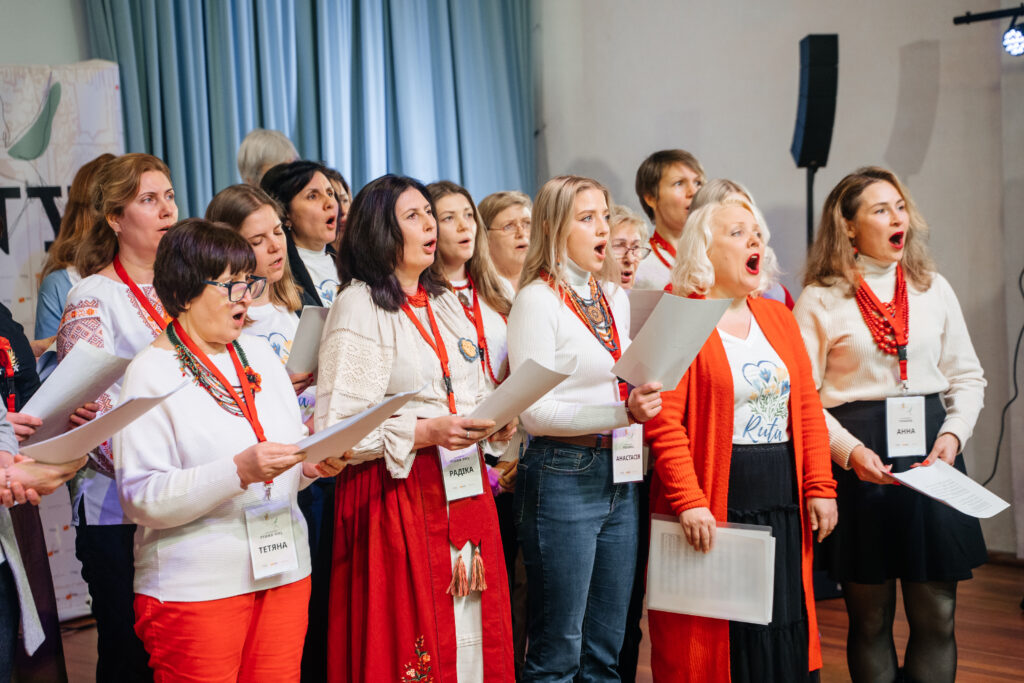
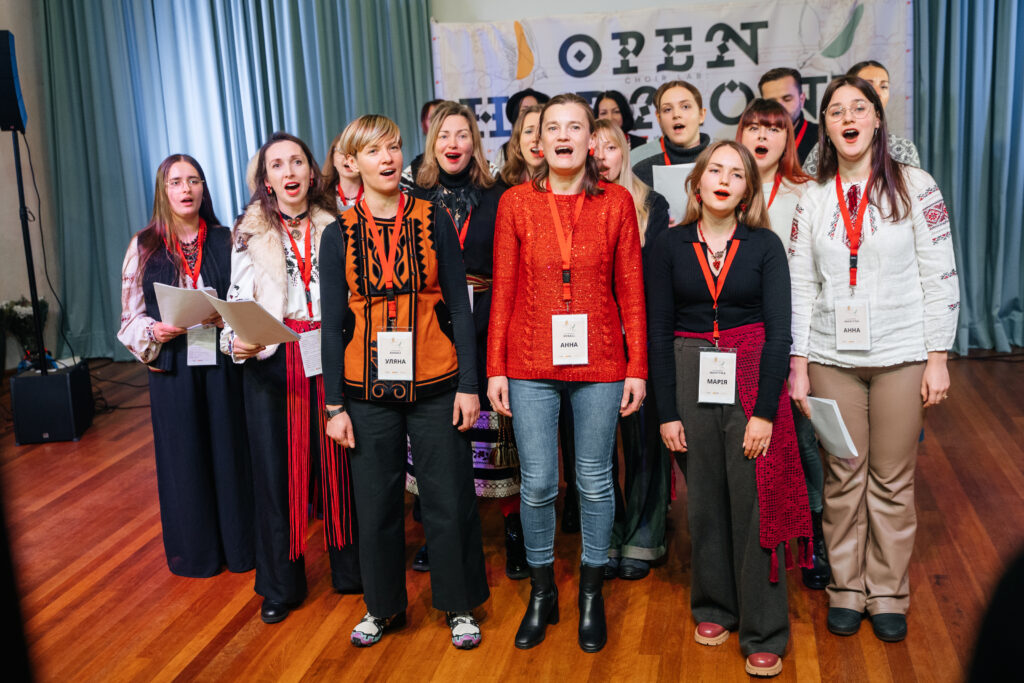
These are just some of the lyrics that 70 participants from six Netherlands-based choirs and ensembles specializing in Ukrainian music perfected at VATAHA’s choir workshop “Open Harmony” in The Hague on 04 January.
Led by our co-founder, Uliana Bun, VATAHA and Ukrainian Institute secured funding from Dutch Culture to invite three choral experts from Ukraine to lead a full-day of singing workshops. They focused on strengthening Dutch-Ukrainian cultural ties through choral singing as a source of artistic development and cultural exchange.
The workshop also created space to engage deeply with Ukrainian vocal and choral traditions in a diasporic context and build meaningful professional connections between ensembles.
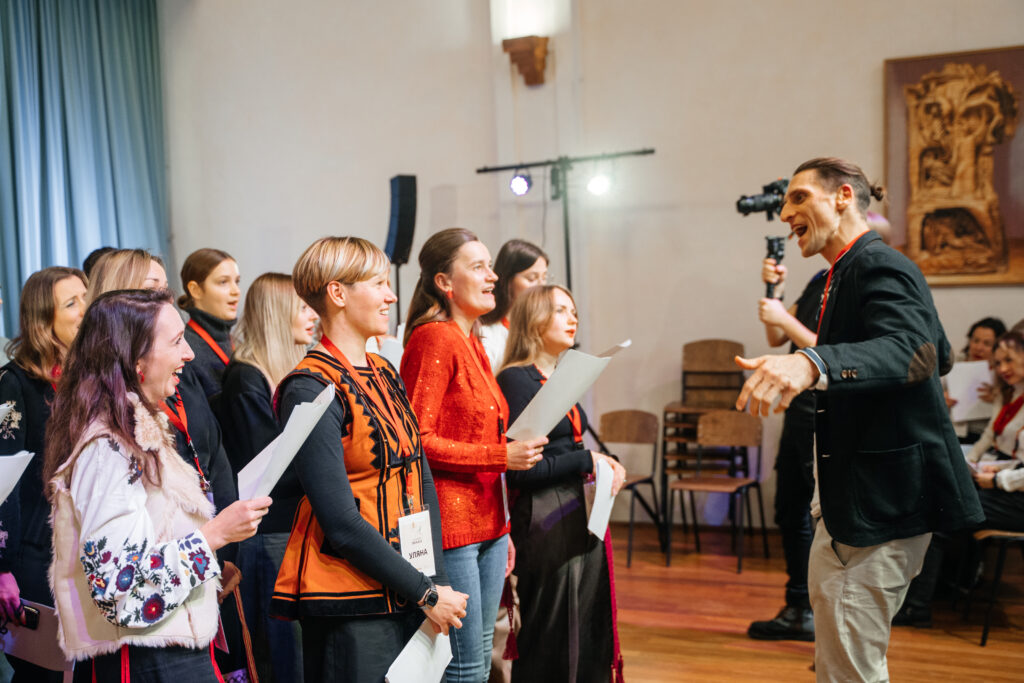
“Ukrainian choral tradition has always been deeply important to Ukrainians. Any family gathering is almost certainly accompanied by the collective singing of folk songs, forming a spontaneous kind of choir,” says Uliana Bun.
The choral tradition is an important part of Ukraine’s musical heritage, and also plays a role in community building and cultural participation in the Netherlands. In recent years, many Ukrainian and mixed choirs have been established in the Netherlands, such as KORALI, Roesalka, PTAHA UNL, and others, where singing serves as a bridge between people, languages, and traditions.
Connecting with home
The Ukrainian singing style is unique because it combines strong communal roots with a rich vocal tradition shaped by history. “Singing in Ukraine is not only a professional art form, but also a natural part of everyday life—family gatherings, celebrations, and rituals often turn into spontaneous collective singing. This creates a deep sense of unity and shared emotion,” Bun explains.
What truly sets Ukrainian singing apart is its role as a form of cultural memory and resistance. For generations, singing preserved identity during times of oppression, making the voice not only an artistic tool but also a means of survival, remembrance, and connection—both within Ukraine and across the diaspora.
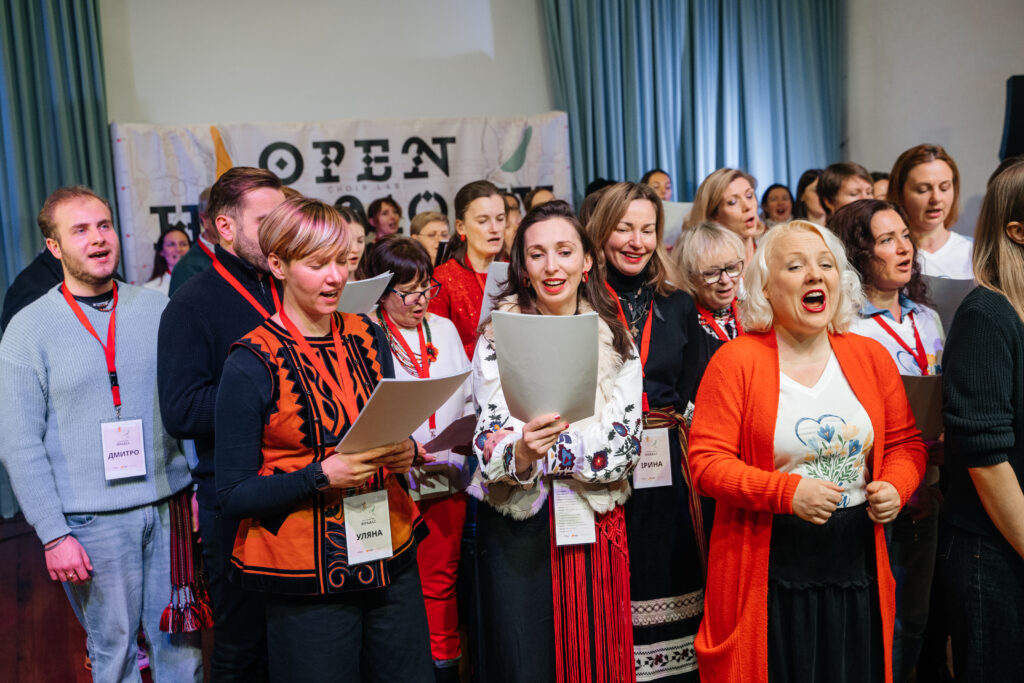
“Moreover, for centuries, singing Ukrainian songs and carols could cost people their lives or lead to exile in Siberia. As a result, many Ukrainian listeners may be hearing traditional Ukrainian songs for the very first time. For me personally, supporting and developing Ukrainian choirs and ensembles in the diaspora is a way to preserve cultural heritage and, at the same time, foster an open dialogue with Dutch audiences, who can also find something meaningful in this music,” she adds.
Closing thoughts
The role of Ukrainian choral art as an instrument of cultural diplomacy is “hard to overstate” in Bun’s view. The workshop ended its private rehearsals by opening with a public presentation by Koornetwerk Nederland, delivered by Ruben Timmer, introducing the Dutch choral landscape and opportunities for professional connection and collaboration.
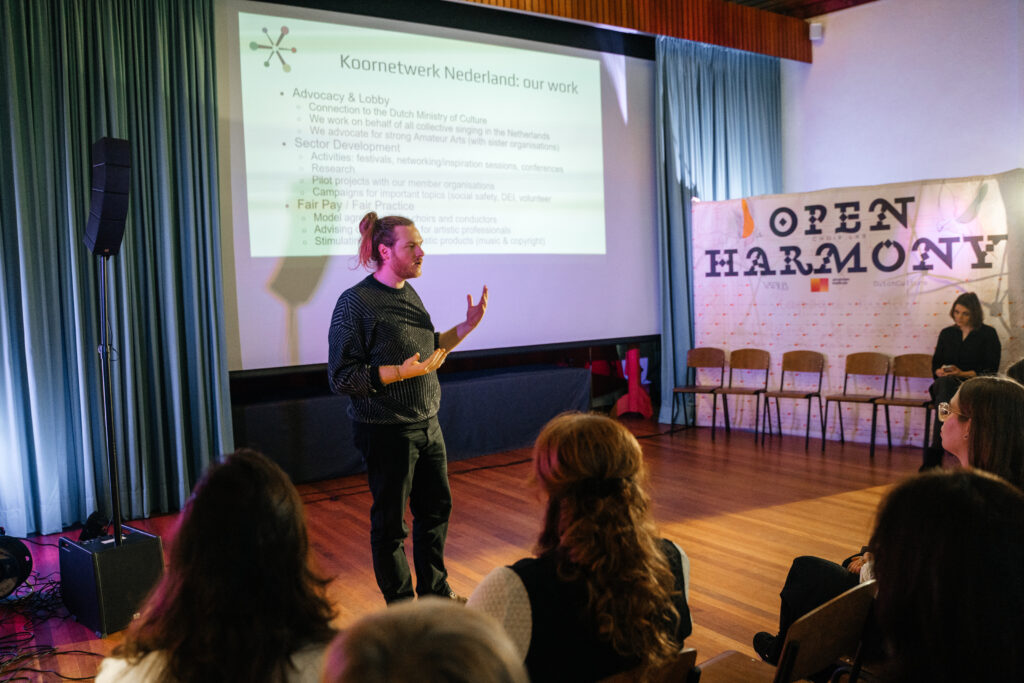
The public panel discussion featured the workshop leaders Yehen Malyarevskyi, Ivanna and Severyn Danyleiko, and also Olena Kopanychuk, and KORALI director Natalia Malhanova, moderated by Ukrainian singer Maryana Golovchenko.
In the concluding networking drinks, participants and singers had the opportunity to connect over their lessons learned throughout the day. “It was clear [from the participants’ response] that they were genuinely engaged and eager to take away advice and discover new nuances,” says Bun.
“This experience once again highlighted how rich and diverse Ukrainian song and choral art really is, with styles so varied that everyone can find something for themselves. And if someone really wants to sing but still isn’t in a choir, it’s only because they haven’t tried it yet!” Bun concludes.
Consider making a tax-deductible donation to support more of VATAHA’s cultural initiatives like these.