Over a year after Ukrainian photographer and artist Hanna Hrabarska received a Letterenfonds grant with VATAHA’s support, we caught up with her to discuss her latest photobook, open to a lot.
Now based in the Netherlands, Hanna’s recent work has often taken a documentary approach to subjects that include displacement, memory, the experience of leaving home, and life during war. Her 2024 photobook My Mom Wants to Go Back Home followed her mother’s experience of becoming a war refugee, while projects like na chuzhiy zemli and КУРАЖ COURAGE drew on personal archives and the stories of Ukrainians living away from home.
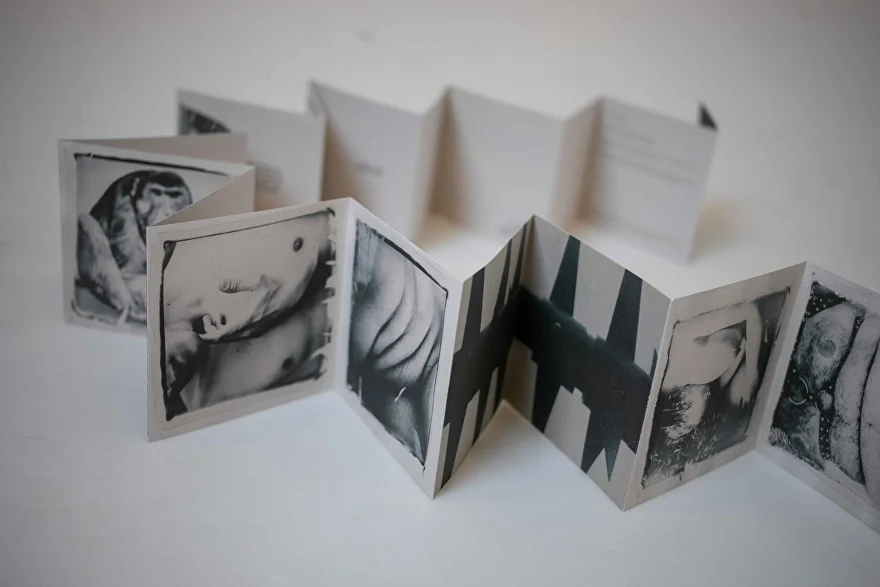
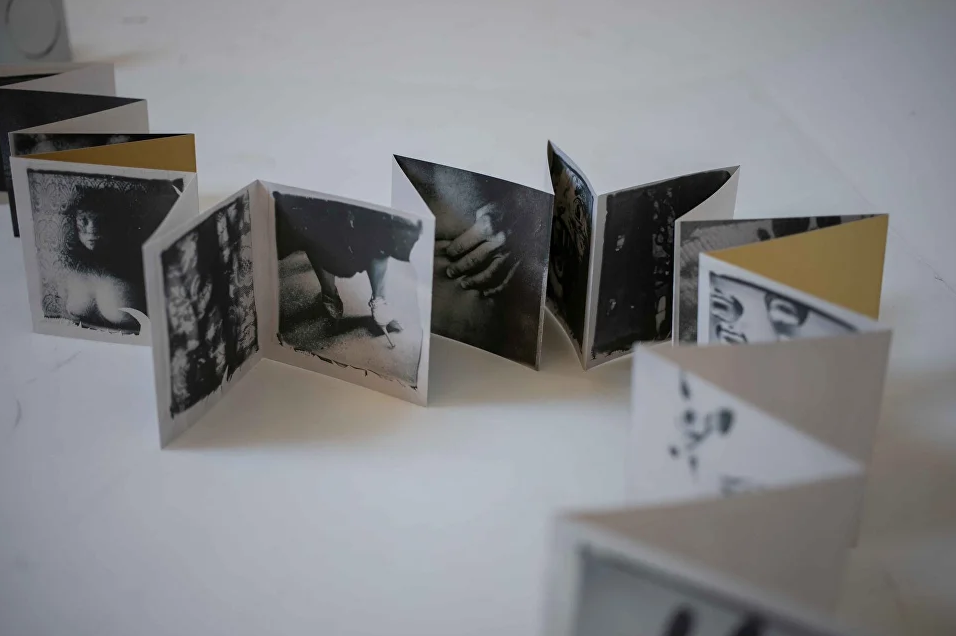
With open to a lot, Hanna has turned deliberately toward intimacy, vulnerability, beauty, and her own inner life. The six-metre-long accordion book brings together photographs from various periods of her archive, reworked through a fragile Polaroid emulsion-lift process and paired with poetry she wrote in 2018.
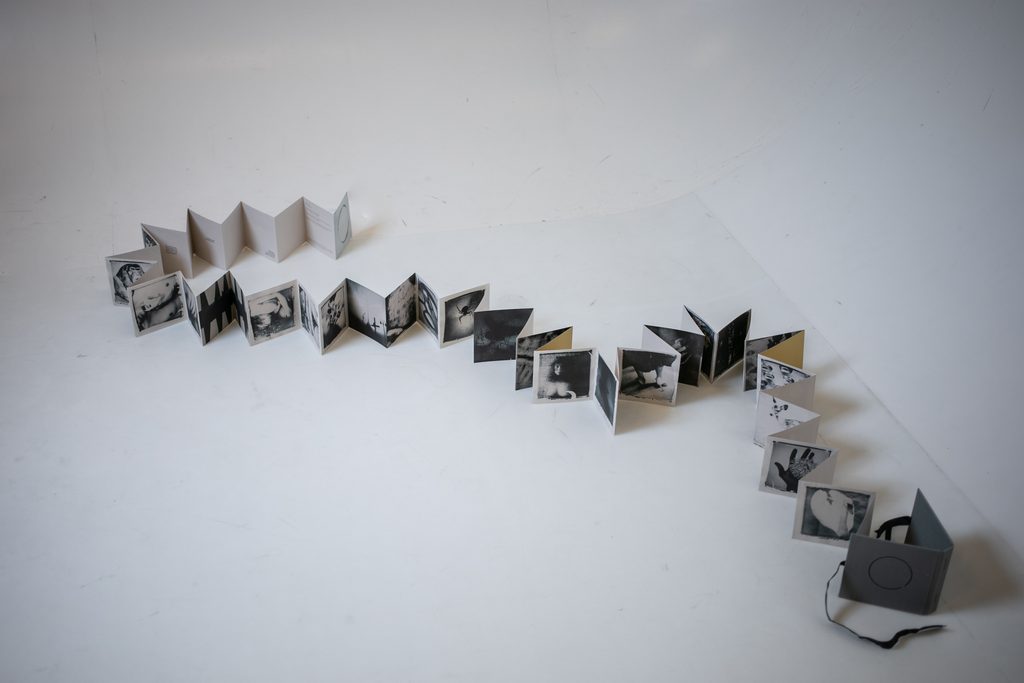
The images come from real moments, but Hanna deliberately leaves much of their original context unsaid. A photograph carrying one memory for her might provoke something completely different to someone else. She explains: “I know the actual story behind the photograph, but for the viewer that part can become completely abstract, and this can mean that you can, through that image, build a story about yourself.”
Instead of trying to tell one fixed story, Hanna says that she wants to “transmit a feeling,” letting memory, intimacy, and history – personal and collective – stay open enough for the viewer to arrive at them on their own terms.
In conversation with VATAHA, Hanna discusses the project’s evolution, and reflects on what she has learned about telling other peoples’ stories, and what it means to make work that is inseparable from her Ukrainian identity.
What made you want to move in a different direction with this project?
I really wanted to make a shift from what I was doing before. I was working mostly on topics of Ukraine, on topics of displacement, on refugee status, these kind of things.
I never planned – as a person, as an artist, or as a photographer – to really put myself in a box in which I have to do projects only on this topic, so with open to a lot I thought more about what my more personal interests were.
Also after I released [My Mom Wants to Go Back Home], I just needed a break from serious topics… but of course I ended up making another book on a serious topic.
One day I was talking with my mentors, Italian photographers Jean-Marc Caimi and Valentina Piccinni. I was trying to find a new topic that would excite me. And they said, “Hanna, you cannot make pictures that are not beautiful.” It made me realize that beauty really means a lot to me.
I said, “Okay, I’m going to step away from documentary. I’m going to step into something conceptual, an idea that does not really exist in a shape that you can photograph, but more like something you can feel. And then I want to photograph those feelings.”
Which feelings did you start with?
It started with the idea of exploring what I am afraid of… the darker sides. I realized that I’m very social, but that I’m in fact a little afraid of other people’s deep personalities and desires.
So I made a profile in a dating app, stating that I was working on a project about people’s desires, and if you want me to photograph your desires, please let’s meet and let’s talk. I started receiving messages, and people were very open about their sexual life. I started meeting these people and asking them to perform their kinks in front of me and photographing these kinks.
The problem became that the people I was photographing started crossing boundaries, doing things like calling me in the middle of the night as an emotional support, and one person tried to involve me in his kink. And I was like – this is not what this whole thing is about. It became a total mess in my head.
What did you do when that approach stopped working?
I thought “what if instead of exploring other people’s hidden lives, I explore my own hidden life.” I started digging into my archives and immediately the sexual elements of the project deescalated. I started noticing different patterns in my own archive and life that fit into this idea of hidden sides of life.
Even though the sexual part was mostly gone, I kept the title as open to a lot, which came from what a lot of people write in their dating profiles. But it doesn’t have to be straightforward-sexual: when we go through life we are open to a lot, to whatever happens or could happen in life.
What did returning to your own archive allow you to explore?
I realized through working on this project that in my work I cannot talk about other people. I always have to talk about myself. People were telling their stories that I couldn’t relate to, and I thought “how can I share their story if I don’t deeply understand it?”
Because of that, most of the photos that I took of other people during that initial phase of the project are not in the final book. There are still some of those photos in the book, but most I replaced because I think maybe one day I will come back to this other direction. But when I do, I would want to dig deeper into the psychology of these desires.
Working with my archive also gave me this freedom to construct a story about my life. You know, in our heads we have this idea, this personality that we call “ourselves.” But when I say “I’m Hanna,” it doesn’t necessarily mean anything to you, right? It doesn’t mean anything to anyone. It’s just sounds. And even when I say my name to myself, it still means only a small part of what I am even for myself.
It was very interesting to discover and, in a way, construct the walls around my own story, and there are so many angles from which we can tell our stories to ourselves and to other people as well. Through working on this project I added a little angle to how I see myself.
The images from my archive are of things that really happened, but if you look at these photos you might see something completely different. I know the actual story behind the photograph, but for the viewer that part can become completely abstract, and this can mean that you can, through that image, build a story about yourself. Because the only way we can understand others is through ourselves.
Can you describe the process you used to create the images, and what it brought to the work?
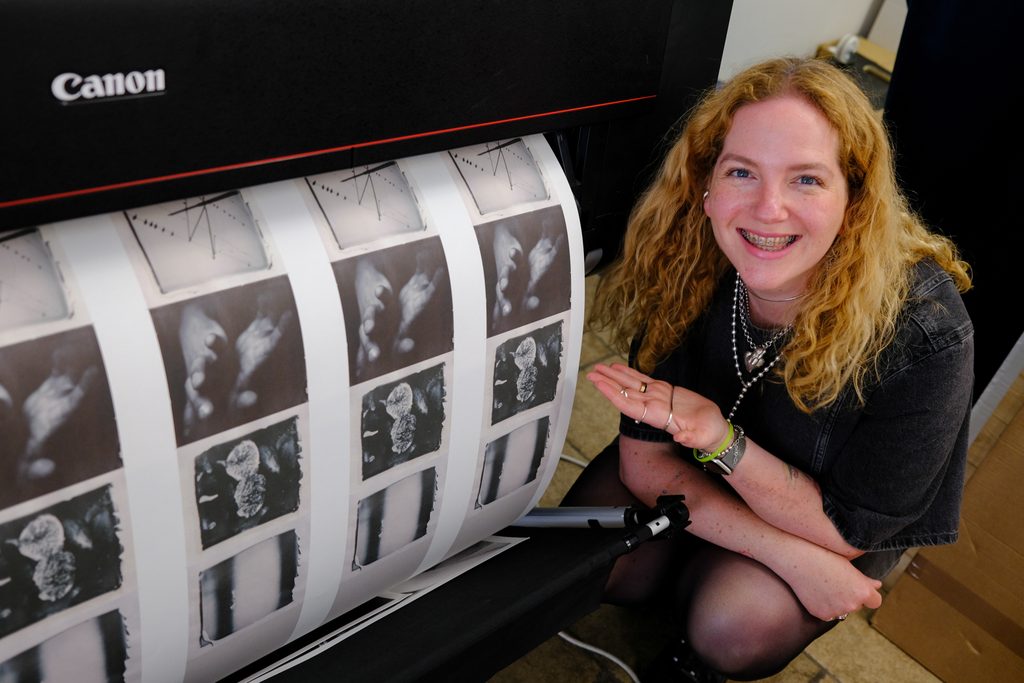
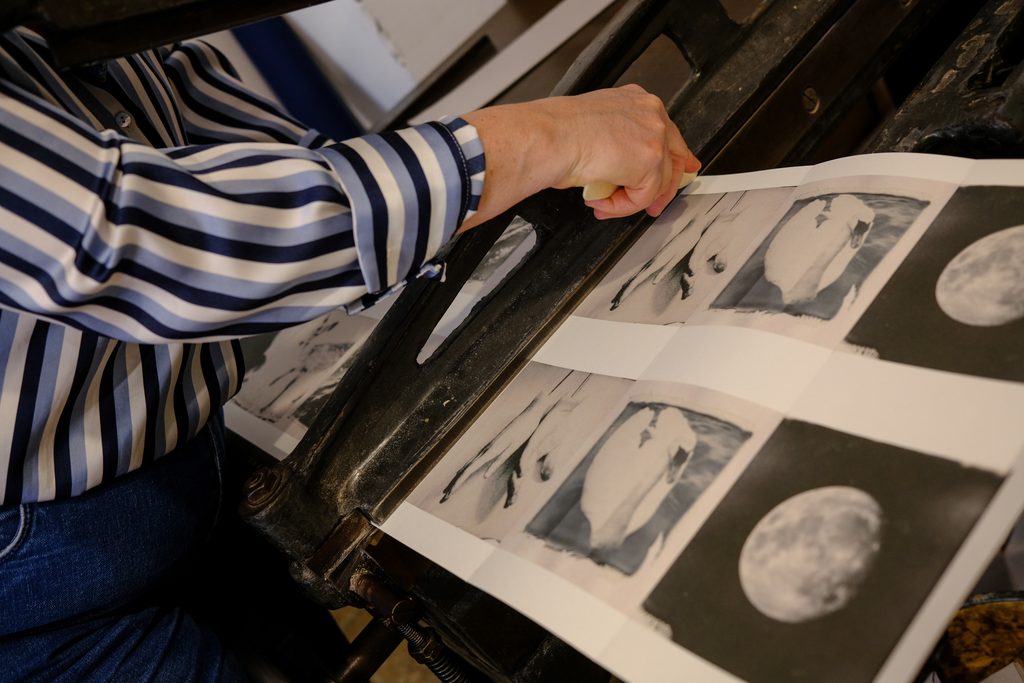
To keep the style similar throughout the book, I processed all the pictures with Polaroid emulsion lift, meaning I would take a polaroid, cut it, put it in hot water, and then open up the whole picture. I completely dismantle it, remove all the plastic, and lift the picture itself out with a brush. It’s very fragile. And then I dry and scan it, and it becomes an image. It means the pictures are very thin, just the layer of the image, and the edges are also not completely straight, they’re natural edges.
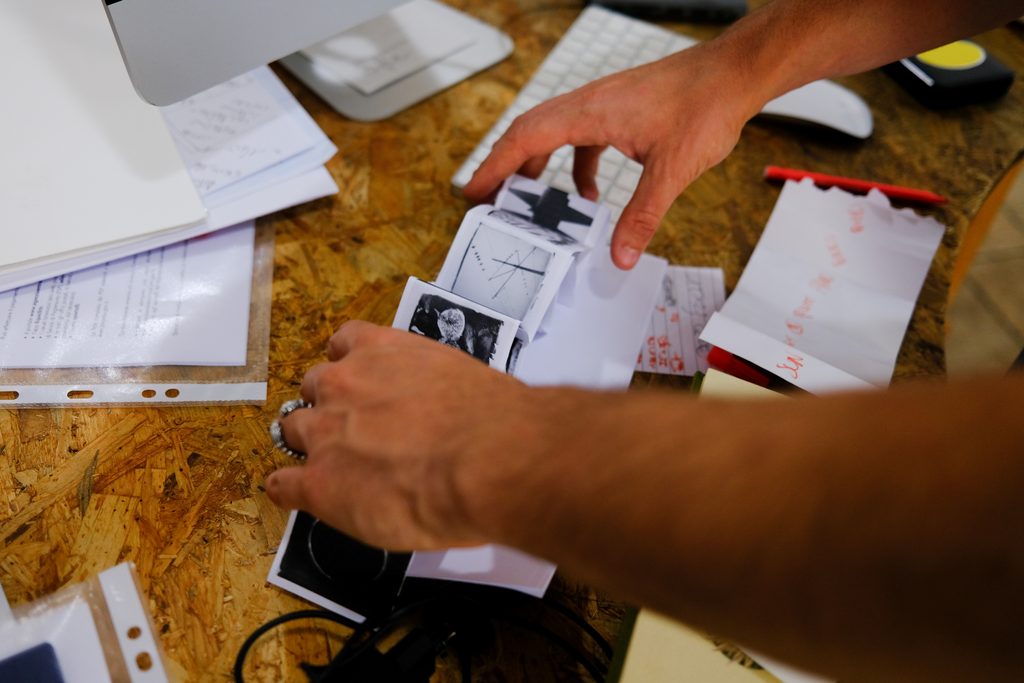
So these very fragile images give meaning to those very fragile and sensitive moments that are captured by the camera. They can crack and they rip apart, just like how you go through life and the moment comes and then it’s gone. And then how we see that moment after is a cracked vision of the moment.
Can you describe the book itself and how you want people to encounter it?
The images are accompanied by poetry that I wrote in 2018. The book is a leporello format, like an accordion it opens up into a 6 meter long piece, with images on the front and poetry on the back, one long poem spread throughout the book.
The poem is abstract, and doesn’t give any context. There is no description for the book, except for a description of the process that I used to physically make it. It even felt weird to tell you about the process earlier, because it gives it some context. I would love viewers to have to look at this book without any context.
The leporello as a form is fun. It’s about play, and the book is about play – playing roles, playing with each other, playing with our feelings… And when readers, viewers communicate with the book, they play with it, because you can stretch it, you can flip through it, you can look from this side, from that side, you can start it from different point, from end to beginning or beginning to end or from the middle. It’s multidimensional.
How, if at all, does Ukraine enter into this project?
Whatever I will do in my life I will remain Ukrainian. This is the context of my life that I can not and don’t want to remove. At the same time, this book is not about Ukraine, even though many of the photos were made in Ukraine and people, Ukrainians especially, will be able to recognize that.
For example, in the book there is a very old photo of mine, maybe from 2012. It’s taken from a window in front of the opera house in Kyiv, where there is a very recognizable stone road, and someone from Kyiv would totally recognize that road. I included the photo because for me it has a very symbolic meaning, for me and for people from Kyiv. But for somebody who has never lived in Kyiv that meaning would be lost or irrelevant.
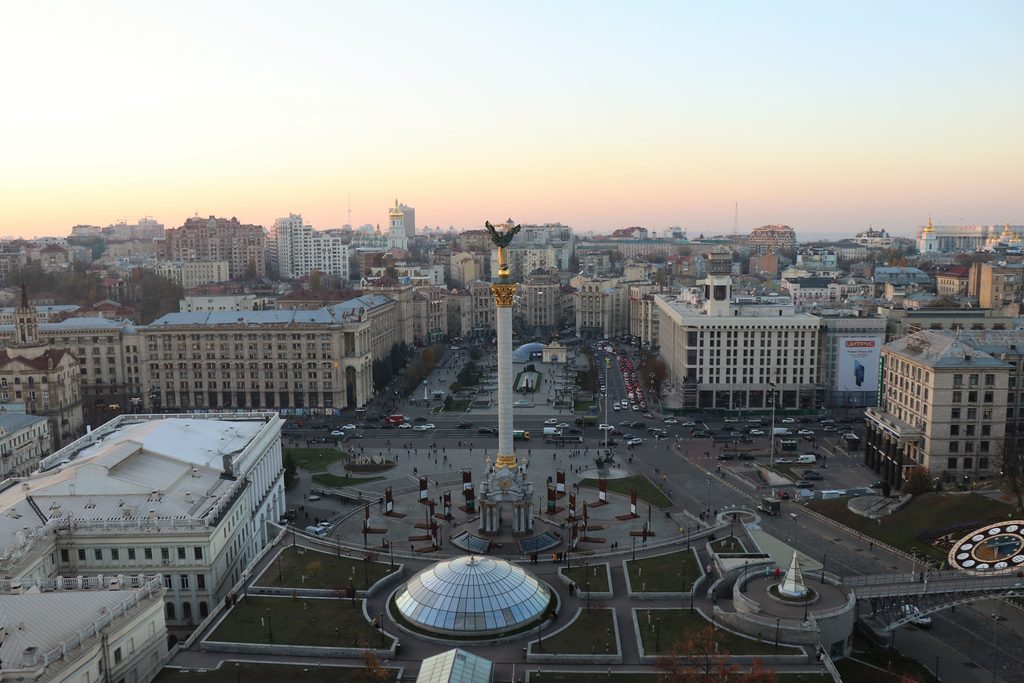
There is an even more straightforward example of a photo from Maidan, the main square of Kyiv, where many revolutions and protests happened. But this was a very foggy morning, I was in a taxi and I took the photo from the taxi window. It was in 2014 after the Revolution of Dignity and there had been a mass shooting in Maidan, many people died, and there was a handmade cross in the square. In this photo you can see this very abstract place with a cross on the foreground. Anyone out of context would think that this photo has religious context, but for me it has zero religious context in spite of the cross. It has a completely different meaning.
Ukraine is rooted in the history of my life, a life which is deeply rooted in the history of Ukraine. At the same time, through this book I don’t want to tell a specific story, I want to transmit a feeling.
How do you feel about the way people connect your work to Ukraine?
Sometimes I do feel that people want to communicate somehow with this specific part of my work. I’ve had people I work with on different projects say things like, “I want you to make it all about Ukraine.” And I’m like, I can’t because it’s about me. It’s not about Ukraine. I am Ukrainian, but it doesn’t define me in an absolute sense. It defines me in certain senses, but I’m also just myself. I belong to myself, right?
So, yes, people of course expect me to talk about Ukraine, and I’m happy to talk about Ukraine. I think [My Mom Wants to Go Back Home] is a really good topic starter, and it’s opened many doors for me to talk about Ukraine, to talk about what’s going on, to talk about what it’s like to leave your country. And those are very important conversations, but at the same time I don’t want to feel obliged to fit into certain boxes.
I don’t want to fit into any box. I want to live outside in the beautiful world.
But at the same time, it makes me happy that people do want to hear stories about Ukraine or from Ukrainians. And it’s important that it’s told by Ukrainians, and not narrated by russia or by Europe, and heard by people who are open to listening.
What did making this project teach you about yourself as an artist?
It taught me that I have much more to say other than being in that box that we talked about. That I’m a multi-dimensional artist and I can also talk about other topics outside of Ukraine. It was a freeing realization and that is also quite interesting.
For more of Hanna’s work, follow her on instagram or visit her website.
open to a lot was developed during Yogurt Contemporary Documentary Lab 2024/2025.
Design: caimi & piccinni
Printed by: Lalegatoria, Rome, 2025
Maidan Nezalezhnosti photograph by Juan Antonio Segal.
All other images provided courtesy of Hanna Hrabarska.