
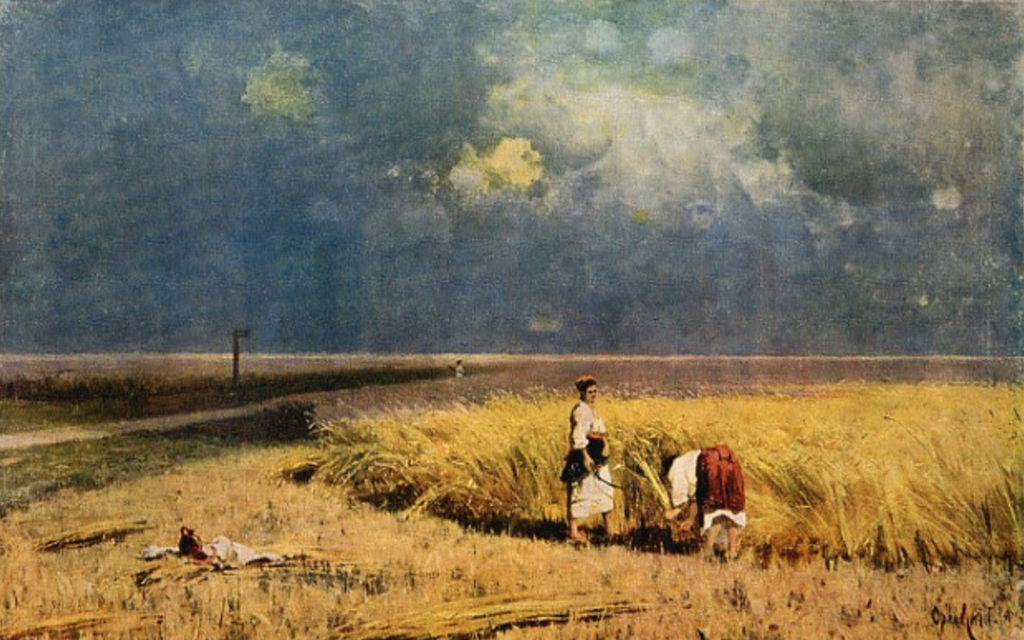
With the arrival of autumn, the agricultural year draws to a close. The grain has been gathered, and, after months of work, there is time to celebrate. In traditional Ukrainian village life, this was one of the most important periods for weddings and celebration.
Marriage brought together entire families and communities, not just the two people getting married. Weddings were elaborate affairs that could last days, filled with singing, dancing, ceremonial foods, and ritual. They also involved an extraordinary amount of craftsmanship, from baking elaborate breads to weaving ornaments and preparing clothing for the bride and groom.
As VATAHA continues its journey of workshops through the seasonal traditions of Ukrainian crafts, autumn is a chance to explore the handmade objects that accompanied one of life’s most important (and elaborate) celebrations.
Autumn: The Ukrainian wedding season
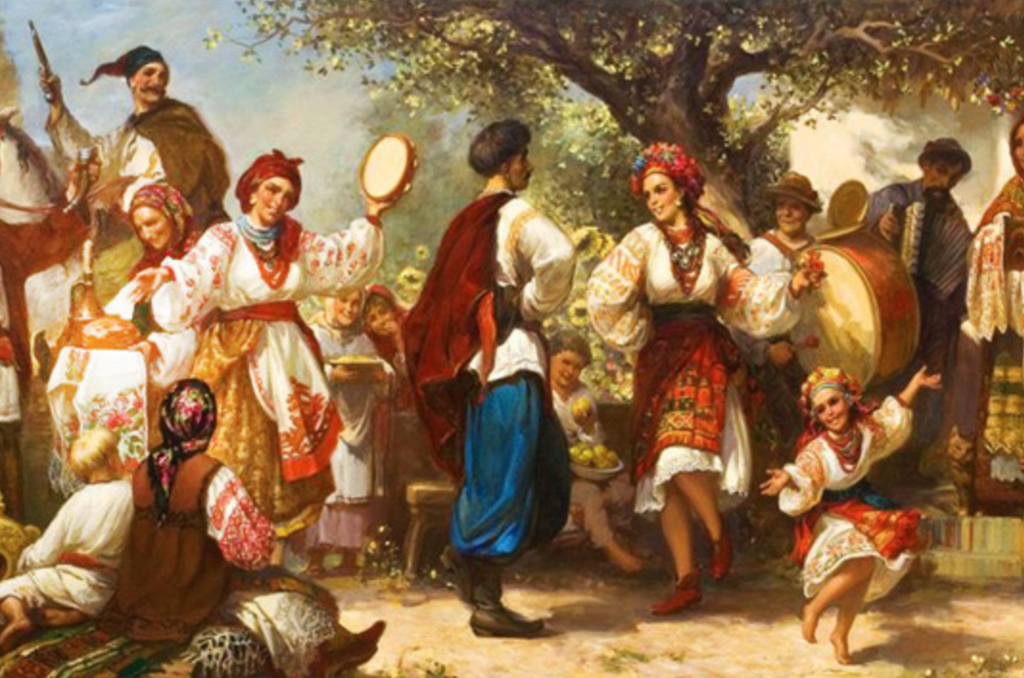
With the most demanding agricultural work finished and food stores replenished, the end of the harvest meant that families could devote their attention and resources to marriage celebrations.
The autumn wedding season was closely associated with Pokrova, the Feast of the Protection of the Mother of God, observed in October. Young unmarried women prayed to the Virgin Mary for a husband, and weddings usually took place between Pokrova and the beginning of the pre-Christmas fast.
As Ukrainian anthropologist Tina Polek explains, this period marked a shift in the social calendar: courtship turned into the formal arrangements of marriage, and the time and money needed for weddings left little for other large festivities. For unmarried women, the season could also bring considerable social pressure, given the particular social and cultural importance placed on marriage.
Folklorist Natalie Kononenko describes the complex social functions of village weddings, writing that along with the religious ceremonies and family blessings were highly elaborate preparations, gift exchanges, and festivities. For example, during svatannia, the groom’s representatives would visit the bride’s family to negotiate a potential marriage, and further agreements and preparations would follow before the celebration could start.
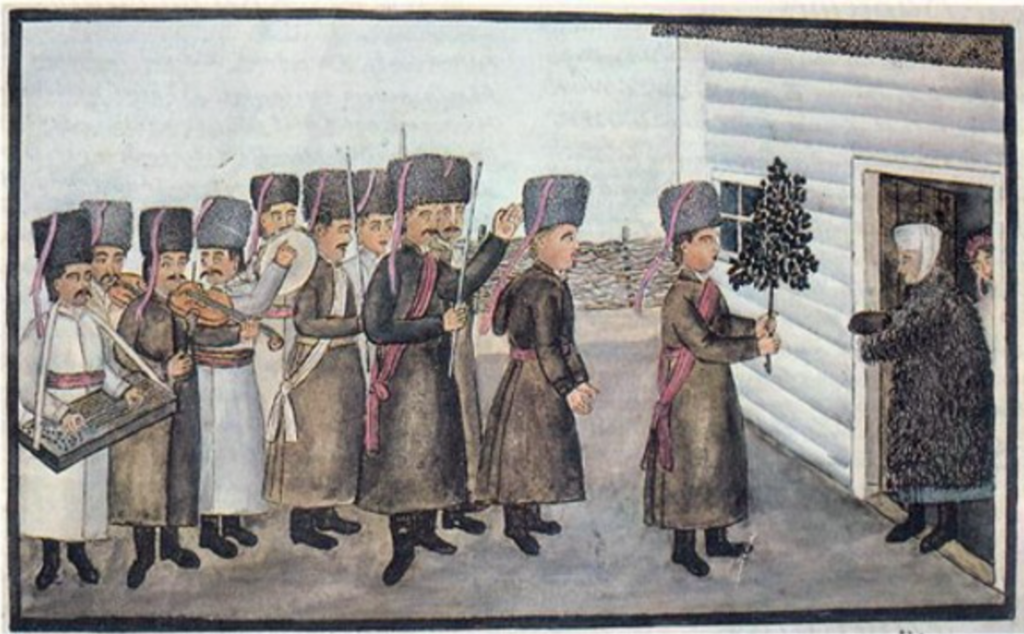
The Encyclopedia of Ukraine even likens the traditional wedding to a theatrical drama, with participants taking on prescribed roles throughout the celebration. It details 24 different customary moments, from matchmaking and betrothal to the final feasts and post-wedding customs. Customs differed across regions, but their scale reveals the significance of marriage within village society.
A wedding made by hand
Long before guests arrived, work was underway preparing the handmade objects that would accompany the ceremony.
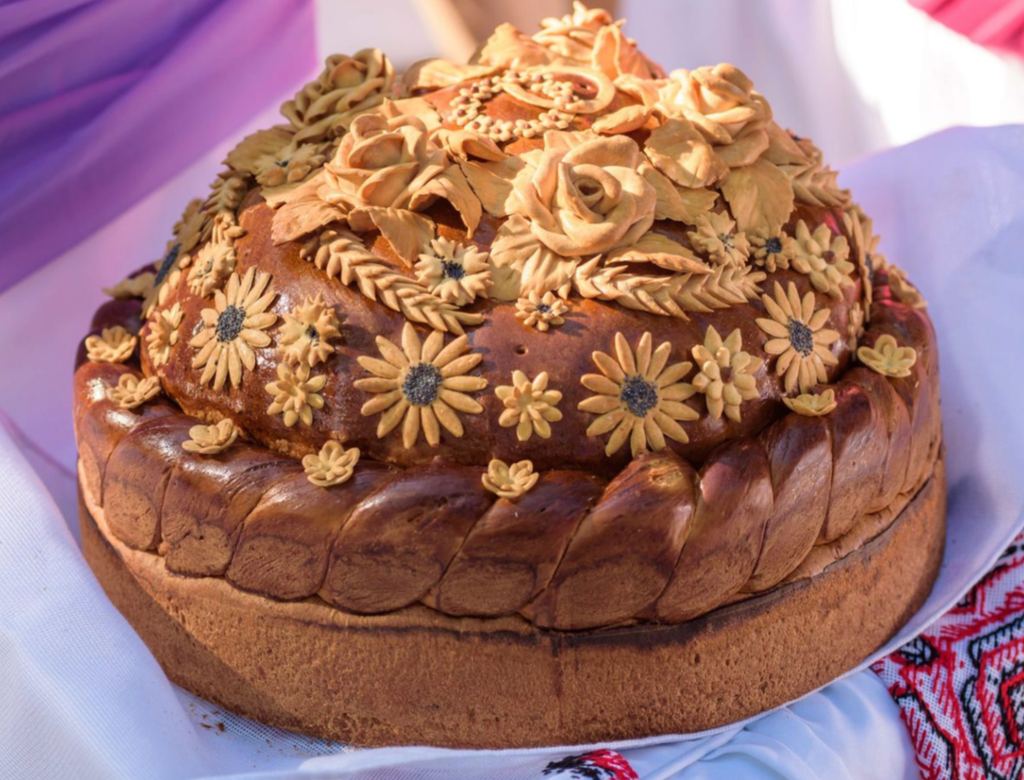
One of these was the korovai, a ceremonial bread traditionally made by women who gathered together to knead and decorate the dough while singing wedding songs. Its surface was decorated with dough figures depicting birds, animals, the sun, or the moon. The tradition has ancient roots in beliefs surrounding grain and its power to sustain life. The bread was prepared with considerable ceremony and eventually divided among the wedding guests, and, in some traditions, flour was contributed by wedding participants, making the finished loaf a collective offering to the newly married couple.
The bride’s clothing and accessories required similarly careful attention.
Ukraine’s traditional embroidered shirt, the vyshyvanka, was frequently a significant element of wedding attire, depending on the region. Shirts were sometimes embroidered specifically for the occasion, often taking months to complete. The importance of the vyshyvanka extends far beyond the wedding itself, becoming a treasured and lasting personal possession, sometimes even preserved for the owner’s burial.
The vinok, or bridal wreath, was traditionally made from greenery (often periwinkle), and sometimes flowers, ribbons, and elaborate decorative elements. It was associated with maidenhood and historical expectations of virginity.
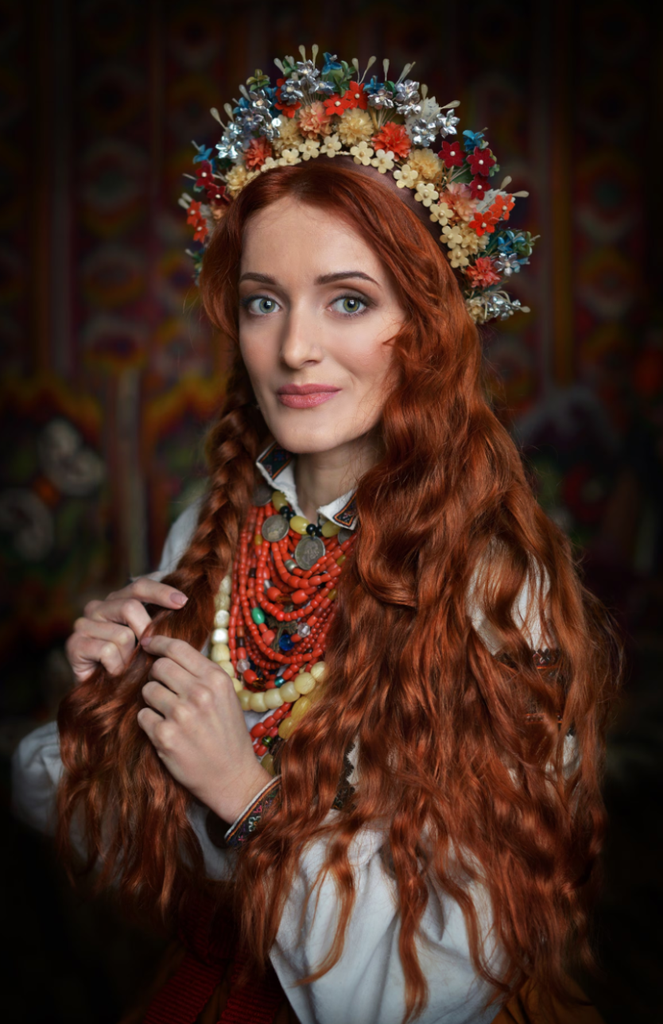
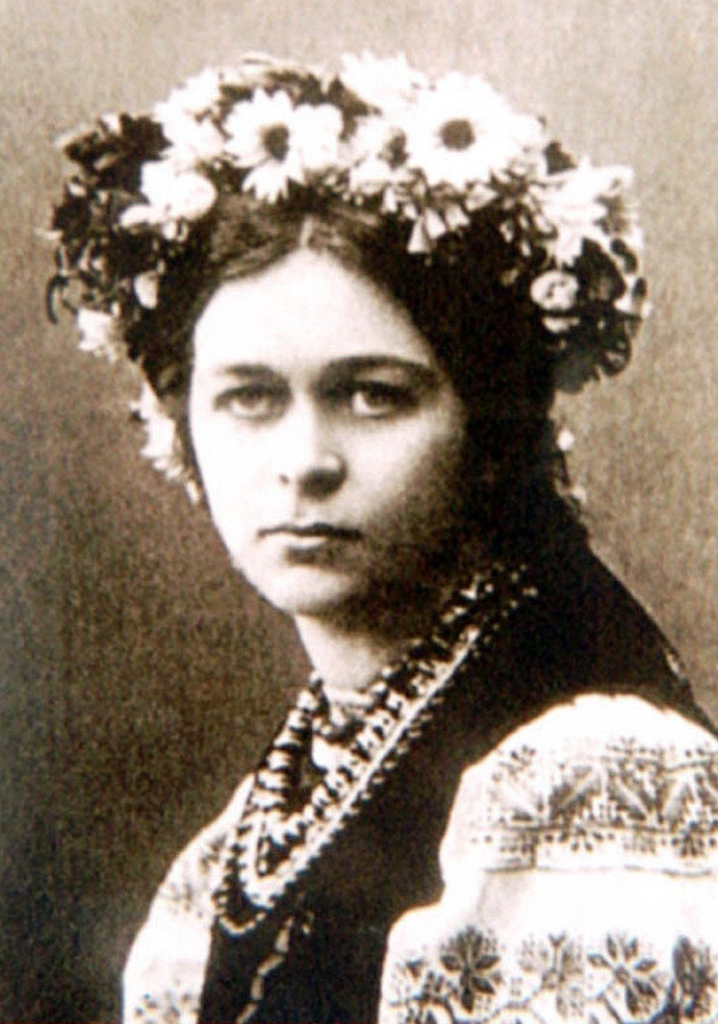
Another significant ritual was pokryvannia, during which the bride’s wreath was removed and her head was covered with a scarf or traditional married woman’s headdress, such as an ochipok, signalling her transition into married life.
Jewellery added yet another layer of regional character. Coral necklaces, coins, intricate beadwork, and detailed embroidery adorned traditional bridal clothing, sometimes in multiple layers. The Ivan Honchar Museum preserves a bridal ensemble from Western Podillia featuring coral necklaces and a beaded gerdan decorated with Austrian coins. Its headdress combines beadwork, artificial flowers, and silk ribbons.
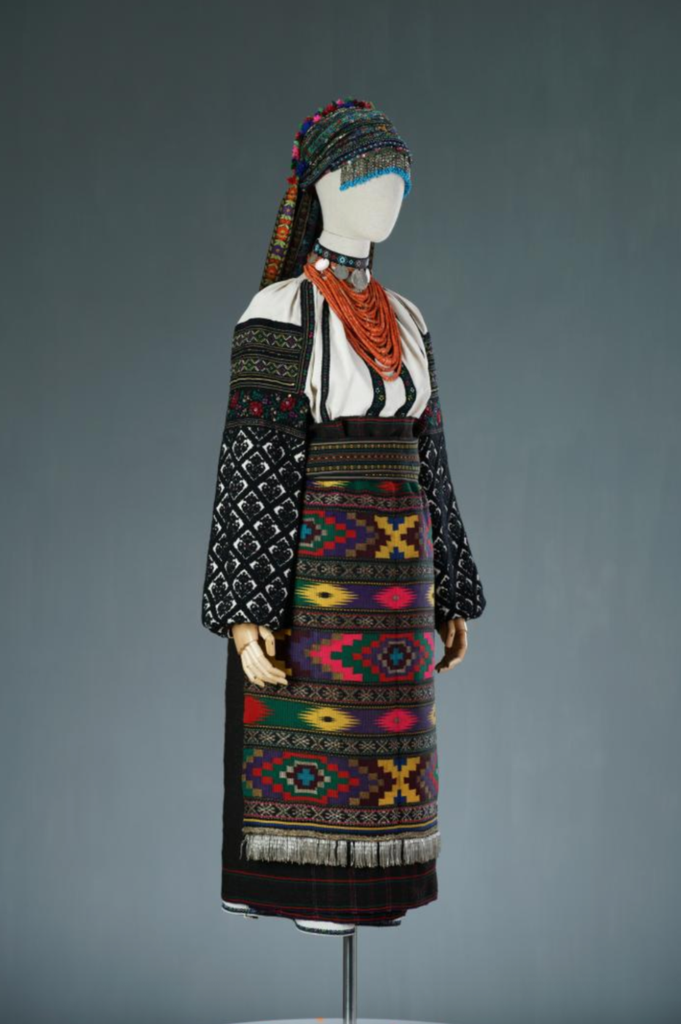
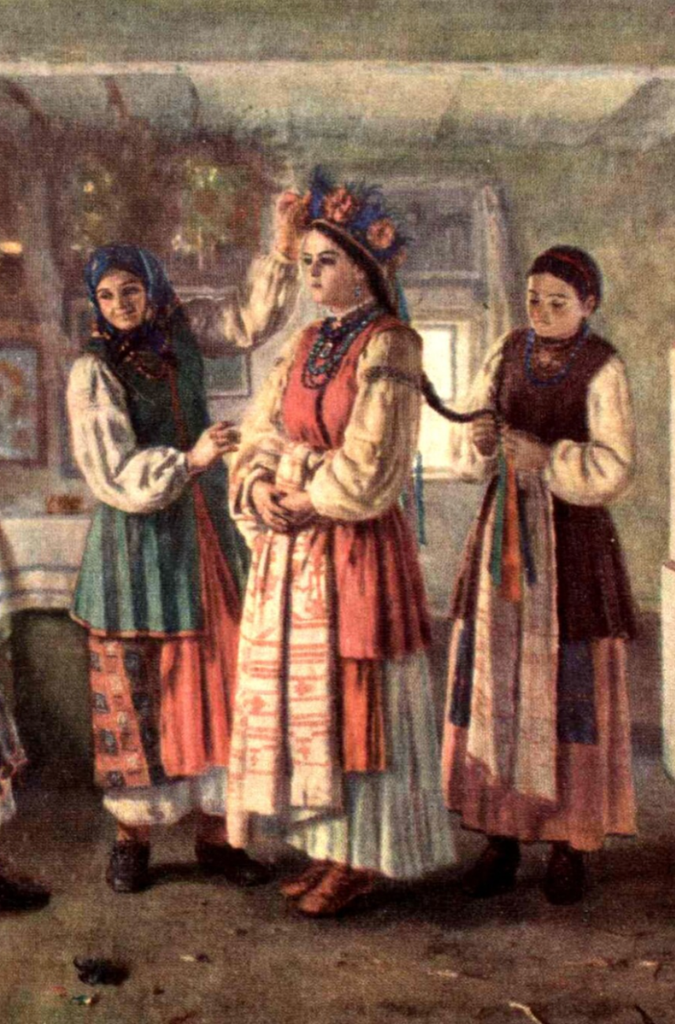
The preparation of these kinds of garments and ornaments drew on craft traditions developed over generations, with regional styles visible and identifiable in everything from embroidery patterns to the specific arrangement of jewellery.
Kotylions: Tokens of affection and protection
Beyond the wedding ceremony itself, handmade ornaments also played a role in courtship and romantic relationships. In parts of western Ukraine, young women expressed their affection through kotylions, small beaded accessories given to men they admired.
Often worn on the chest, kotylions featured geometric patterns, flowers, and sometimes initials or personal messages. They were associated with courtship dances, while in some communities their placement identified a man as married or unmarried.
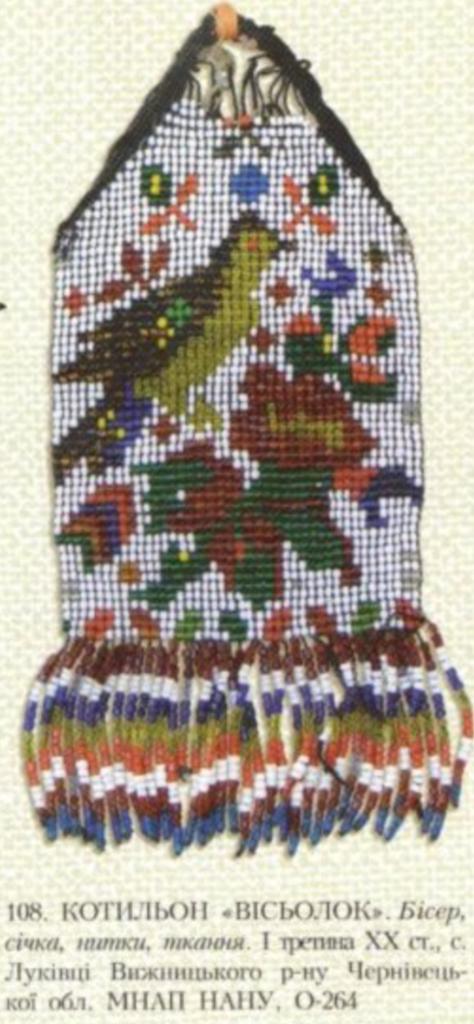
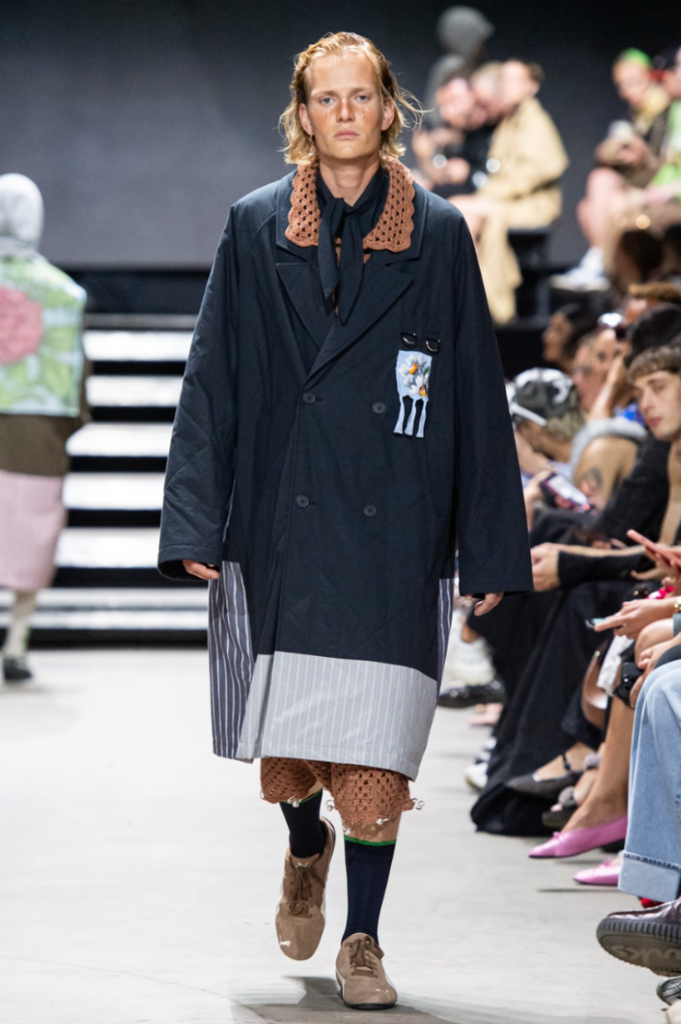
Kotylions also acquired particular significance during periods of war, when women made them for husbands, brothers, and other loved ones departing for military service. Worn as protective charms, they carried wishes for a safe return.
Crimean Tatar weddings: Embroidery, gifts, and cultural memory
Ukraine’s wedding traditions encompass the distinctive cultural heritage of the Crimean Tatars, an Indigenous people of Crimea, whose ceremonial clothing, embroidery, and ornamentation developed through specific artistic traditions.
One particularly important tradition was dokuzlama, the preparation of sets of nine gifts for the groom. These could include embroidered handkerchiefs, pouches, garments, and personal accessories decorated with gold or silver thread. In one traditional gift, a small silver coin was sewn into the bottom of a pouch with the wish that its owner would never be without money.
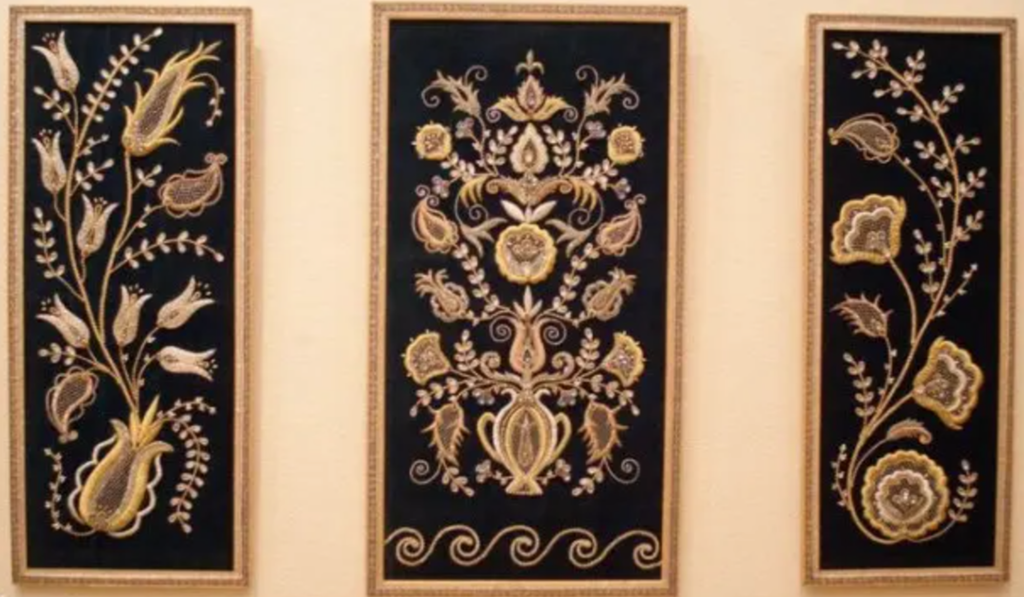
Further, the preparation of wedding textiles was a significant part of women’s artistic education, and young women learned embroidery and weaving from a young age. They were thought to fashion garments and household items with help from female relatives and friends in communal, social gatherings with food and singing.
The final ceremonial clothing itself was highly elaborate: brides wore decorated garments, ornate head coverings, gold jewellery, and silver belts. In one ceremony documented among Crimean Tatars, the bride’s father circled her three times holding a silver belt, fastening it around her waist on the final turn.
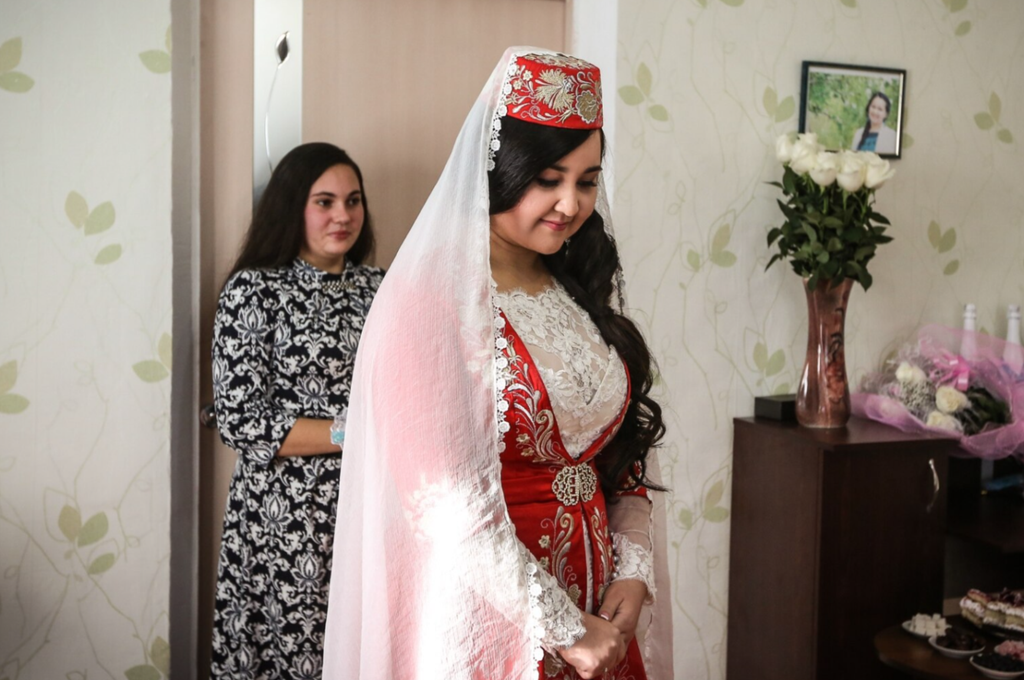
These traditions suffered enormous disruption following the Soviet deportation of Crimean Tatars in 1944. Families were forcibly displaced to Central Asia and other parts of the Soviet Union, and the economic hardship of exile made elaborate wedding preparations increasingly difficult.
“We lost a lot when the indigenous people of Crimea were deported in 1944,” Crimean Tatar artist Mamut Churlu told Katherine Leung in a 2021 interview with Lossi 36. Churlu recalls that brides could once bring as many as 400 handwoven and embroidered household objects into marriage, with the skills required to produce them passed from grandmothers on to younger generations.
The surviving textiles and the knowledge behind their creation preserve a history that goes far beyond a wedding ceremony. Every object is evidence of family life and craft traditions that generations worked to establish and maintain.
Continuing the traditions
From the baking of a korovai to the embroidery of a vyshyvanka, Ukrainian wedding traditions reveal how much work went into a celebration, and how much was once prepared by hand. The objects made for these occasions stayed within families sometimes for generations, holding with them the labour, ritual, ceremony, and community of their creation.
This autumn edition of VATAHA’s Studio of Ukrainian Crafts explores wedding customs and regional craft traditions through a programme culminating in a mock Ukrainian wedding, featuring our very own Anastasiia Khomenko.
Participants will have the opportunity to discover the histories behind these practices and explore traditional crafts through hands-on activities.
Originally planned for autumn, the workshops have been rescheduled for 14 March 2027.
Studio of Ukrainian Crafts is organised by VATAHA in partnership with Ukrainian House Rotterdam and supported by the Ministry of Migration of the Netherlands.
To support VATAHA’s work preserving and sharing Ukrainian cultural heritage, please consider making a tax-deductible donation.