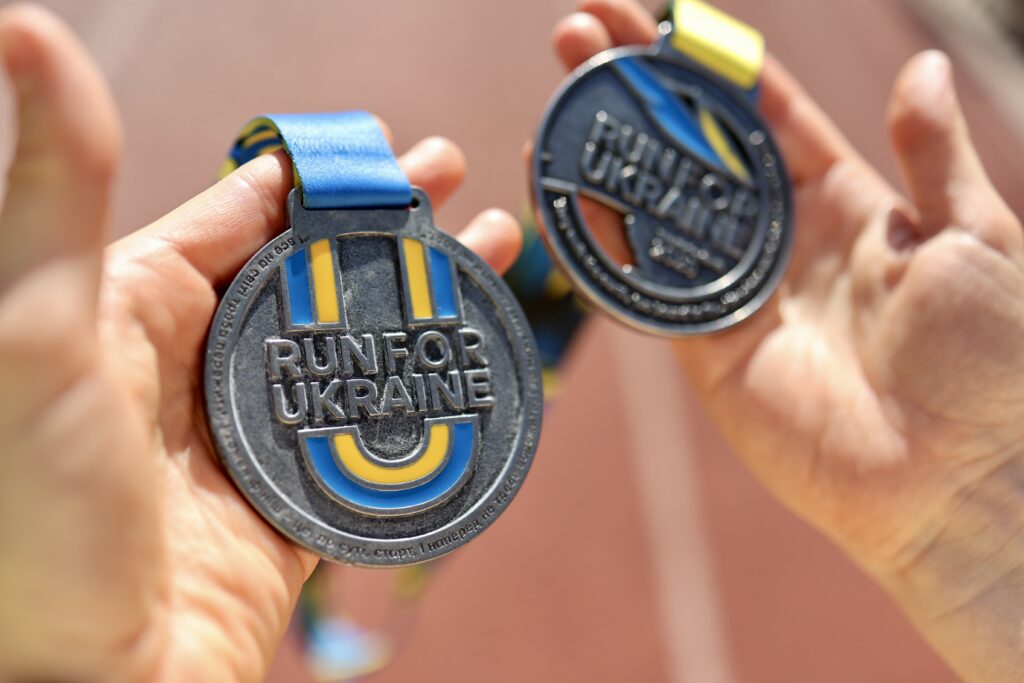
A medal usually lets you know that something is over. The distance has been covered, the finish line crossed. You hang it around your neck, catch your breath, and take a look back at what you have achieved.
The medals awarded at Run for Ukraine aren’t quite like that. Yes, they mark the end of a race, but the struggle they represent is painfully unfinished.
This year will be the fifth Run for Ukraine organized by VATAHA in the Netherlands. A small memorial run in 2022 has grown, year by year, into a major annual gathering of Ukrainians and international supporters. It’s an amazing act of solidarity and community. But five years of running means five years in which the need to run – the need to remember those killed, to protest the destruction of Ukrainian cities, and to honour those defending the country – hasn’t disappeared.
Since 2024, each participant crossing the finish line has received their medal: a piece of Ukrainian art designed around a selected poem. The words are engraved on the medals and, this year, are printed on the runners’ t-shirts as well.
“I see that people respond to the use of poetry,” says Ukrainian artist Maria Petrochko, who has designed the medals since 2024.
Across three medals and three selections of poetry, Petrochko’s designs have become a record of the ideas carried through each edition of the run: endurance, grief, culture, memory, freedom, and struggle.
2024: “Every finish line becomes a start”
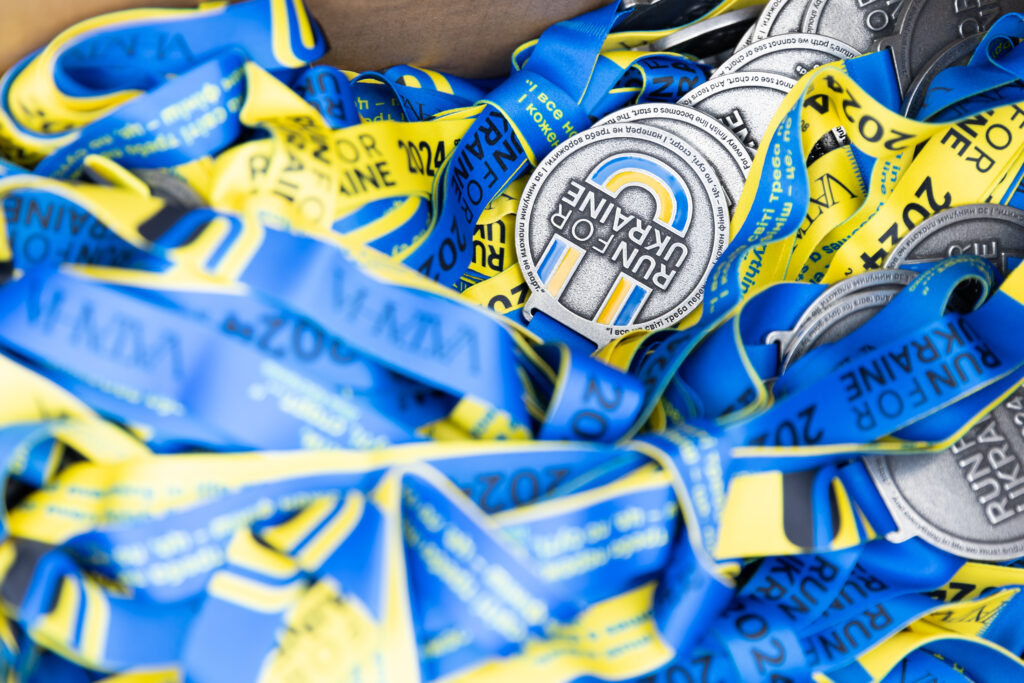
In 2024, Petrochko created a bold, minimal design, using the blue and yellow of the Ukrainian flag to shape a “U” in the centre of the medal, with the engraved lines of Lina Kostenko, one of Ukraine’s most celebrated living poets:
And everything in life we must endure
For every finish line becomes a start,
The future’s path we cannot see or chart
And tears for days gone by should not restart
They are fitting words for a race in which reaching the end doesn’t truly signal the end. The finish line becomes a place to remember, and to begin again.
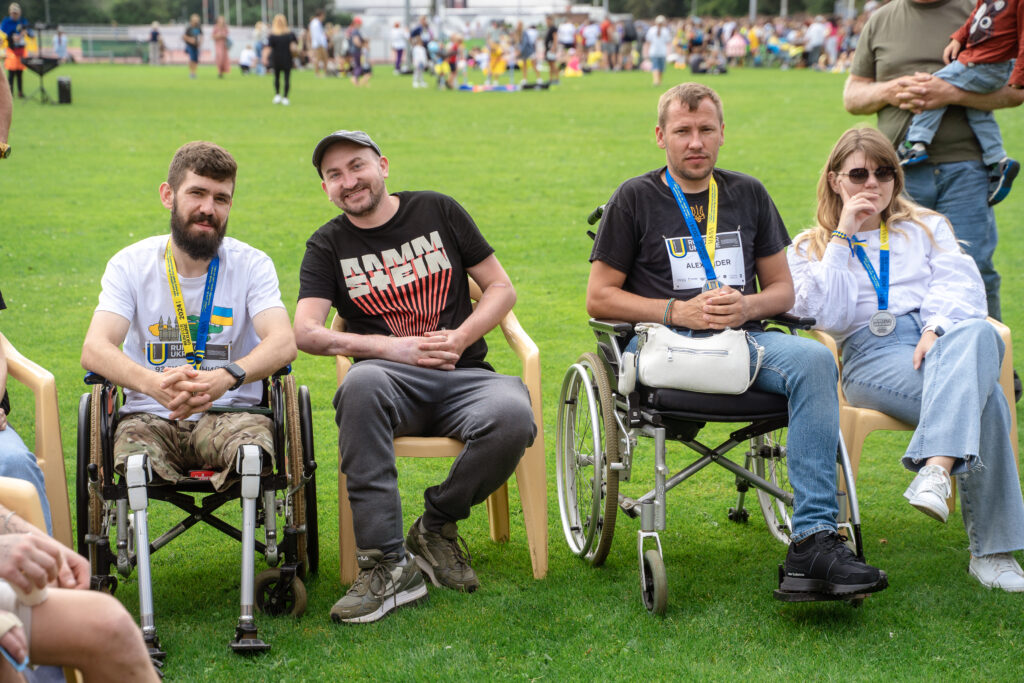
That year’s Run for Ukraine was dedicated in part to the writers, musicians, journalists, photographers, and other cultural figures killed during the war. Kostenko’s poem doesn’t permit loss to become paralysis.
2025: “To touch the sky”
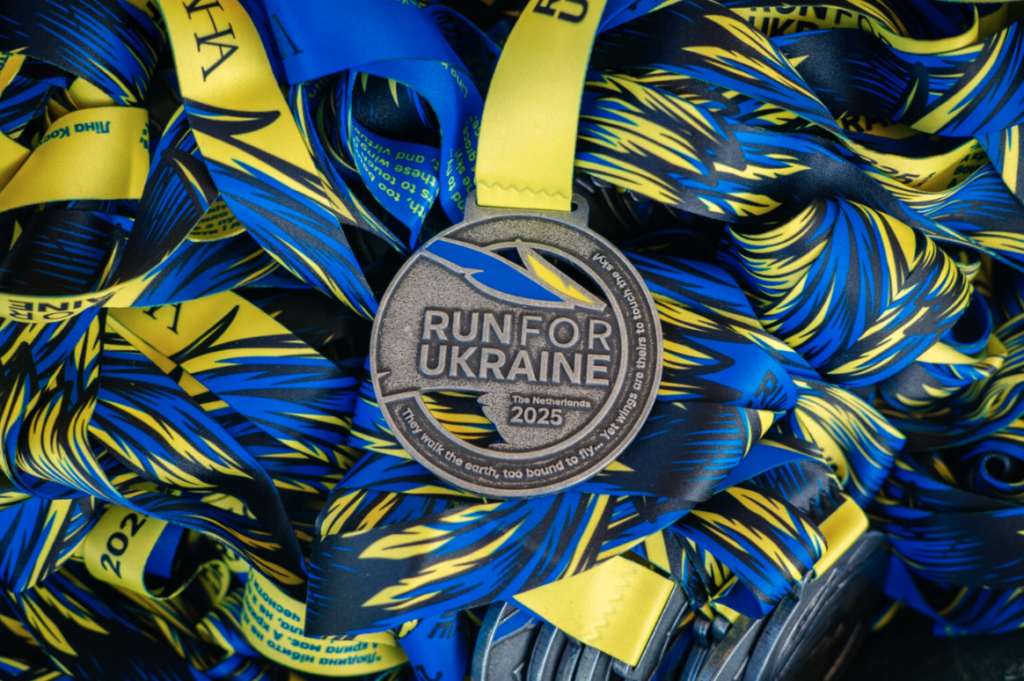
The following year, Petrochko turned again to Kostenko and her 1958 poem “Wings:”
They walk the earth, too bound to fly…
Yet wings are theirs to touch the sky!
Not feathers craft these wings of grace,
But truth, and trust, and virtue’s trace.
Kostenko’s poem imagines human wings formed not of feathers but of trust, truth, virtue, love, dreams. Petrochko’s design, which incorporates a pair of wings blooming from the medal itself, gives those invisible forces a visible form.
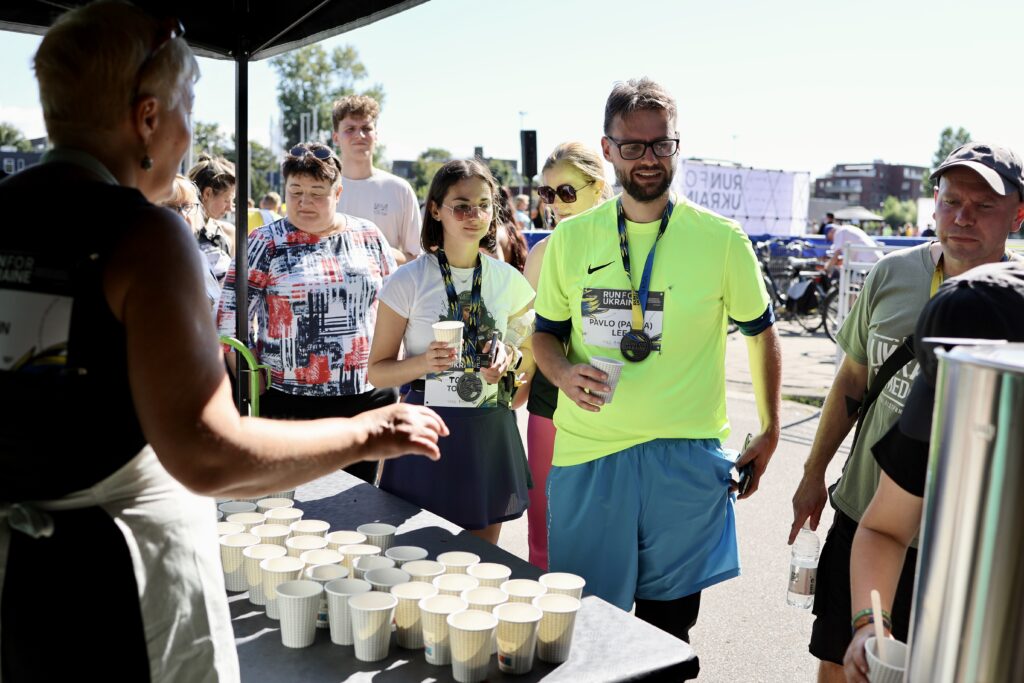
The medals’ production added another layer of significance, less immediately visible: they were made in Zaporizhzhia, where life and industrial work have continued amid attacks and disruption, and each contained a small piece of steel from Azovstal.
It’s an object that gestures in several directions: towards flight, but also to the physicality of metal; towards freedom and to the material effort of continuing to work and create through war.
2026 “Only to struggle means to live”
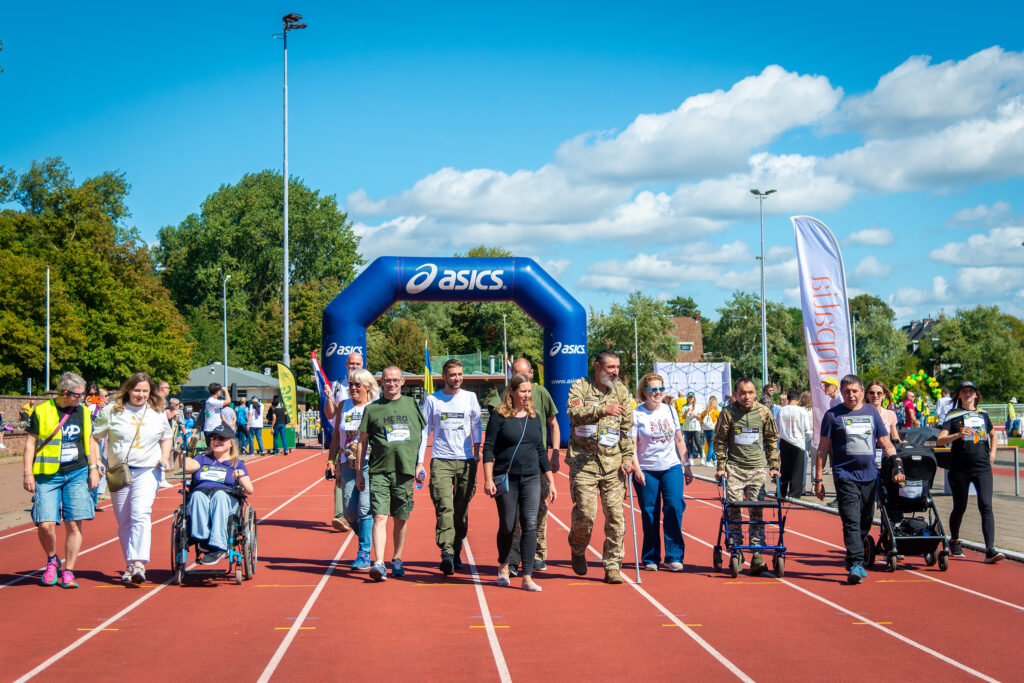
This year, the Run for Ukraine medal honours Ivan Franko. It bears a line of poetry that could almost serve as a command:
Only to struggle means to live. Vivere memento.
Remember to live.
Franko is one of the towering figures of Ukrainian literature and culture. His writing is familiar to generations of Ukrainians; his portrait appears on the 20-hryvnia banknote; his legacy is inseparable from the defence of Ukrainian language and identity.
Franko wrote in Ukrainian, and proudly and publicly wore a Vyshyvanka, at a time when assertion of that identity could bring censorship, imprisonment, or death. August 27th marks the 170th anniversary of his birth.
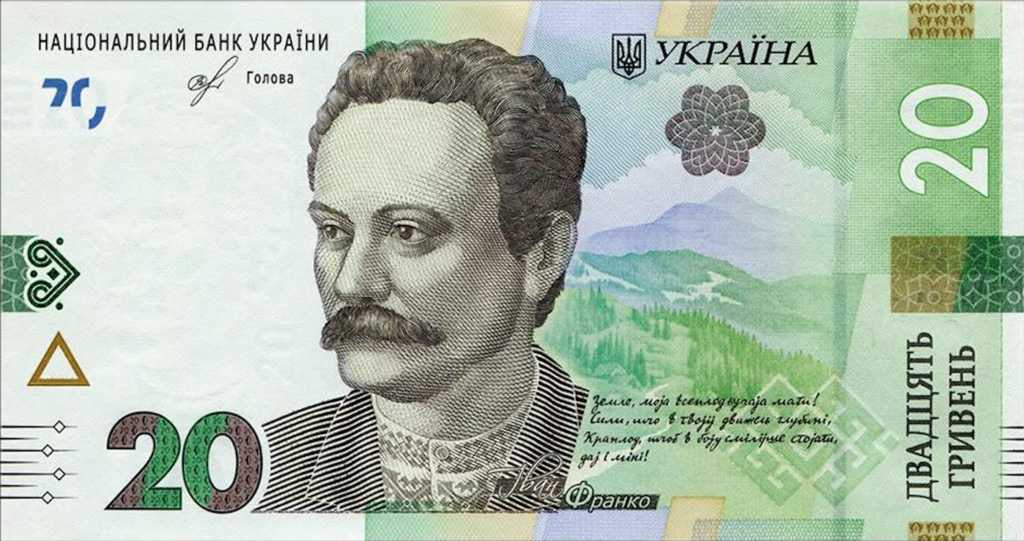
Petrochko, who once again created the design for the medal, has worked these details into a medal that reads like a mini landscape of Franko’s life. On the front, the Carpathian mountains are reflected in water, recalling the landscape of the region where he was born. The reverse side reveals the embroidery pattern of a vyshyvanka that Franko himself wore.
Petrochko incorporated a small Ukrainian flag into the design, marking the fact that this year’s run takes place on Ukraine’s National Flag Day.
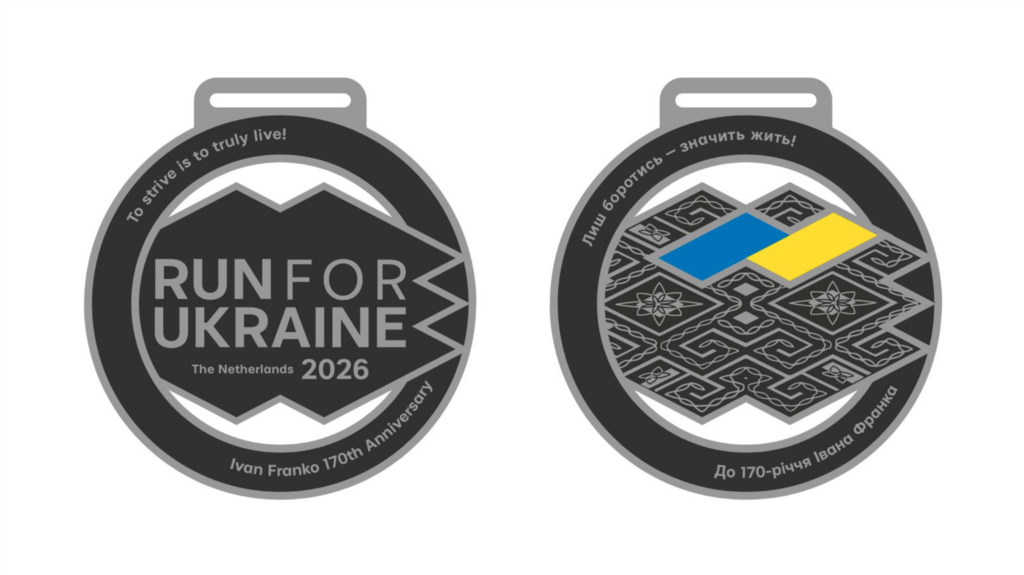
After the endurance of 2024 and the wings of 2025, the 2026 medal brings the series to the idea of struggle as proof of life. Franko’s words connect the present war to a much longer history in which Ukrainian culture has had to insist on the right to exist.
Each Run for Ukraine medal signifies a distance covered. Together, they tell a story that does not yet have an ending, a story of carrying memory and grief forward, of protecting culture against erasure.
Five years is enough time for an event to become a tradition. It’s also far too long for the violence that made the tradition necessary to continue.
Register for Run for Ukraine 2026
This year, Run for Ukraine will be taking place in The Hague on 23 August, 2026.
Registration is now open!
For practical information on the day-of, frequently asked questions, and more information about this year’s event, check out Run for Ukraine 2026.