
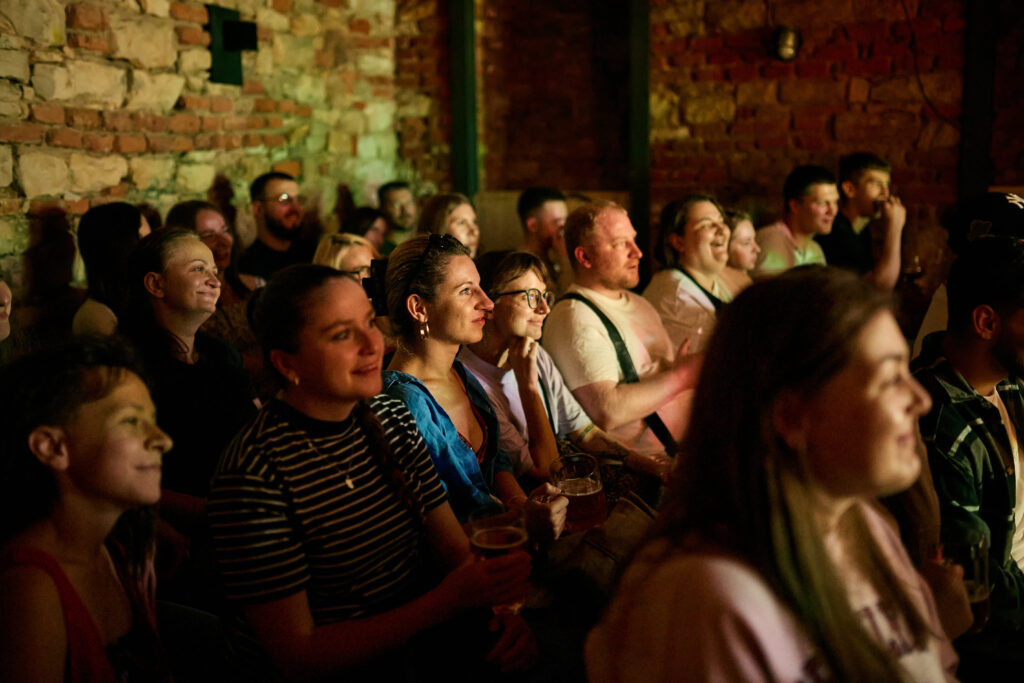
Ukrainians allow themselves to make jokes on every occasion, says stand-up comedian Hanna Kochegura.
“No matter what is happening, even at the end of times, Ukrainians would be making memes and jokes. Comedy creates a space, where we all can come together and laugh despite all the hardships. My goal is to create a safe space where we all can relax and unwind as much as possible.”
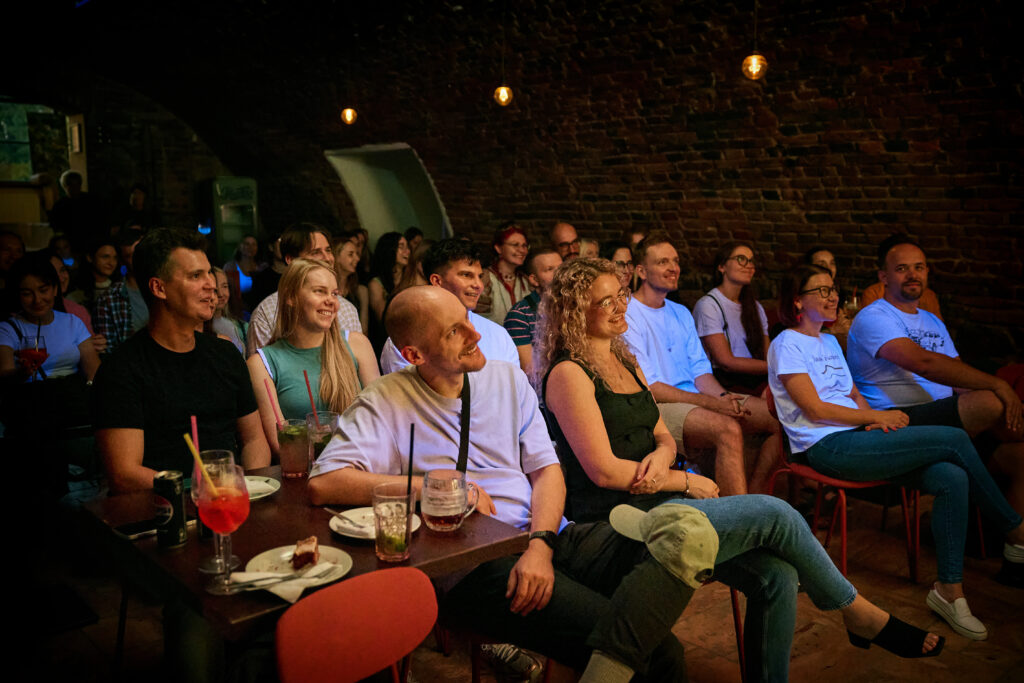
VATAHA’s event organizer Nadiia Davydenko took the initiative in 2022 to organize comedy shows in the Netherlands for Ukrainians abroad. Her efforts have grown into a 2 million Euro fundraising project for Ukrainian defense aid, VATAHA’s most remunerative project. Since the full-scale invasion, Nadiia has organized over 20 Ukrainian comedy shows in Amsterdam and Rotterdam, with up to 200 guests per night.
How do Ukrainian audiences in Ukraine versus Ukrainians in The Netherlands react to different jokes and skits? In part two of this interview series, we discuss crowd work (unscripted interaction with the audience) with Ukrainians abroad and at home, the impact these donation-based shows have had on the Ukrainian community, and the comedians’ motivation to continue their performances.
Varying views on crowd work
My six interviewees differed in opinion when asked whether crowd work with Ukrainians in the Netherlands varies from crowd work with Ukrainians in Ukraine.
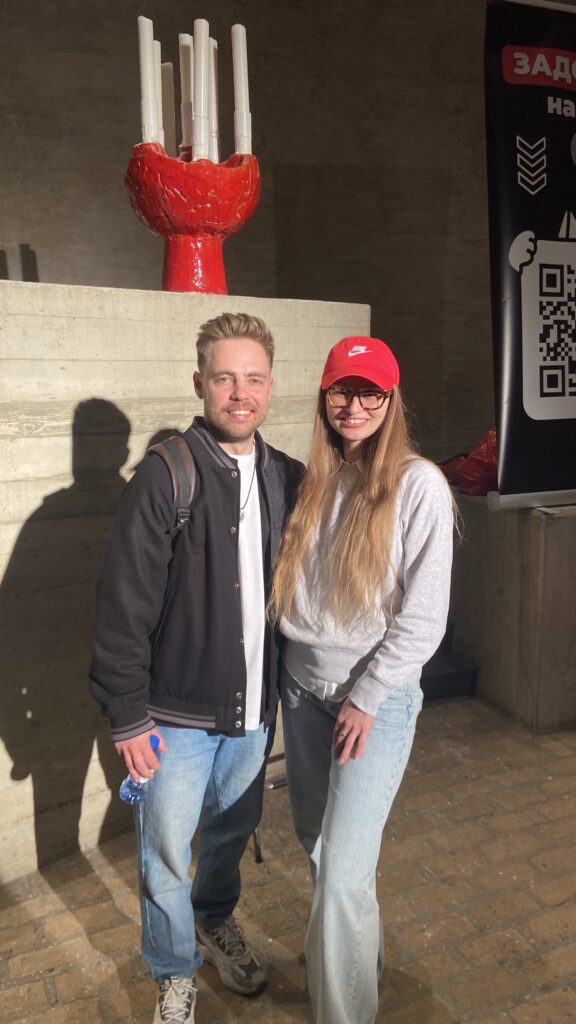
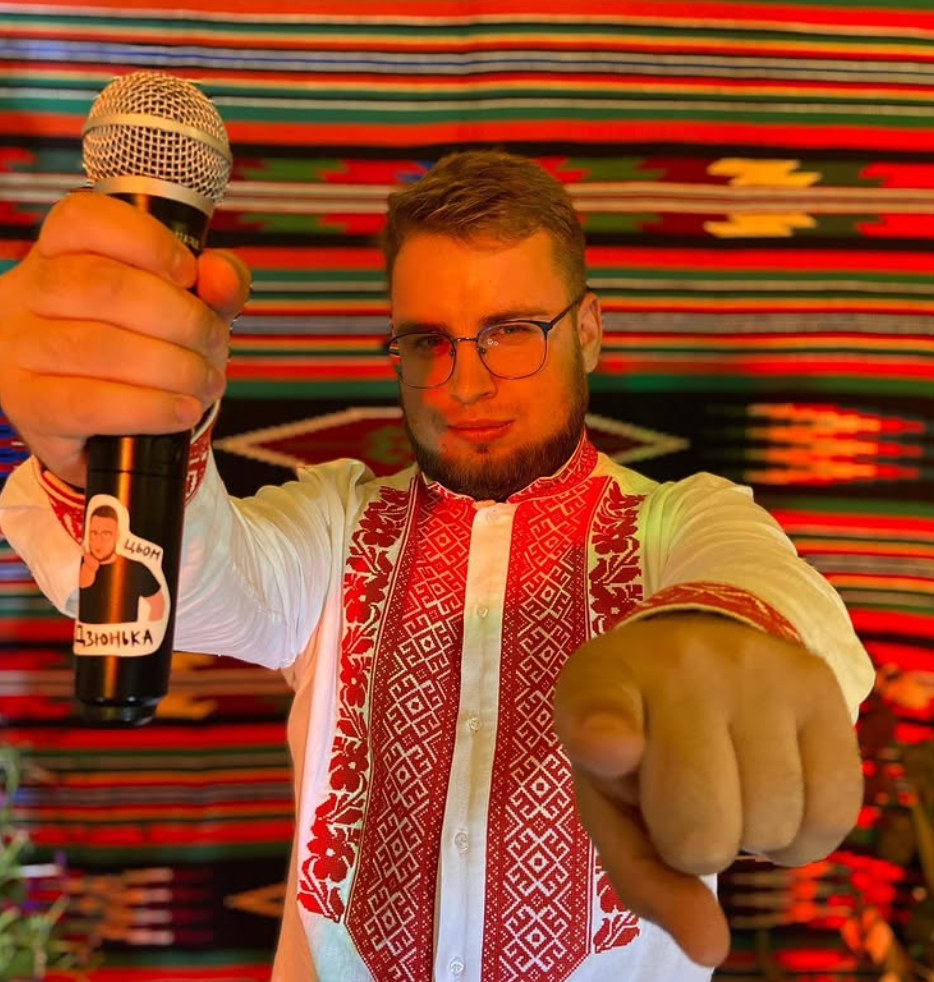
Vadym Dzyunko and Anton Tymoshenko agreed there is no difference. “The perception of jokes is the same, the reaction to jokes is the same,” says Vadym. “If a joke is funny, a Ukrainian will laugh at it anywhere in the world.”
Anton views Ukrainians in Ukraine and abroad as the same people with the same problems. “Because war affects you one way or another, no matter where you are in the world, if you are Ukrainian. Ukrainians in Ukraine and Ukrainians abroad are traumatized in exactly the same way.”
Slightly more sensitive abroad
In Hanna Kochegura’s and Lana Chubakha’s respective performances, they both shared that Ukrainians in Ukraine laugh more at jokes about bomb shelters and shelling than Ukrainians abroad do. “I think it has to do with the fact that this experience is somewhat more relatable for [Ukrainians in Ukraine],” says Hanna Kochegura.
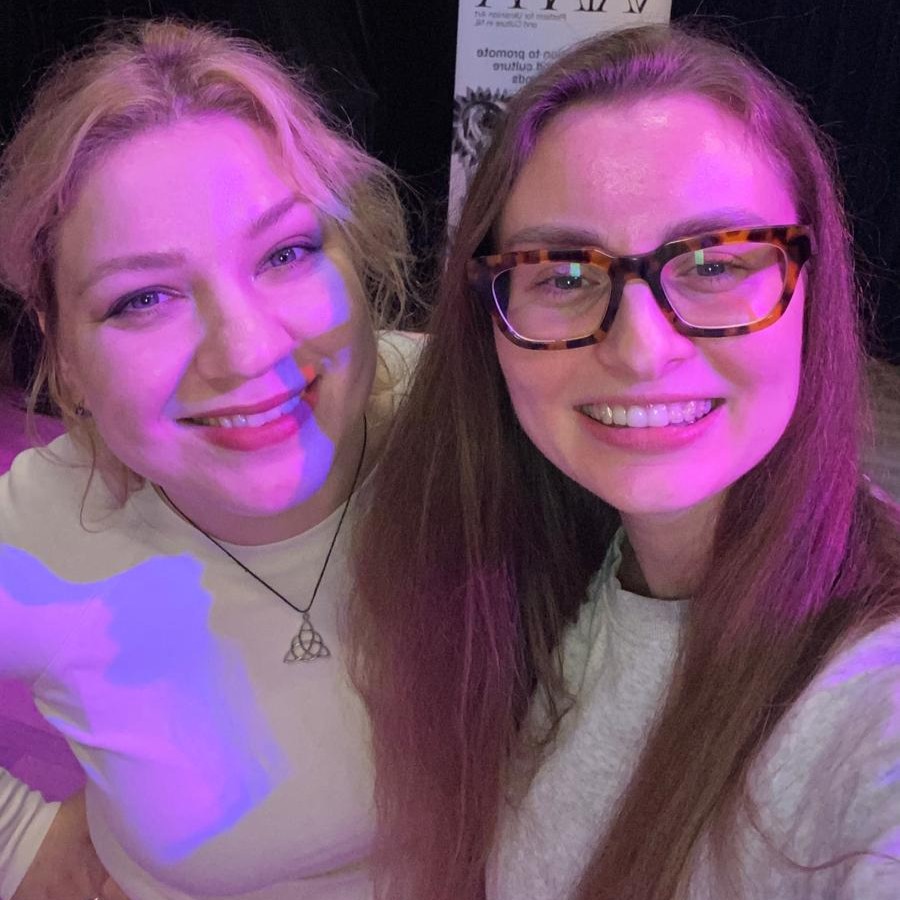
Lana Chubakha agrees that Ukrainians in the Netherlands can be more sensitive to certain jokes that would get a different reaction in Ukraine. “For example, my segment about troop rotation in the south is not meant to scare or upset people because of the living conditions of the soldiers, but rather to inspire donations and support for the defense forces.”
Major differences
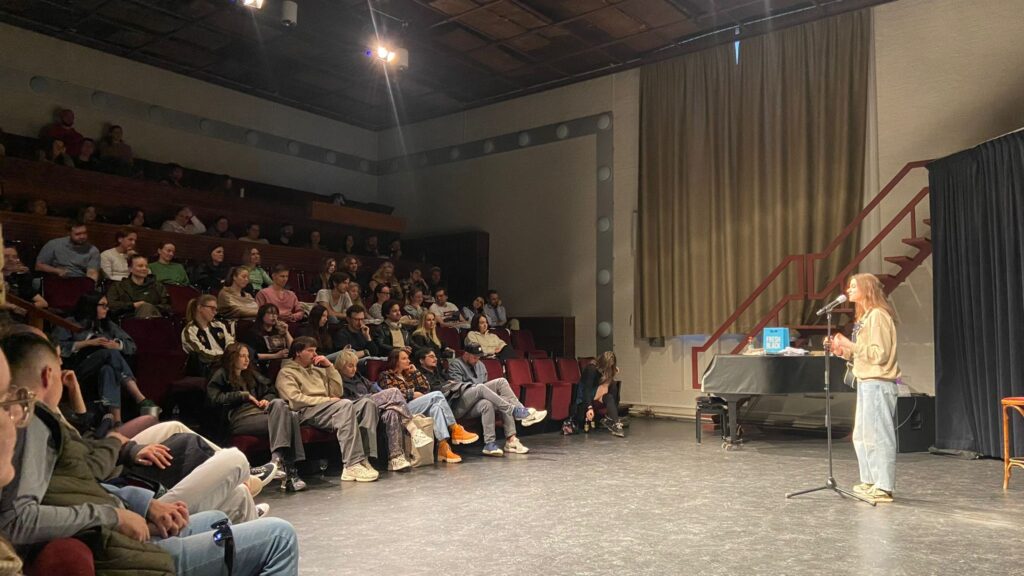
Vasyl Baydak and Svyat Zagaikevich emphasize that Ukrainian audiences are “profoundly different” from home audiences. For example, when Vasyl performs in Ukraine, he talks about drone attacks in Kyiv more calmly than he does abroad. “Because when I perform outside Ukraine, I understand that people carry an additional layer of fear.”
Displaced Ukrainians’ war experiences are inevitably essentially second-hand and dependent on media sources, whereas Ukrainian residents physically make their own experiences. “It’s a question [Ukrainians abroad] ask themselves: Do I have the right to laugh at something I don’t experience every day?”
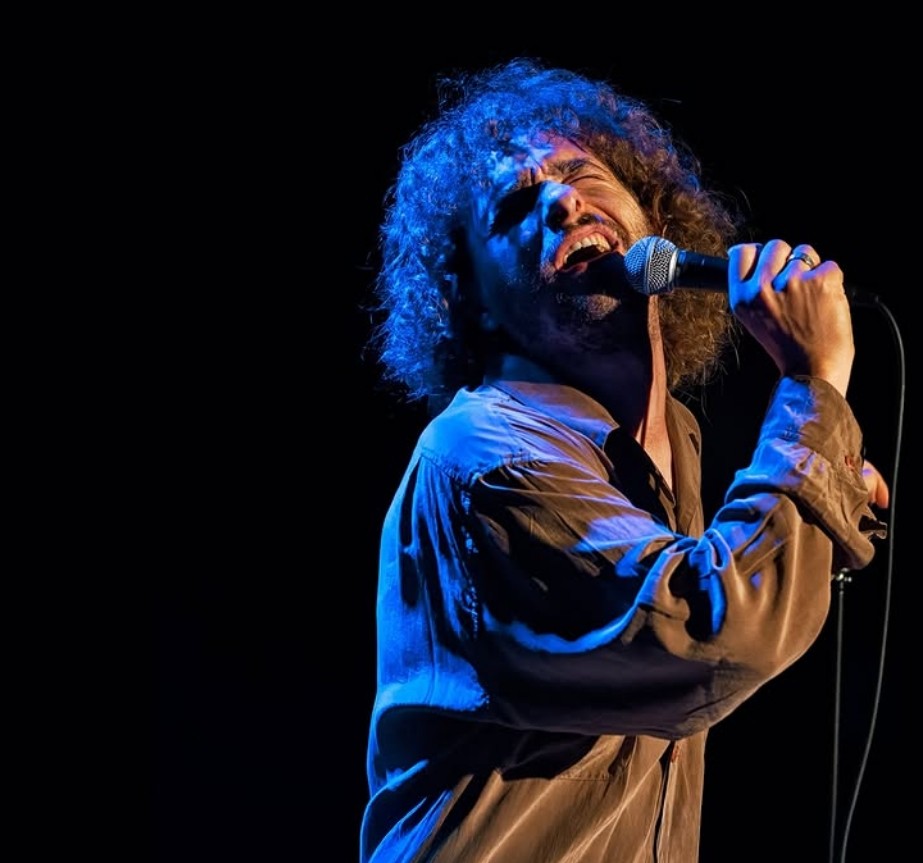
Outside of Ukraine you can really feel how much the audience misses something “familiar,” or “their own,” adds Svyat Zagaikevich. “And then they see someone on stage who came to them, but just a few days earlier heard the sounds of shelling. They want to hear about my experience and see that, despite everything, life goes on. Or simply dive into sweet nostalgia for their homeland.
“You often meet people who constantly watch me on YouTube, and to them you’re practically a relative who’s finally come to visit: ‘Tell us everything!’ they say. In Ukraine the audience treats you more calmly, but they share the wartime experience with you—and it’s easier to meet them more often.”
Impact of donations
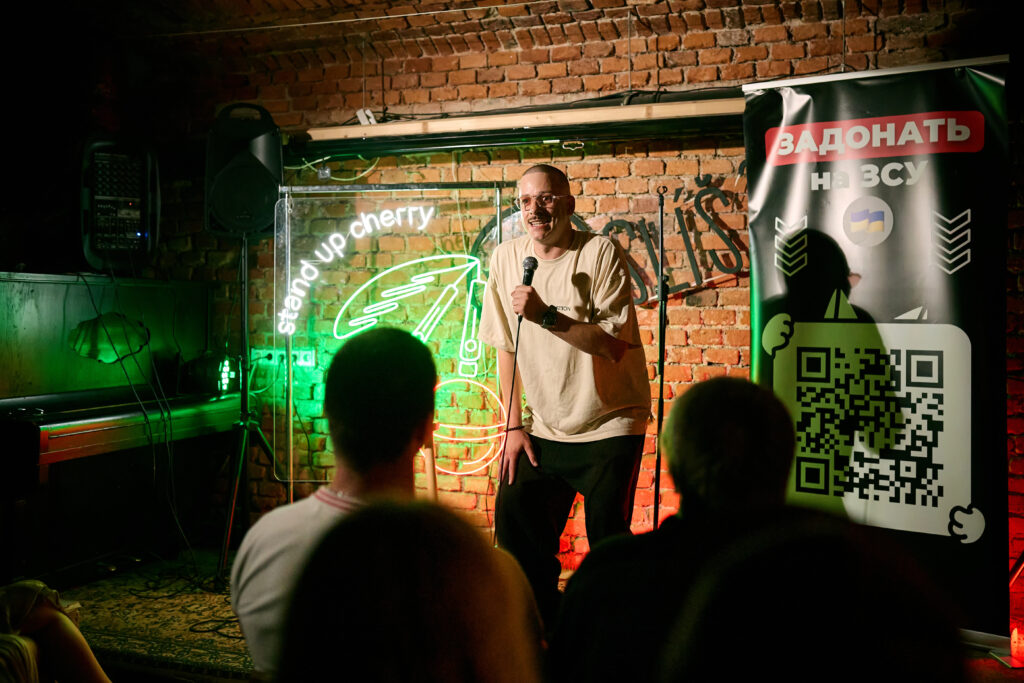
Regardless of the size or location of each comedy performance, all shows host an auction to raise money for the Ukrainian defense forces.
“One of the most unforgettable moments was when Anton Tymoshenko sold plastic transparent wrappers for €400 each—it was incredible to see how the audience played along with the comedian,” shares VATAHA’s event organizer Nadiia Davydenko.
“Another highlight was when Vasyl Baydak auctioned 10 items at once—truly a spectacle to witness. So, sometimes, even the auction itself becomes one of the most memorable parts of a performance!”
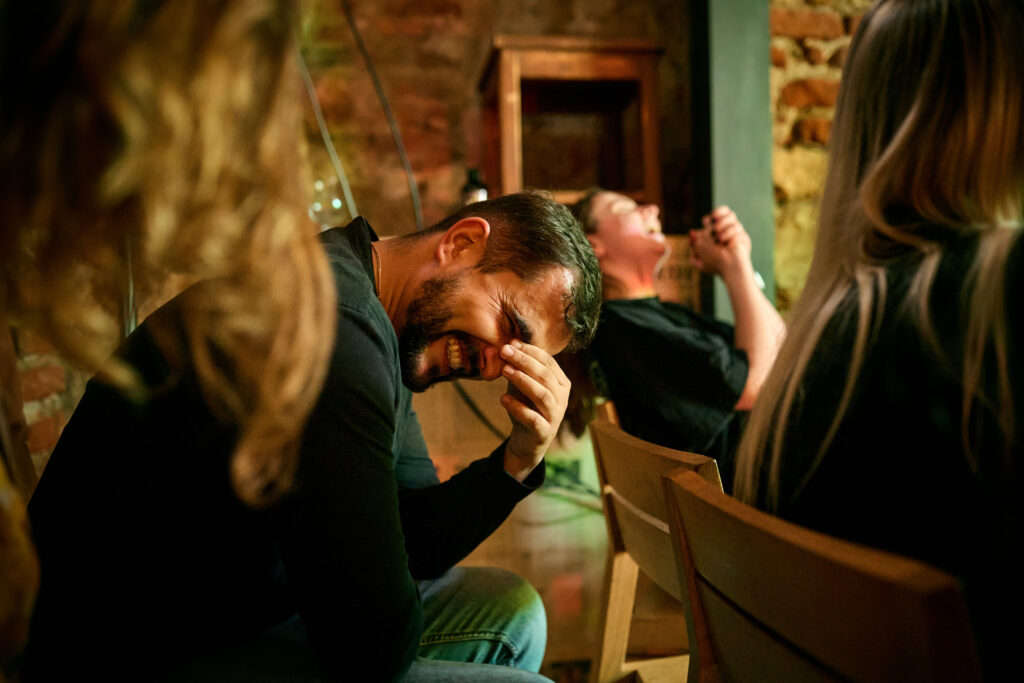
All six comedians resonated in a profound need to not only use comedy as a community building function, but also an international fundraising campaign. “We collect strong European currency — or [US dollars], or whatever country we’re in — bring it back to Ukraine, and use it to buy essential [military defense] equipment that can help us survive this war,” explains Anton Tymoshenko.
“It is touching to realize that even after moving abroad, people continue to support the army, maintain their mental strength, and spread awareness about the war,” Lana Chubakha shares. “Their presence at our charity performances and their active participation in auctions only confirm one thing: no matter where Ukrainians are, they are united.”
Vasyl Baydak concludes: “Building a Ukrainian community across the world is incredibly important, because it spreads Ukrainian narratives and Ukrainian realities globally. It is, in its own way, a fight against russian propaganda—even if it happens in a small 7-by-7-meter room. But it’s an important fight, one that contributes to a broader victory of the Ukrainian narrative in the world.”
If you missed it, read Part One of this two-part interview series, where the same interviewees share how crucial their work is to not only raising donations but also morale.
All six interviewees’ socials here:
Special thanks go to Nadiia Davydenko, for her reporting and conducting the translations from Ukrainian into English, and to IB Promotion, for organizing every tour for each comedian.