
In Lyuba Yakimchuk’s poem “Decomposition” (2014), which we’ll look more closely at below, we see a city disappear through syllables. Luhansk becomes “hansk,” a name partially erased in front of the reader’s eyes. War, in these lines, doesn’t arrive as a spectacle. It enters the language itself until the name of the city starts to break apart.
War poetry is often imagined as a poetry of impact, of “big” things, of loud things. A blast, a charge, a hero. Some of the most arresting Ukrainian poetry of this century moves in the opposite direction. These poets and their work show the impact of war on language, memory, on ordinary folks and their ordinary habits-of-living. They work in worlds of erosion, or attempted erosion, and the continued endurance of resistance against it.
The body appears under strain: sleepless, displaced, aged, foreign to itself. Language becomes unstable, as if war has entered and occupied the written word itself. Home isn’t a settled and impermeable fact but an injured category, fragmenting into versions of defended, mistrusted, cracked-open. And memory becomes a task.
russia’s war has threatened archives, libraries, and books, many of the material conditions of cultural memory. Writing, in this context, isn’t symbolic resistance. It’s one of many ways of refusing disappearance and keeping names, places, history, tradition, and language from being lost.
There is, too, a long tradition behind this work. Ukrainian poetry has often been written under pressure, and shaped by questions of identity, language, and survival. The line runs, however selectively, from Taras Shevchenko through Vasyl Stus and into the work of Lina Kostenko, poets for whom language has never been separable from political life. The four contemporary writers that are considered in this article (Serhiy Zhadan, Iya Kiva, Ostap Slyvynsky, and Lyuba Yakimchuk) inherit their tradition and test it under familiar, though modern, conditions (occupation, displacement, bombardment).
Serhiy Zhadan
Serhiy Zhadan, born in Starobilsk (1974) and based in Kharkiv, offers one of the clearest expressions of continuance under strain.
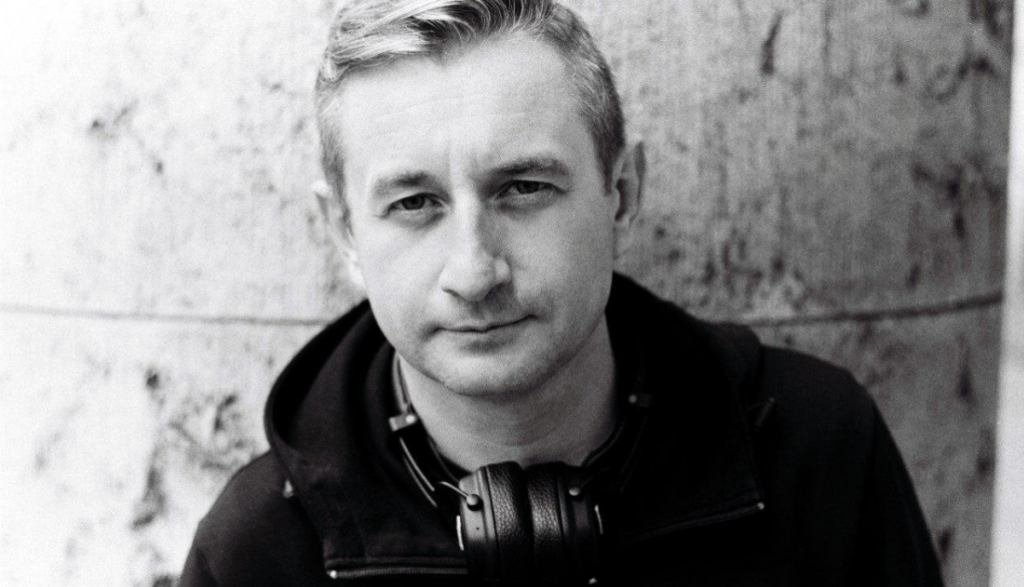
Zhadan is among the most widely read contemporary Ukrainian writers. His work rarely treats war as abstraction, and instead holds it close to all the textures of daily life, with its usual interruptions and repetitions.
In “A bridge used to be there, someone recalled” (2019), a loss of infrastructure becomes a problem of memory. The bridge, no longer existent, survives as recollection. It is spoken about and remembered in its absence. The poem moves through checkpoints, patrols, and moments of bodily awareness:
Today you’ll still wake up in a room
listening carefully to your body.
Today you’ll still be looking at the steel mill
standing idle all summer.
Zhadan lowers emotion until a sense of dread starts to feel ordinary.
Lines like “Home that is always with you like a sin / Parents that will never grow older.” upset some lucky assumptions often permitted about home, time, and family. Home isn’t a refuge, and the time of those we are tied to can be cut short. Later in the poem, the phrase “whomever you call your people” reveals another fracture: war doesn’t divide only territorially, but cuts into identity and belonging.
Zhadan gives us forms of continuance and of routine (and work, and family, and other mundane-not-mundane cycles). The moon shows up every night and insects still spark human irritation. But this continuance is damaged; it holds a heavy weight on its shoulders.
And the world doesn’t end. In fact, its persistence becomes its own kind of violence. Zhadan’s work bears witness by showing how war settles into perception, how it becomes part of the air people move through, the way they speak, the bodies they inhabit.
Iya Kiva
Born in 1984 in Donetsk and displaced in 2014, Kiva writes out of a condition in which home is no longer stable, nor fully legible.
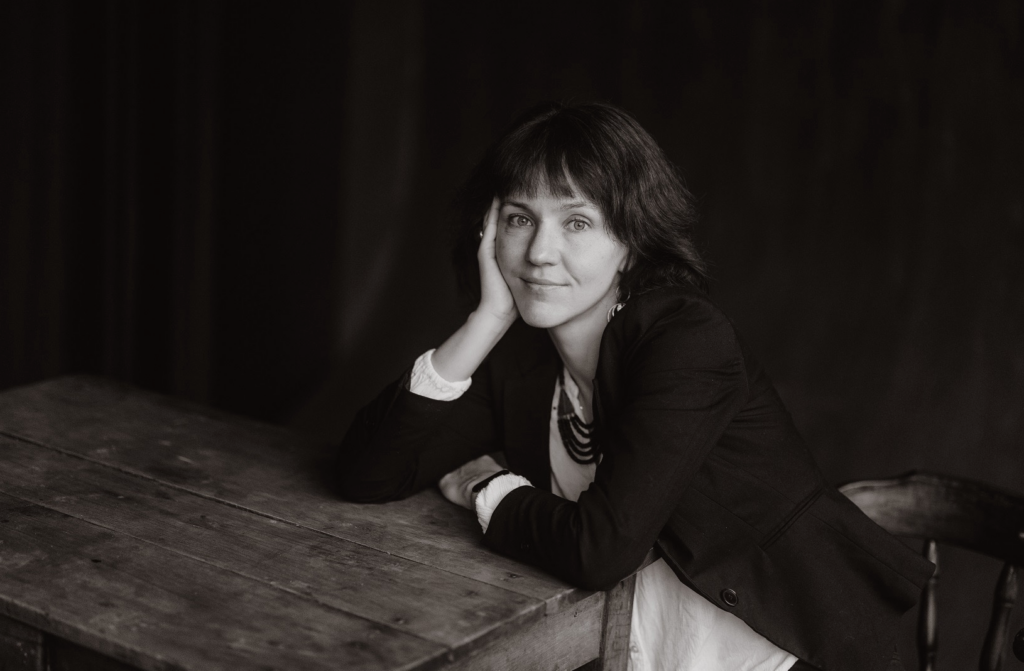
Her poem “Ilya” functions as a kind of intimate address, arguably part accusation and part reflection, while still attempting to locate itself within a moral landscape that has been fractured.
The poem opens with the demand: “Why did you orchestrate a war at home / and run away to more normal cities—”. We become immediately aware that war isn’t abstract or distant but internal and proximate. It is also entangled with some level of responsibility as well as personal relationships.
The speaker moves “along walls of guilt,” and the line “some people live in it / and they call my life a home as if it were alive” unsettles the very definition of home. It is something others name, sometimes inaccurately. It’s something that may no longer sustain life.
Kiva’s work moves through themes that echo across contemporary Ukrainian poetry: testimony, memory, fluid and unsettled ideas of home, and the effort (and exhaustion) of maintaining identity under pressure. One of the things that distinguishes her is the inwardness of that struggle. War appears as both an event and atmosphere. It is something that reshapes thought and belonging. This poem doesn’t resolve that instability, but in staying with it fossilizes it so as to preserve it in time.
Ostap Slyvynsky
Slyvynsky (b. 1978 in Lviv) is a translator, literary critic, essayist, as well as poet, whose work often reveals the way “bigger” political violences infiltrate and register in small, intimate moments.
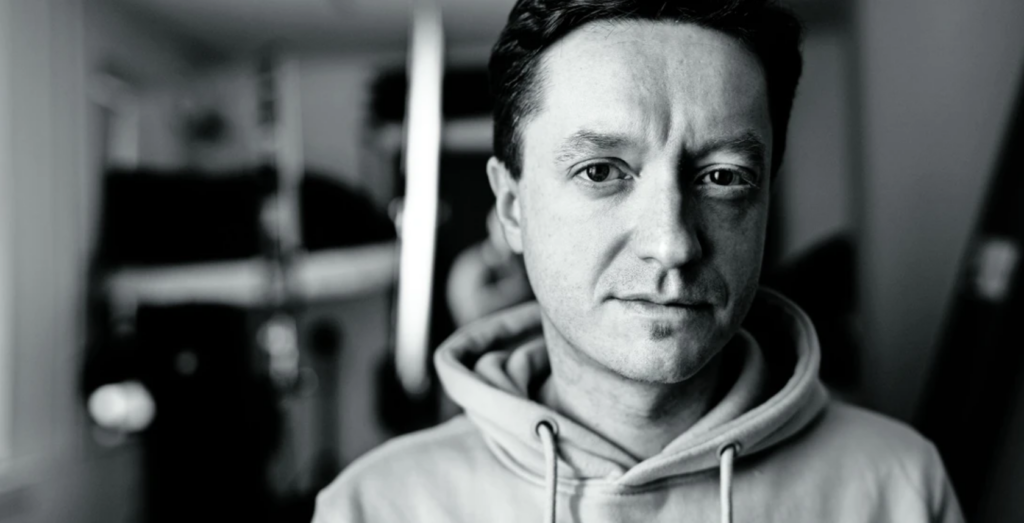
“A Scene From 2014” begins with recollection: a man returning from a night shift, “almost invisible / in the dark,” his body merging with coal dust. “Did he simply dissolve one night?” the poem asks (a question with no response).
A child runs, trips, and falls while carrying a sack of flour:
his sneakers fly up high
in the heart of a little white cloud —
so white, this explosion,
she says, so quiet.
The word “explosion” doubles itself here. It is not forceful or spectacular. It’s flour – it’s soft, almost weightless in this context. Of course the implicit association lingers. War has entered perception to the point that even a small accident is read through its vocabulary.
Slyvynsky’s work doesn’t insist on the extraordinariness of war. It shows how it reshapes seemingly unrelated moments. There isn’t a resolution to this tension. There is flour in the air; there is a child; there is the everpresent reminder that the world is changed.
Lyuba Yakimchuk
Yakimchuk, born in 1985 in the Luhansk region, has written extensively about the Donbas and the transformations brought on by war.
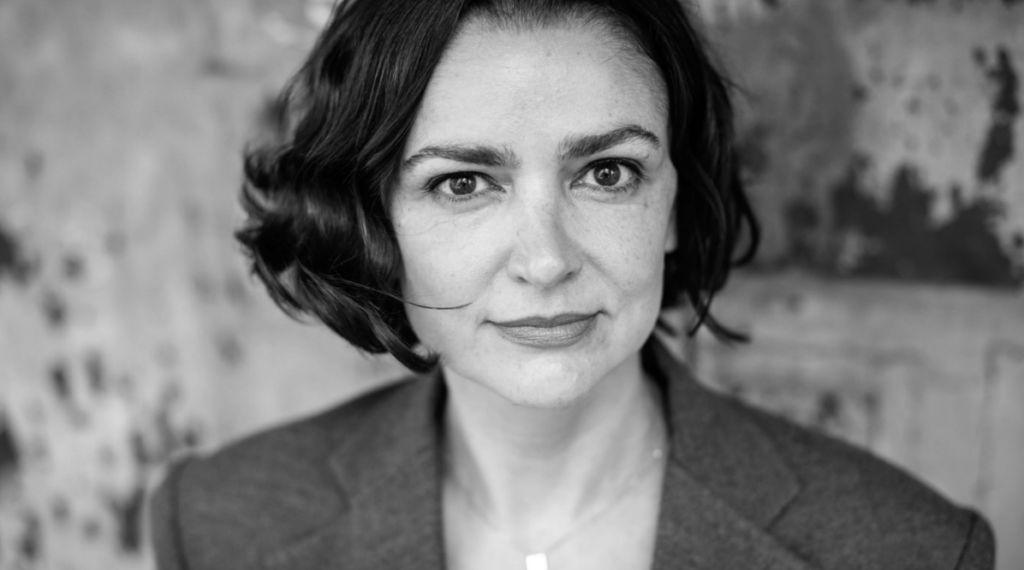
“Decomposition” stages that transformation at the level of language: “Don’t talk to me about Luhansk / it’s long since turned into hansk.” The loss, of/in Luhansk, is linguistic as well as geographical and human. The name itself is broken and partially erased. Pervomaisk is similarly “split into pervo and maisk,” and the speaker becomes “no longer Lyuba / just a -ba.” Yakimchuk shows, on the page itself, how war breaks apart not just places but identities, reducing them to syllables or remnants.
The poem also turns, sharply, on poetry (and, to some extent, language) itself:
Yet here you are, writing poems
ideally slick poems
high-minded gilded poems
This passage points to a kind of writing that would remain untouched by what it claims to describe. Yakimchuk refuses that distance: “There’s no poetry about war / just decomposition.” If there is no poetry about war in the sense of “proper” representation, there may still be poetry that undergoes its pressures; poetry that records breakdown by breaking.
Language doesn’t disappear, but it is altered. It carries the mark of what has passed through it.
Not the explosion, the aftermath
Read together, these four poems pull us toward a shared set of concerns: endurance, memory, language, and the effort to preserve what war (and this war in particular) threatens to erase.
They offer continuation and testimony. Zhadan traces the slow normalization of violence in daily life. Kiva writes the interior dislocation of a home that no longer holds as it once did. Yakimchuk lets language crack under pressure. Slyvynsky captures the way war lingers in perception.
To call these writings a way of “fighting with words” makes sense, as long as the phrase is understood in a particular way. These words sustain; they hold on to the things that are at risk of disappearing. This is also what VATAHA Foundation works to uphold, and why we aim to highlight both Ukrainian tradition and contemporary Ukrainian artistic production: not through far-away observation, but as a way of staying in continuous relation with voices actively resisting erasure, and working to give space to these voices.
Further reading, viewing, and making with Ukrainian artists: