
In Ukrainian tradition, spring is never just a change in weather. It is something people prepare for, call in, decorate for, and make tangible with their own hands. The spring cycle is full of acts that turn renewal into reality: homes are adorned before major feast days, ritual bread is baked, Easter eggs are decorated, birds appear in song and ornament, and everyday materials become carriers of blessing, memory, and hope.
These customs are not separate “crafts”, but part of a seasonal worldview in which the household, the land, the dead, and the living all had to be brought back into harmony at springtime. This is what makes the upcoming VATAHA spring training workshops feel so coherent. The Donetsk pysanka Easter eggs, the printed Polissia vybiika, and the Hutsul bird – kukutsy – each belong to a different region and medium, yet all three emerge from the same cultural logic: spring must be marked through artisanal craft.
Donetsk pysanky: a written language of spring
Among Ukrainian spring traditions, the pysanka remains one of the most concentrated and meaningful forms. It is often viewed today as just a meticulously painted Easter egg, but the materials behind this workshop point to something much deeper: Originating in pre-Christian traditions, the pysanka was historically understood as a symbolic vessel, carrying wishes for health, fertility, protection, and abundance. Upon the adoption of Christianity, pysanky became associated with Easter.
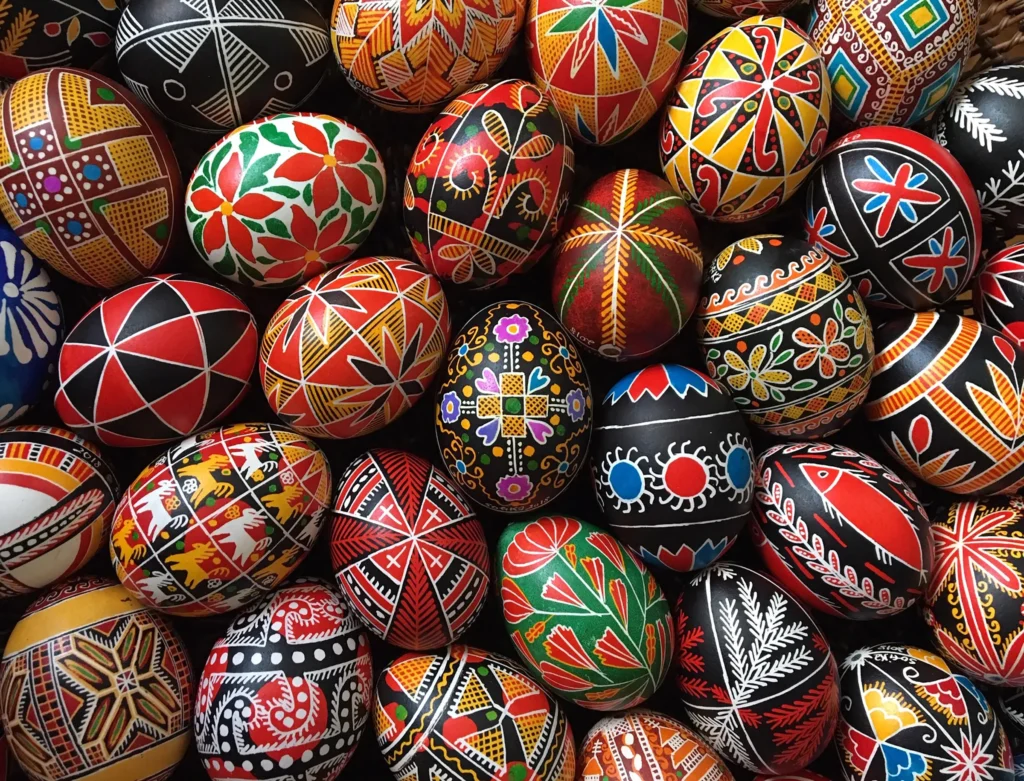
During Soviet rule, pysanky were suppressed, ostensibly due to their religious significance. However, another theory by Orysia Paszczak is that “Because the russians do not have pysanky in their tradition, this was one folk art that they could not claim as their own, the way they have done with so much of Ukrainian heritage.”
Across Ukrainian tradition, the ornament of the pysanka developed as a visual language of cosmological signs: solar forms, waves, crosses, spirals, plant motifs, and gridded or comb-like structures all point to a world in which the egg becomes a small model of order, growth, and seasonal return. In that sense, the pysanka is not simply decorated; it is written. The hand traces a set of inherited signs onto a living form, and, through that act, spring becomes visible and meaningful.
This is especially important when we speak about Donetsk pysanky, whose region has its own regional vocabulary of motifs throughout eastern and southern Ukraine. For example, very common are wave or sigma signs, related to water. Similarly, it was common to include some signs of clouds and rain, looking like a small rake.
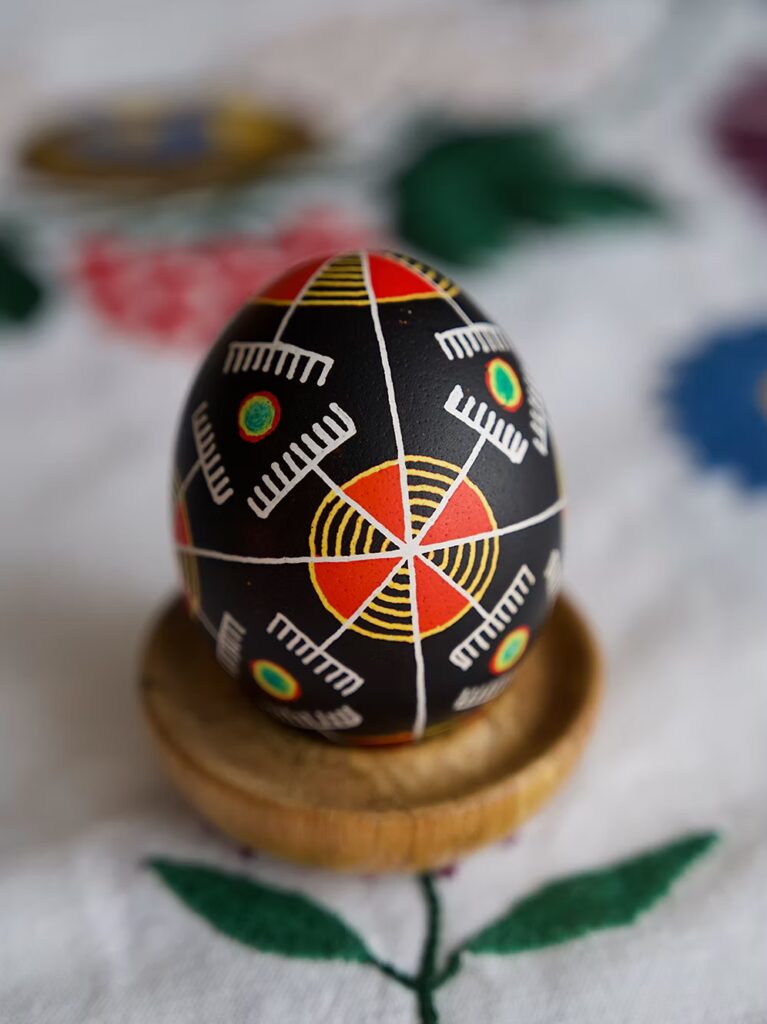
Revisiting and painting Donetsk pysanky means resisting the flattening idea that “traditional” Ukrainian ornaments belong only to the center or west. Donetsk pysanky are part of a full and sophisticated regional tradition of symbolic thinking, carrying local memory as much as ritual meaning. To make a Donetsk pysanka today is to work with one of the eastern voices of Ukrainian visual tradition, and to re-enter a seasonal practice in which protection and renewal were once held in the same object.
Stamping vybiika and the spring home
If the pysanka is a written tradition, vybiika is an imprinted one. Ukrainian spring customs consistently tie festivity to the transformation of the household: before important feast days, the home was prepared, cleaned, ornamented, and made ceremonially legible.
For example, it is known that in the Uman region of Ukraine, people used to create “printed” carpets on the walls. Practically, it was done by simply painting the walls with hand-made brushes with natural and improvised pigments, made out of coal, seeds or clay. As well, people would use the practice closer to vybiika, using natural plants as stamps. These decorations combined floral forms, birds, geometric grids, wreaths, and symbols like the tree of life, all of which carried not only decorative appeal but also protective and ritual meaning.
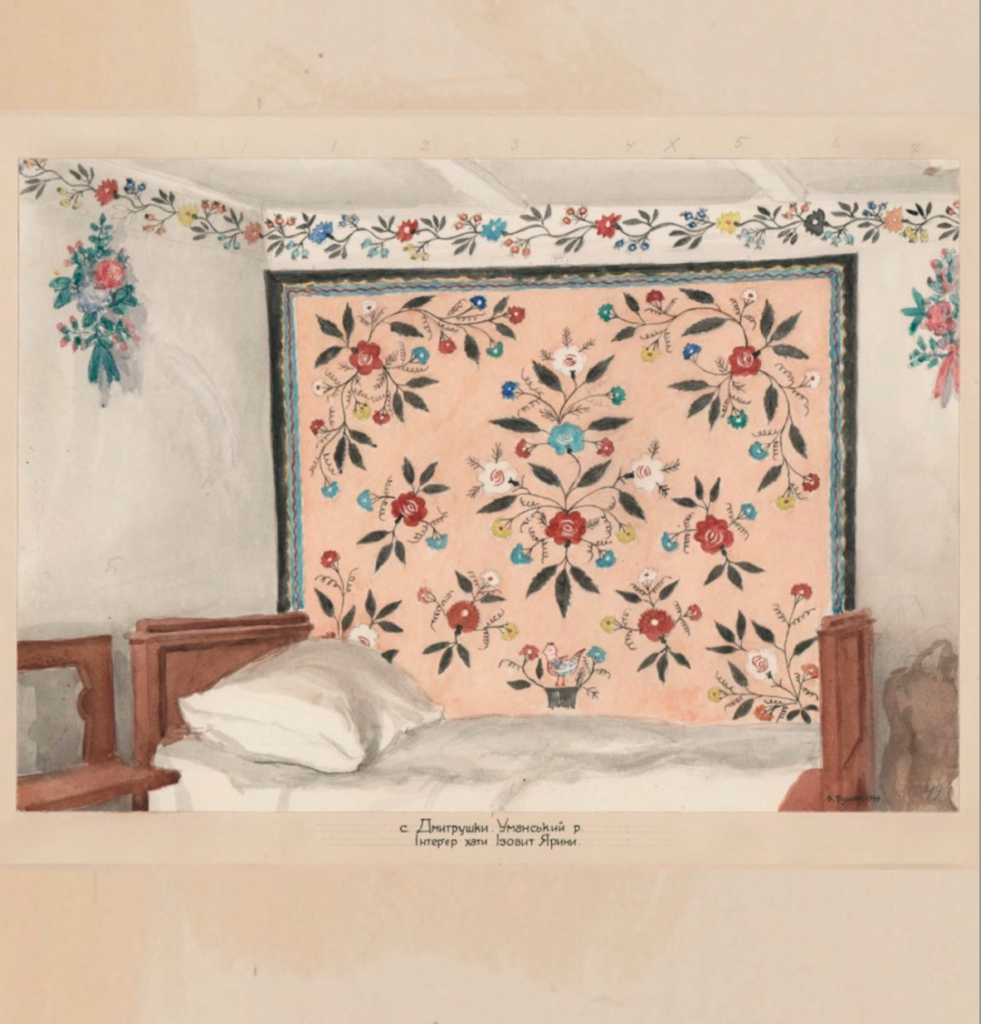
Painted carpets belonged to the spheres of both household function and ceremonial symbolism; they were about beauty but also about safeguarding and ordering domestic space. Similar to this practice, vybiika also works through repetition, rhythm, borders, and emblematic motifs. It transforms cloth into a marked surface, and a marked surface into a bearer of occasion.
As vybiika was born as a handmade craft in rural villages, it was threatened by the advent of industrial manufacturing. However, artisans revived the craft in the 20th century through workshops and practice.
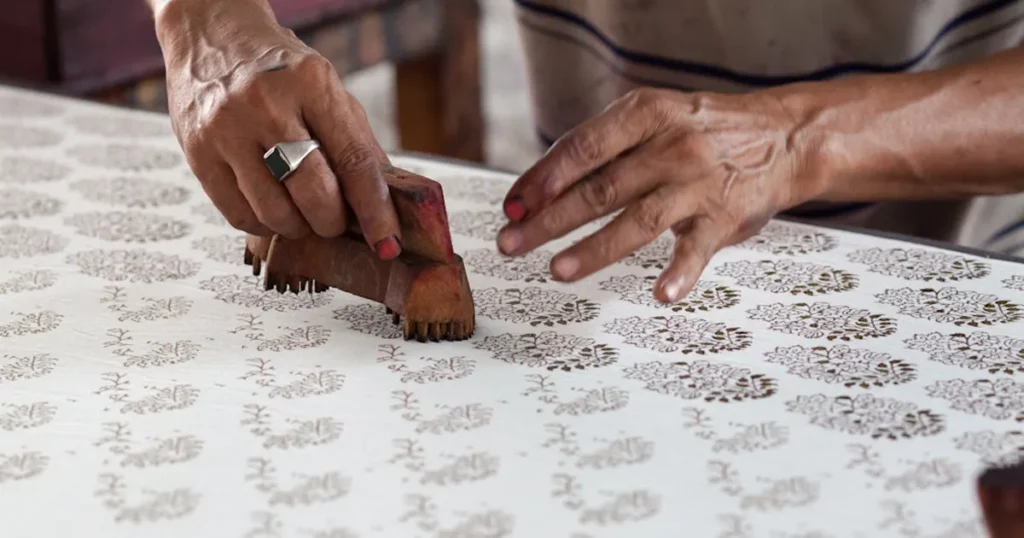
In that sense, vybiika is not just textile decoration; it is a way of organizing the festive home. For spring, this is especially resonant. The rushnyk becomes part of the seasonal task of preparing the world around oneself for Easter and for the return of life. Making one by hand becomes a way of entering a broader Ukrainian practice of making the home bloom through ornament.
Hutsul birds ‘kukutsy’: memory, children, and the return of life
The most moving part of this spring round may be the Hutsul birds, because it shows just how much can be held in a seemingly small, child-centered tradition. As the return of migratory birds signalled the beginning of spring, ancient Ukrainians baked these festive bird-shaped buns to help nature along.
Kukutsy are described not simply as little buns, but as ritual breads baked around Clean Thursday (the Thursday before Easter Sunday). They were given to children who go from house to house in custom known as vohnyky (вогники) in the Kosiv region or, in some places, heating the dido (гріти діда), where dido represents the connection between the generations, between the living and dead, and stands for kinship. The tradition is deeply layered. As some explain, it carries both pre-Christian and Christian meanings intertwined in the same custom.
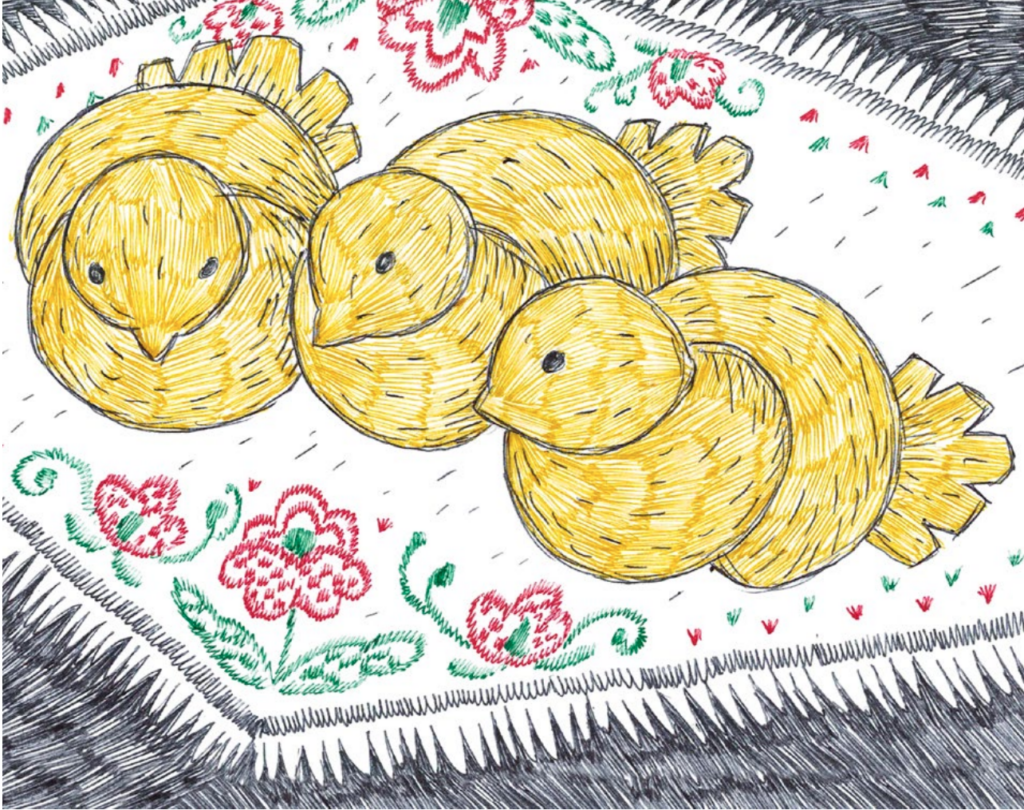
The recollections are especially valuable because they preserve not just a definition, but a lived texture of tradition. In various places across Ukraine, children are entering homes, sitting on benches, carrying baskets, visiting every household in a designated area, and receiving kukutsy, pysanky, sweets, and sometimes plain eggs, given for the health of livestock and protection from predators. In the village Horod of the Kosiv region, children crawl under the table and call out, “Tsiv-tsiv! Give us kukutsy!” In another, older children cry, “Heat the dido!” as they go in the evening before Easter.
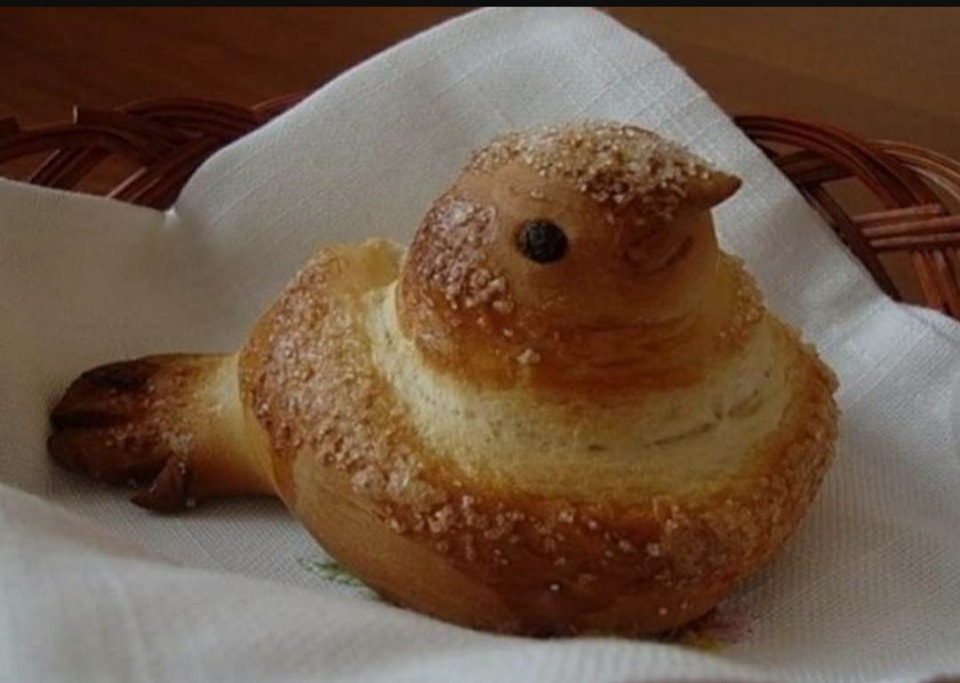
What is interesting is that kukutsy appear as both ritual food and social memory. Children wait for the day eagerly; there is even a saying, “One more night and then kukutsy.” Each household bakes many of them, sometimes sixty or seventy. Some are sweet, some lean; some are shaped like small buns, some like horns, crescents, or birds. One recollection explains that the little bird is made from two strips of dough crossed and twisted, with sacred meaning in the cross at its base; cloves can become eyes, raisins may be added, and one bird is sometimes hung from the stable roof or a large tree in the orchard for a good harvest.
Another memory notes that painted salt-dough versions could be made to last longer, even decorated with shiny candy wrappers on a string. The little bird is not only a pleasant spring motif. It is a form that links children to ancestors, prayer to baking, household generosity to the agricultural year, and playfulness to sacred structure. The Hutsul bird belongs to a spring world where food, gifts, ornaments, and blessings are one gesture.
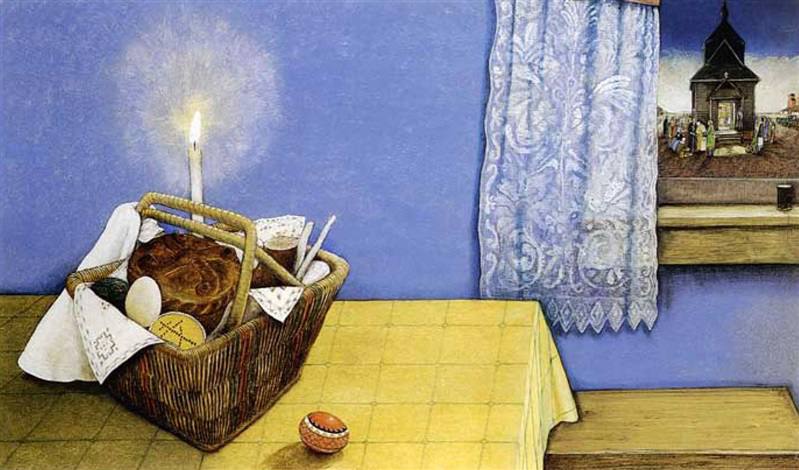
Pysanky, vybiika, and kukutsy together offer far more than a single regional variety of experiences in Ukraine. They show three ways Ukrainian culture has made spring visible, tangible and communal.
This article is part of the training program “Studio of Ukrainian Crafts,” organised by VATAHA in partnership with Ukrainian House Rotterdam and supported by the Ministry of Migration of the Netherlands. You can learn more about the open call here.
To financially support VATAHA in organizing these spring workshops, please consider making a tax-deductible donation here.