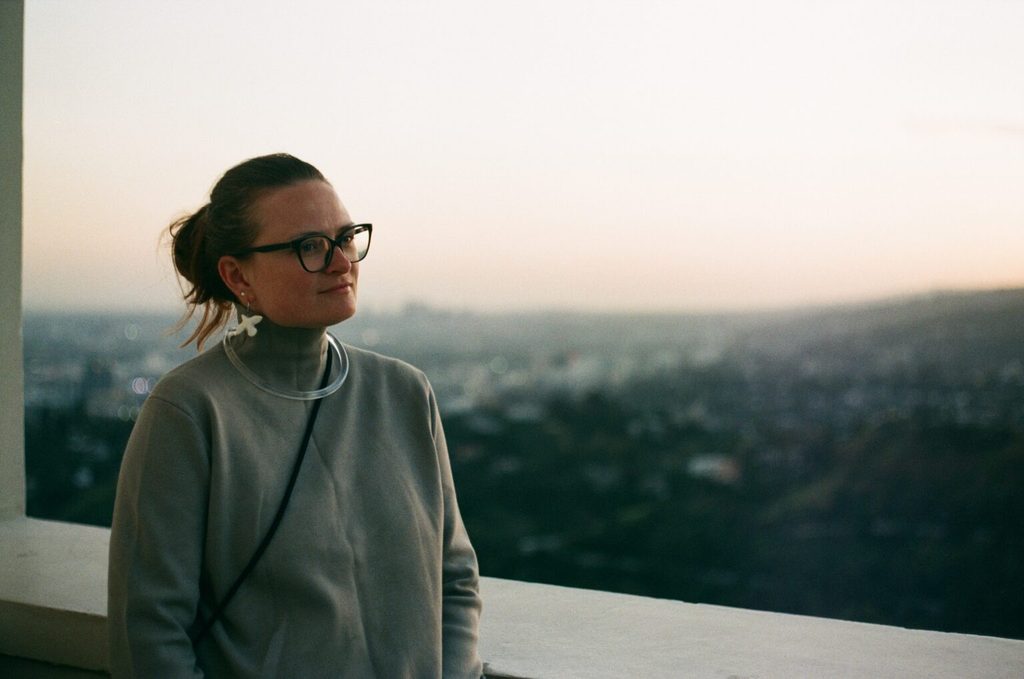
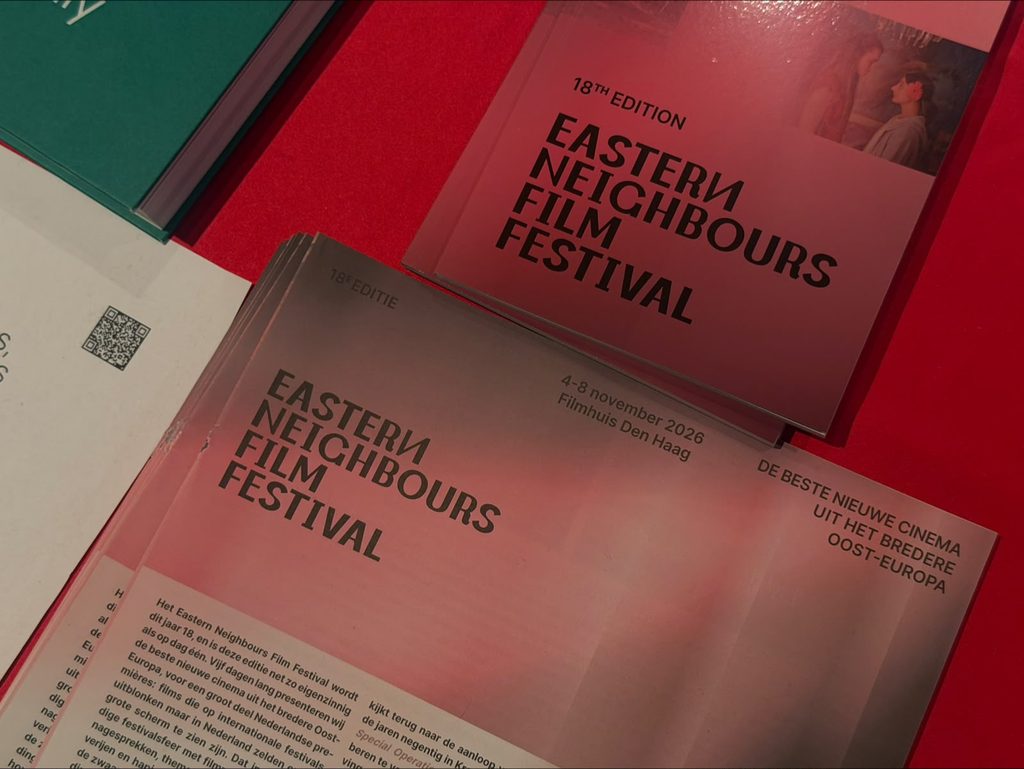
During the Eastern Neighbours Film Festival, held between 4-8 November in The Hague, we had an exclusive opportunity to speak with Ukrainian documentary film producer Lyuba Knorozok. Our social media creative lead Tamara van Marle-Prysykar caught Lyuba between screenings to talk about Special Operation (2025), directed by Oleksiy Radinsky.
Special Operation (2025) is a uncommented documentary built entirely from CCTV footage saved by workers of the Chornobyl Nuclear Power Plant during the russian occupation. Forty years after the Chornobyl disaster, with nuclear plants again caught up in a war, the film speaks to questions that reach far beyond Ukraine. In our conversation, Lyuba told us how this unique archive found its way to the screen, what she believes Europe still misunderstands, and what she hopes Dutch audiences will take home with them.
Tell us a little about yourself and the festival you are participating in today.
I am Lyuba Knorozok, a documentary film producer from Kyiv, Ukraine, and a co-founder of the filmmakers’ collective Kinotron Group. Today we presented our film Special Operation (2025), directed by Oleksiy Radinsky. I really enjoyed the feedback from the audience and the discussion it sparked.
What made you first realize that the CCTV footage from Chornobyl could become a documentary?
Together with the director, I normally work with different archives. When we heard from workers of the Chornobyl Nuclear Power Plant that, during the occupation, they had managed to save material from the CCTV cameras, it immediately became important for us to get it and see it.
After a year and a half of research, we received the material from Ukrainian law enforcement. We immediately realized how unique and powerful this material was and that there was no need to add anything to it. The picture and the story behind it speak for themselves. We wanted the footage to tell the story on its own, without any additional meanings, filming or edits.
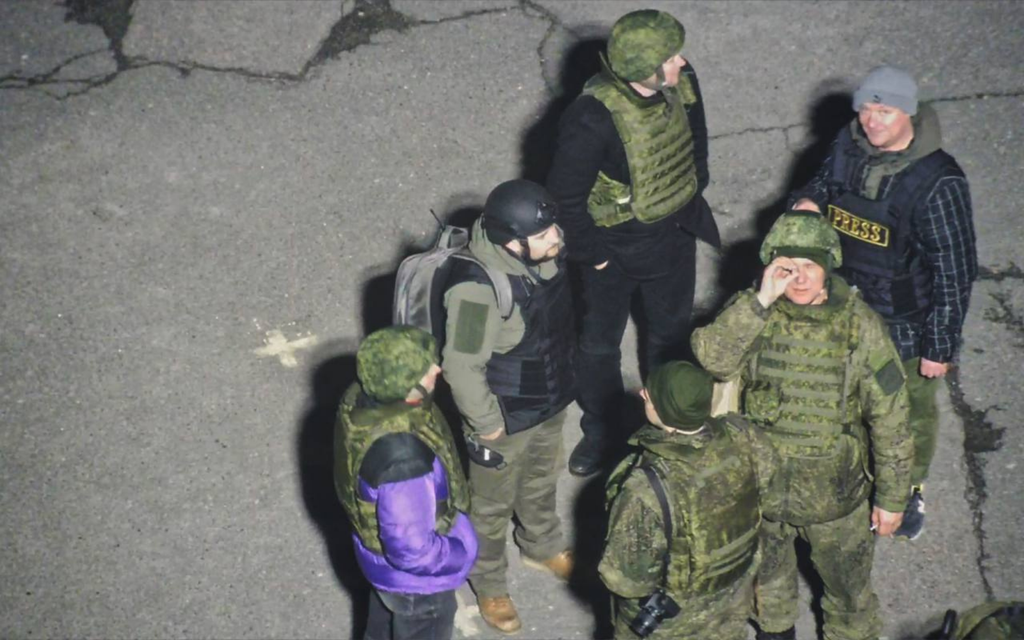
The footage was created to monitor a nuclear power plant, not to tell a cinematic story. How do you transform surveillance images into an act of witnessing?
Surveillance footage is basically the act of witnessing. Cameras are installed in order to witness something, even if it was not necessarily meant to be saved and preserved. In our case, the workers of the Chornobyl Nuclear Power Plant became our co-authors. Under russian occupation, they bravely decided to save the parts of the footage they considered most important as evidence of the war crime of nuclear terror.
They became, in fact, our team of anonymous directors of photography, because we added nothing to the visual form of the footage. We never added any zooms or panoramic shots on purpose. Every pan or zoom-in you see was already the part of the original footage itself. I consider the workers of the nuclear plant as co-authors of this film.
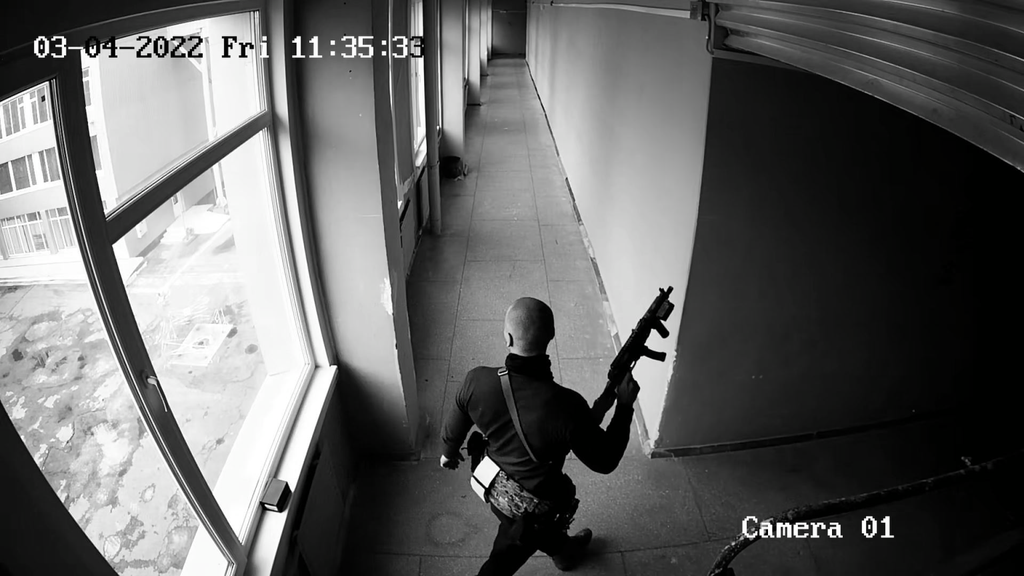
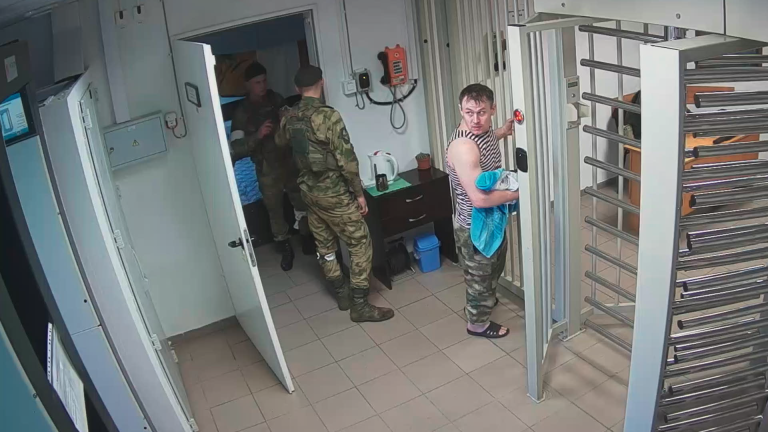
We only added the sound, and it was a crazy amount of work, recreating everything from scratch, because the original material was completely silent. Our Lithuanian colleague, the great sound artist Vladimir Holovnitski, reconstructed it based on the testimonies from the workers who provided us with the footage.
Forty years after the Chornobyl disaster, Ukraine is again confronting the threat of nuclear catastrophe. Do you think we have learned anything from history?
Definitely, we learned a lot. The Chornobyl catastrophe played a major role in the collapse of the Soviet Union – not the catastrophe itself, but the discussion it sparked in society, and precisely in Ukrainian society. The Soviet authorities’ attempts to conceal the scale of the disaster led to protests and demands for greater nuclear safety and transparency.
In the end, this became a huge part of the last drop contributing to the dissolution of the Soviet Union. So it was an important lesson for society, and especially for our part of the world.
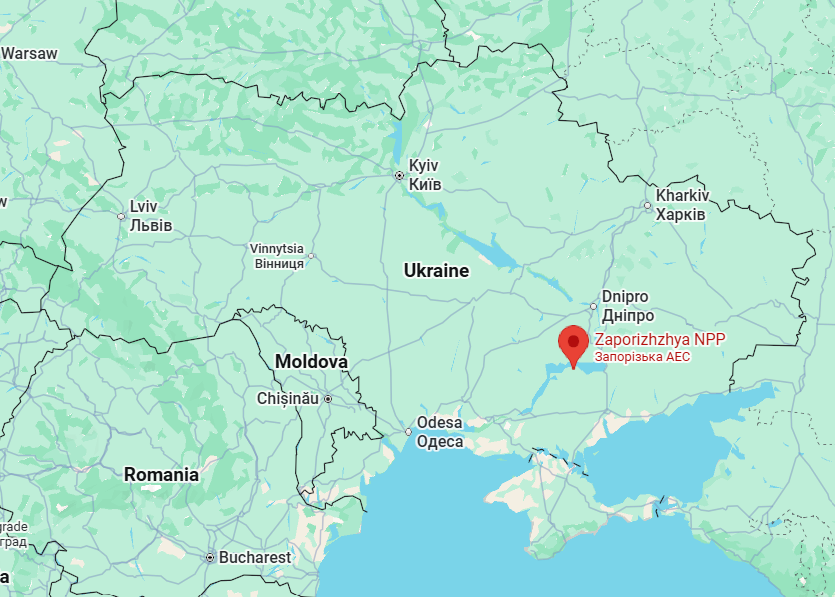
But I am not sure it was a lesson for the so-called russian federation, because they continue to use the nuclear threat as a weapon. I think the atomic war actually began on the very first day of the full-scale invasion, when russian forces occupied the Chornobyl nuclear power plant and began using it as a nuclear shield. They also continue to occupy the biggest nuclear power plant in Europe, Zaporizhzhia, and that threat is still there. So I doubt they have learned that lesson.
Perhaps, this is a lesson that can never be fully learned. It is an ongoing process that requires the ability to critically reflect, acknowledge mistakes, and take responsibility for their cosequences. And this is precisely where russian society has demonstrated its failure to learn from history. Instead of confronting its own crimes and catastrophes, it continues to deny them, cover them up, and repeat the same practices. You cannot simply erase the past from memory and expect its consequences to disappear. Yet this is exactly what russia continues to do.
What was the key takeaway from the talk on the 40th anniversary of Chornobyl with Kristina Mikhailova and Asel Kadyrkhanova during the festival?
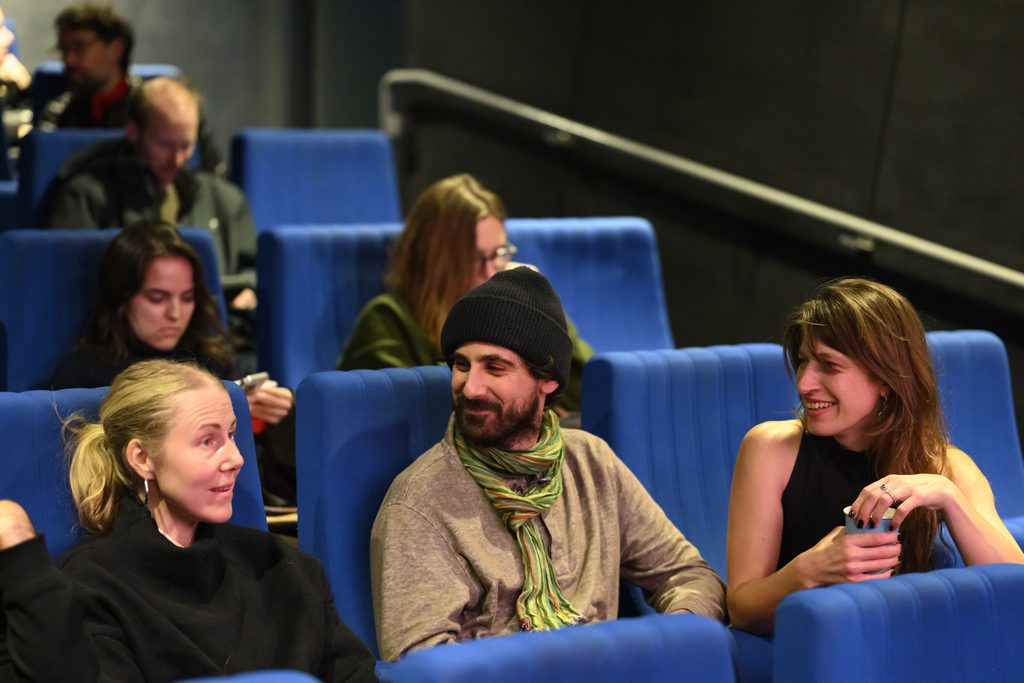
The discussion ended up being not only about Chornobyl, but about the legacy of nuclear trauma in the different countries formaerly colonised the USSR. The other two women were from Khazakstan and their work focuses on for example the Semipalatinsk region and the nuclear tests the Soviet Union conducted on their territory. I am from Kyiv and spoke about Chornobyl and its influence on our society. Since their approaches these issues on a more personal level, our conversation naturally ended up discussing the historical trauma experienced by our societies and how nuclear power shaped it.
As a Ukrainian producer working during war, how do you navigate the tension between artistic value and urgent political and historical responsibility?
We were making political cinema even before the full-scale invasion. That never meant our films were less aesthetic or artistic. It is simply our form of activism.
I believe all professionals should use their skills and expertise to contribute in the fields they know best. If you want to protect architectural heritage and you are a filmmaker, you make films to tell the story and raise awareness. You do not have to become a lawyer. The same applies to war. As a documentary filmmaker, I use my knowledge to document what is happening, archive and preserve testimonies, and analyze them. Preservation is essenntial, but so does analysis.
So I do not feel a contradiction. Of course, I would prefer to work in film, and to live, without war. But 90% of my professional life has been during the ongoing war since 2014. I can not imagine how I could approach my artistic practice without addressing it.
What do European audiences still misunderstand about your film and its significance for Ukraine, and how does the documentary try to correct that?
I think European audiences do not fully understand how dependent societies are on infrastructure. The Chornobyl catastrophe helped bring environemntal issues to the forefront and many countries, Germany among them, gave up nuclear power. But in doing so they became completely dependent on russian gas, which fed the wealth of the russian federation and the growth of a bizarre totalitarian regime. The connection between energy infrastructure and politics is still not fully understood to many European citizens, and we try to emphasize it at each screening.
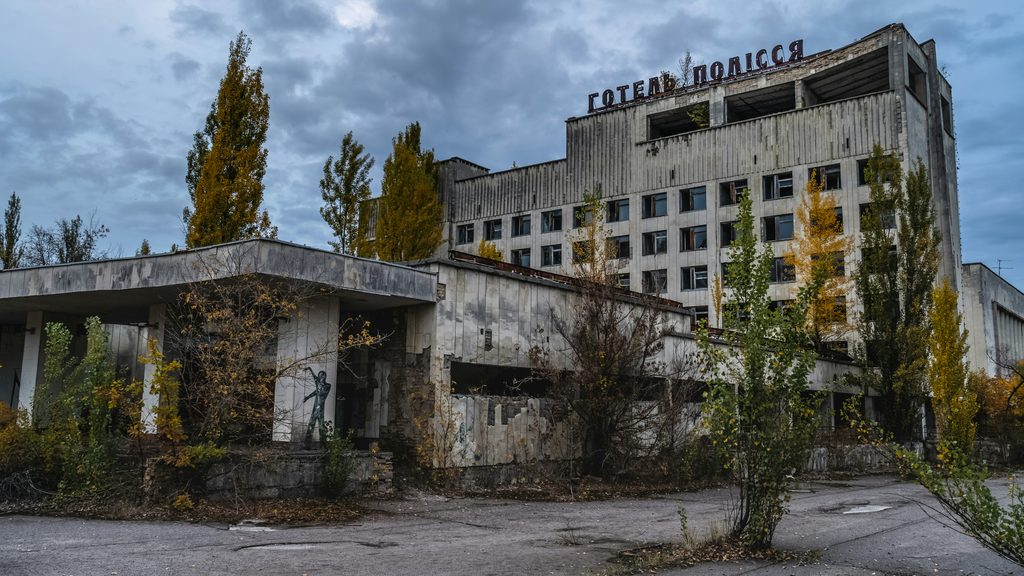
The nuclear threat is always there, and we cannot forget about the ongoing occupation of nuclear plants. The heads of rosatom, the russian atomic energy corporation, continues to be involved in nuclear projects internationally, including in Europe, South Africa, and the so-called Global South. They also remain present in Vienna and in international nuclear safety institutions, even as russia occupies a nuclear power plant and uses it as a shield. This creates enormous danger for the whole of Europe. I do not think people fully recognize this threat, or pay enough attention to it.
We thought this film would be about the occupation of the Chornobyl plant, but it turned out to be a film about the russian army itself. It is a portrait of a profoundly incompetent army, and it dismantles the myth of the world’s second strongest army. It also raises the question of whether the war could have been won in the very first weeks and months of the full-scale invasion, if European countries had been less scared to act and had stopped financing it through energy purchases. What Europeans continue to pay russia for gas is far more than the support they give Ukraine. It is a really twisted reality.
What do you hope audiences in the Netherlands will take away from Special Operation, and how might they apply it in daily life?
It is very important to be able to analyze what you hear in the news, to process different information and reach conclusions, and those conclusions are often not obvious. You have to question wht you think you know: what people think about the russian army, about its ability to fight, about how strong it is, about what the war actually looks like.
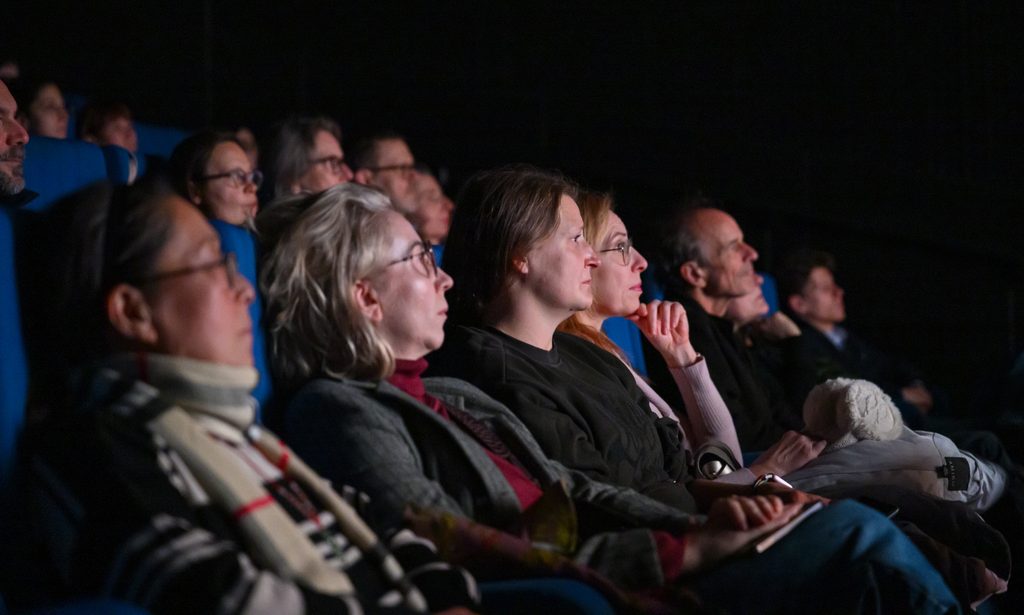
I hope people will ask hundreds of questions. We mostly do not give answers. We put the audience in the position of workers who had to work under occupation for almost five weeks, and we want viewers to experience that and see the weirdness of the russian war machine. I want viewers to question their own assumptions more, and to see that what they hear in fast-food news is often not what it really is.
The russian army is not a great power, and what it is doing is not right. It poses a huge threat, not only to Ukraine but to Europe, to ecology, and to all the societies and peoples living in Europe.
The interview was conducted on November 8, 2026 and edited for clarity. Special thanks to Tamara van Marle-Prysykar for her live reporting.