In this interview, we had a conversation with the founders of the Ukrainian Decolonial Glossary: the online platform, which is a compilation of articles by 24 professionals who explain historical events in Ukraine in a clear and accessible way, challenging dominant narratives, unapplicable in particular contexts. The authors discussed the purpose of the project, its impact on different audiences, what is next for the platform, and the vital task of raising awareness about Ukraine’s past without bias.
A Ukrainian-specific context of (de)colonialization means confronting the ways imperial powers have shaped knowledge and identity, as any terms commonly used to discuss colonialism abroad fail to capture Ukraine’s unique experience. For instance, words like “genocide” often overlook historical realities, while “decolonization” can be applied without recognizing local cultural and historical specificities.
The Ukrainian Decolonial Glossary (UDG) is an online resource that brings together insights from academics, historians and artists on more than 20 key terms. Its goal is to correct misconceptions and provide a context-specific understanding of concepts that are often misunderstood internationally. UDG is designed for both Ukrainians and international audiences seeking a more accurate perspective on Ukraine’s past and present. By combining scholarly rigor with accessible explanations, it helps users engage critically with complex ideas without oversimplifying them.
Since its launch, the project has received widespread positive feedback, proving useful for anyone navigating debates about identity and colonial legacies in Ukraine. Through this glossary, readers can explore terms that are frequently misinterpreted, gaining an objective perspective on contemporary challenges.VATAHA reporters Eugenia Bocancia and Dasha Lohvynova had the honor of speaking with its founders, Yuliia Elyas and Anastasiia Omelianuk. Let’s dive in on translation’s limits, the risks of oversimplification, and the challenge of grounding theory in lived experience.
VATAHA: Yuliia and Anastasiia, thank you for joining us today to talk about the Ukrainian Decolonial Glossary! To begin with, what are the risks that come with relying heavily on Western decolonial terms in a post-imperial context like Ukraine’s?
Yuliia Elyas: There is a risk of oversimplification, of generalisation, and of sliding into a kind of victimhood rivalry—a competition over who is entitled to use this language. We wrote these texts with respect and with the belief that general audiences can understand this language, because it comes from lived experiences. It is not just theory for the authors of these texts. That is why we believe people can resonate with them. The challenge is universalism and generalisation, and the cure is grounding in lived experience.
The challenge lies in universalism and generalisation, and the cure lies in grounding in lived experience.
I would like to add that the glossary came out of urgency. The full-scale invasion began, and we felt the need to explain our condition and situation in a language accessible to Western audiences. It was an advantage that there was already a vocabulary in the West to address these issues. At the same time, applying it one-to-one is risky, as many nuances can be lost.
VATAHA: When you first started the glossary, which gap—emotional, intellectual, or practical—were you responding to?
YE: For me, it came from the experience of studying and practicing my art in the Netherlands. I first encountered decolonial theory through the work of artists and through people from former Dutch colonies, observing how they engaged with their identity, the challenges of living in Dutch society, and what those experiences meant to them.
It gave me a very particular understanding of my own experiences: realizing that people from different contexts had gone through similar struggles related to the [expression through] language. I resonated deeply with it, and it gave me the vocabulary to make sense of what I experienced growing up in Ukraine. Through my art, and through many similar encounters, I came to realize that much of it applies to our context.
I also felt it visiting a Dutch museum: my identity wasn’t represented, yet there were efforts to present world history. I experienced these urgencies even before the full-scale invasion while living in the Netherlands. That is why a glossary can help us think together and bridge the gap—both an intellectual one and an emotional one.
VATAHA: Did you have in mind who would be your first users of the glossary, and do you think your target audience has changed over time?
Anastasiia Omelianuk: The glossary often covers academic terms used in academic settings and contexts. However, we were thinking of expanding it to those outside academia: students, artists, activists, and journalists. We thought about people who work within a Ukrainian, Eastern European, or post-Soviet space but are not familiar with colonial and postcolonial theories, and also the other way around. These were our primary audiences.
Even though we have received a lot of feedback that the glossary is accessible and important for many people, I would like it to be even more accessible—maybe for those in activist settings who know nothing about decolonial theories. This aligns with my own work in academia, which we know comes with a certain privilege and elitism in the West. I want my practice to be more in tune with what is happening on the ground. Maybe not all the articles can be equally accessible, but at least some of them.
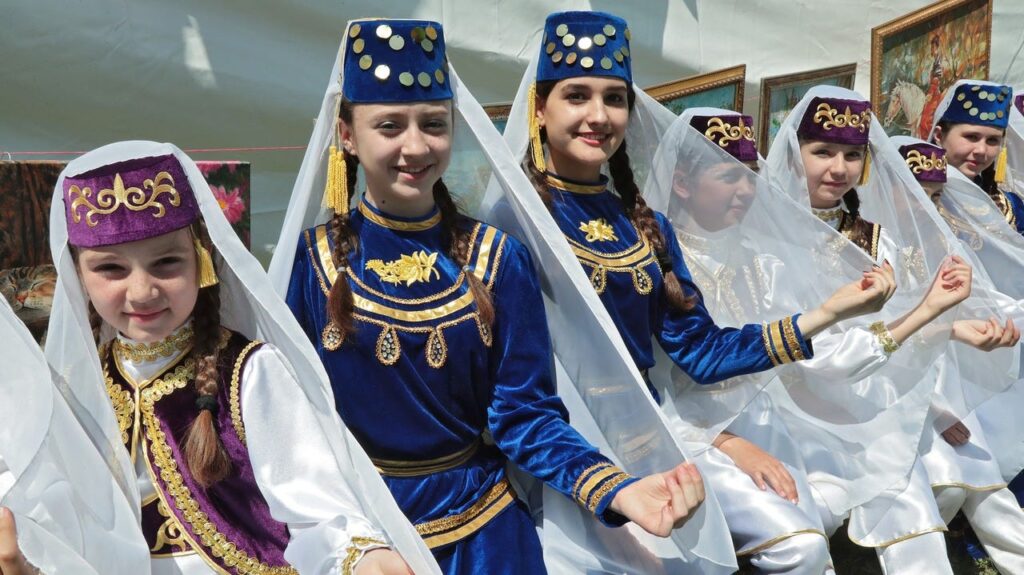
For example, we wanted to talk more about ethnic minorities in Ukraine, such as the Crimean Tatars, and about the use of talking about them in museums or academic language. I feel it is difficult to maintain that balance because we also need in-depth conversations within fields such as artistic research or literary studies.
VATAHA: Do you think there are some Ukrainian concepts or experiences that are still hard to explain with words? For example, terms that are missing or still in the process of being established.
YE: Absolutely. We always talk about the limitations of translation. Translation adds something to the original; it gives it more nuance and value. For instance, you cannot read a book about [someone’s lived experiences] and understand [them fully]. It is something you have to experience. However, even if some things cannot be fully understood, they can still move the discussion and discourse further, so it does not mean we should stop trying.
AO: There is a lot of exclusion even in decolonial and postcolonial spaces. Instead of asking whether we can apply Western decolonial theories to Ukraine, should we not instead ask whether we are joining decolonization as a colonized nation among many others, not only in the post-Soviet space but throughout the world? We should take ownership of that and use it as a tool to translate ourselves and to find ground with other people: with Western people, colonisers, and people who were colonized in other regions.
By introducing new terms and explaining phenomena unique to Ukraine and its peoples, we not only enrich theory but also work through our past. A major challenge in Ukrainian history and culture is that people were often forbidden to speak, feel, or make sense of events—for example, the inability to commemorate or document the Holodomor or the deportation of Crimean Tatars. Decolonial theory can help us reflect on these experiences, not just counter russian influence on our land and language. Importantly, it was not only the russian Empire or Soviet Union that suppressed Ukrainian culture; Romanian and Polish policies, such as interwar restrictions on language and cultural expression, also sought to erase it.
This process is not only about memory, culture, and language, but also about social justice: decolonial theory is much more than just limiting imperial influences. It is also about practical things, such as fighting against inner corruption, fighting for the right to education, and quality of life for everyone. It is not only about translating outward; it is also about translating our needs, feelings, and emotions into actions, creating meanings within the country that we can apply to improve our lives.
VATAHA: Do you think there are some terms or definitions that have provoked strong disagreement? And if yes, how do you usually navigate those tensions?
YE: One of the terms that provoked the most discussion, at least in my context, was connected to Eurocentrism and Euromodernity. In the context of the russian invasion, we often think about colonisation only from a russian perspective and understand Europe as someone who can grant Ukraine a future. I talk a lot about this term in public talks and presentations, for example, during Europe Day. Part of the problem is that Ukraine is not seen as a country with its own agency: as if it is up to Europe to decide the future of Ukraine, but the reality is that Ukraine decides the future of Ukraine. Even though Europe postponed some help for a long time, the amount of occupied land has stayed almost the same since 2023 due to the resistance of the Ukrainian army, which represents Ukraine’s agency.
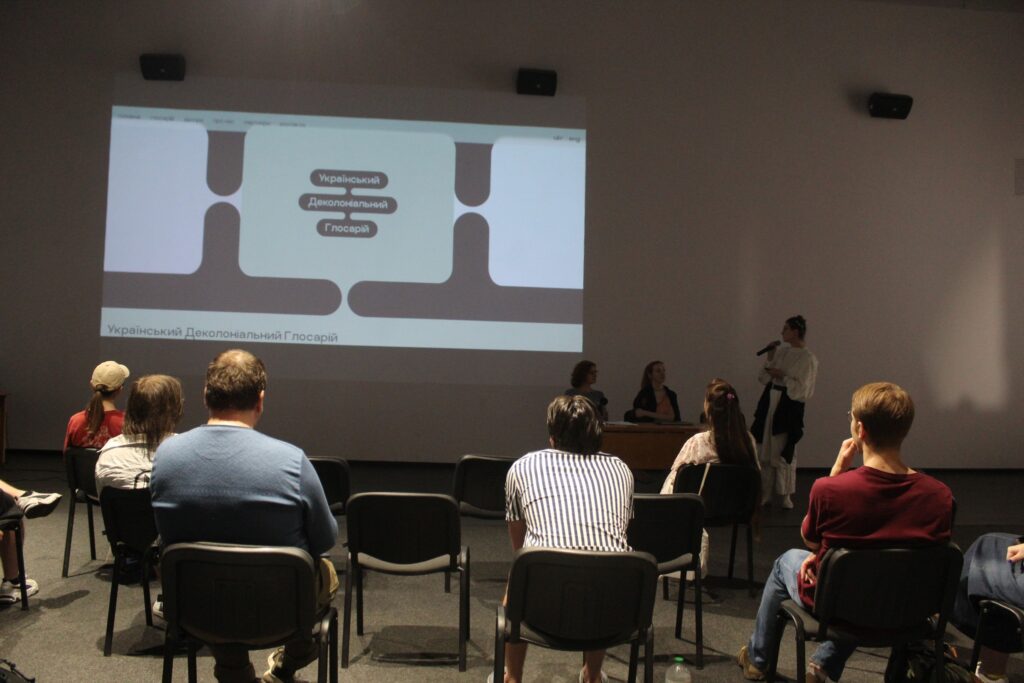
We are trying to offer the resources we have, create bridges, and invite people from different contexts to come together to learn.
AO: The whole project also gets criticism. Many attempts to talk about colonization in the Ukrainian context are viewed as reactionary, an attempt to jump on a bandwagon and make something trendy. There are projects that appeal to populist ideas and use “decolonization” but have nothing to do with decolonial practice or philosophy. But the existence of such projects does not mean we should not explore and practice decolonial theories and ideas.
I would encourage readers, and maybe specifically Ukrainians, to look at the themes of Eurocentrism and what Europe means. In addition, the term of genocide: what genocide means and how we deal with that. There are a few articles in the glossary that address these issues on different levels.
VATAHA: It seems that (de)colonial work can be emotionally heavy and politically charged. Do you have any internal ethics of care to support your collaborators, yourselves, or your readers?
AO: It is really important to acknowledge and accept that decolonial work—or any work that tries to disrupt imperialist and patriarchal systems—is going to be vexing and taxing. That is why it is important to acknowledge it and support each other. The work we are doing is often unpaid or paid very little, but we still do it because it helps us heal in some way, in a sense to be aware and reflect on injustices, but also [it is] a way to help ourselves.
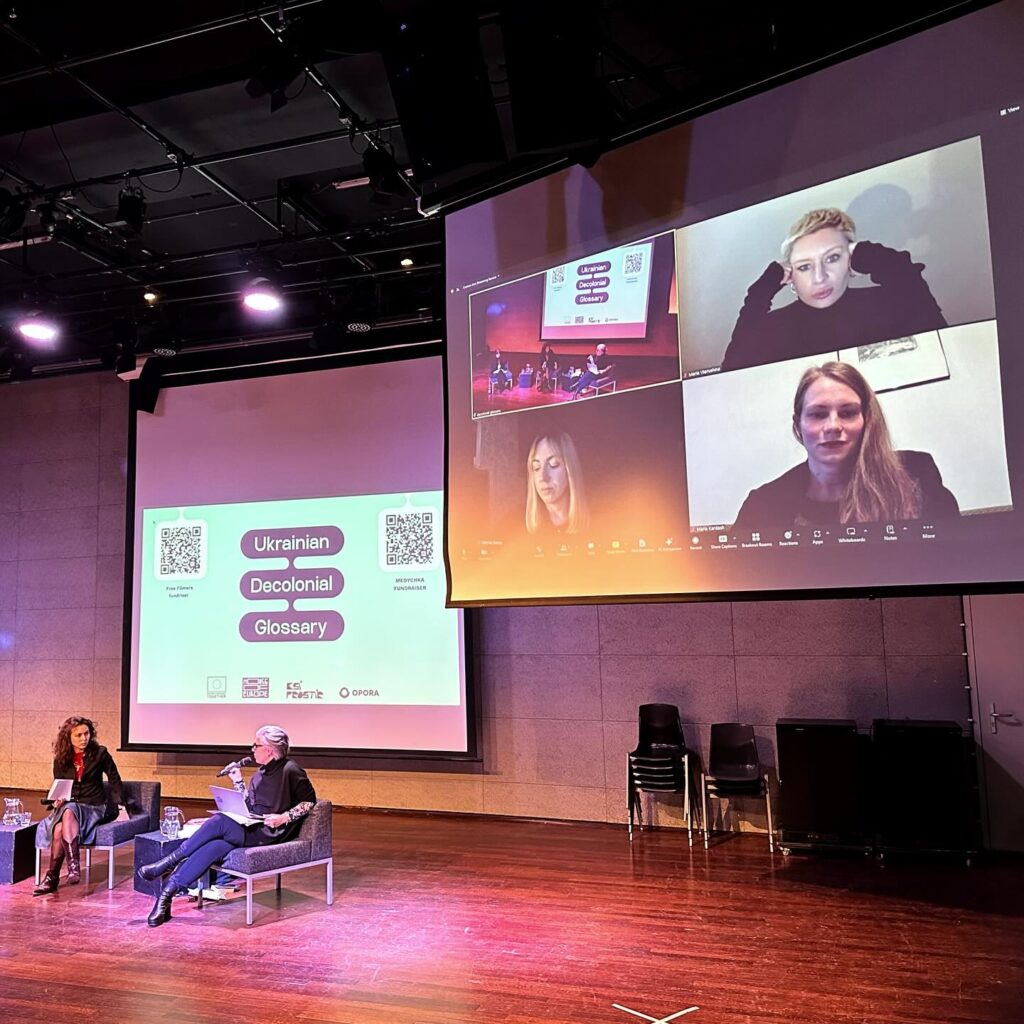
Regarding the glossary, we are proud of the project’s structure because it was truly decolonial and supportive. It worked because we invited very different authors: famous Canadian professors, Masters’ students, journalists, and artists. This mix of ages, professions, disciplines, and experiences was useful for everyone because it allowed people to step out of their bubbles. We hope the authors felt it. We tried to make it egalitarian and non-hierarchical. It was a work of care: we tried to create a structure without leaders. Everyone has to be a leader and take accountability for others.
YE: We reflect on this a lot in our workshops, on interactions that happen after [collaborators engaged with] the glossary and how this experience can be useful for other activists and artists in sustaining their work.
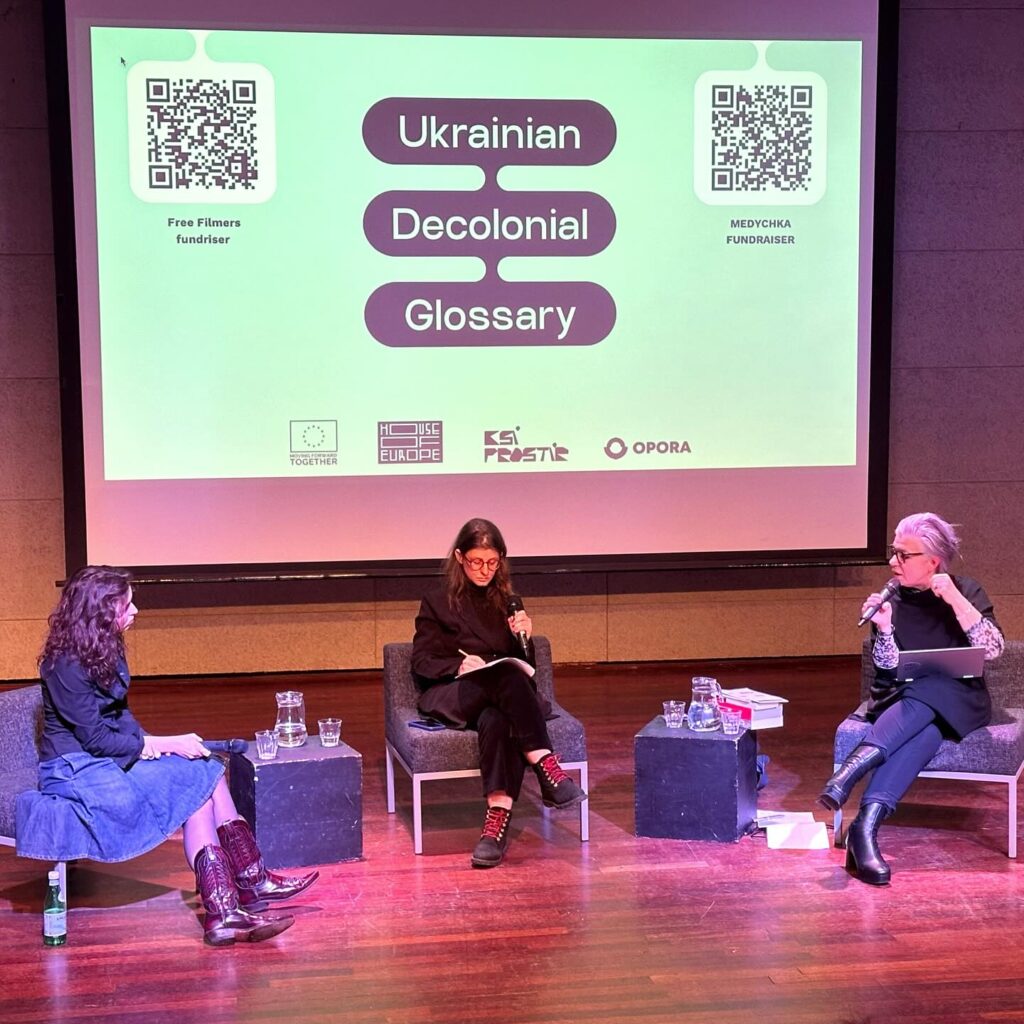
However, there are always its limitations. At this point, everyone is exhausted. We wrote about the impasse: this never-ending suffering, the bad news coming from home. It is not only optimistic and nice; there are also questions like, “What are we even doing at this moment?” In a crisis, immediate volunteer work [for the military] takes priority—donations and direct action come first. Yet the opportunity to pause and consider the bigger picture is also important, and it’s a privilege I have because I am based abroad.
Part of our team is in Ukraine. When we were designing this project, the question for me was: how can I channel the privileges I have, as an artist and practitioner in the West—[with access to familiar] institutions and grant opportunities—into communities in Ukraine, and help people continue their work? But in many cases, it is not even about continuing work; it’s about surviving in this moment.
VATAHA: What role could the glossary play in helping the diaspora articulate their experiences and identity shifts?
YE: We worked with the Ukrainian Institute and ICOM on a decolonial guide for museums. The guide offers museum specialists resources on working with collections and archives and presenting Ukrainian identity. This work will not happen on its own. Archives were curated for decades, and a lot of money was poured into presenting things in specific ways. Even if we change Malevich’s label at the Stedelijk Museum, Malevich will still be presented as a russian artist in libraries and archives in the Netherlands. To change that, we do not really have funding, and we need creative ways to reach the audience. The way your image is created in the public imagination influences voting decisions and many other things.
VATAHA: You mentioned that it also depends on funding. If I understood correctly, you want to keep doing this, but for now, there’s a pause?
AO: We managed a big project with a small budget. There were so many opportunities for Ukrainians to represent Ukraine as volunteers, and that is okay. However, Ukrainians, and many other people of marginalized backgrounds, either forcefully displaced or living and working in extreme conditions, already do a lot of unpaid work. Apart from that, there is already more than enough precarity in the arts and academia, especially when one’s work is political and challenges long-established approaches, or questions forms of knowledge that are strategically constructed by powerful oppressive states. In this project, we really wanted people to be paid and have some security. For the project to be ethical and good, it requires some money – not that much, but it does require it, because it is a nonprofit. It is hard to secure funding because the topics we work with are important, but unfortunately, not always popular.
VATAHA: Are there collaborations you’d like to happen next – partnerships, or maybe a new wave of inspiration to add more terms?
AO: We are working on it all the time. We apply for grants. If someone wants to collaborate with us, we are wide open! We also think about different iterations: terms on the website, a physical publication, more events and public discussions, and working with local activists in smaller regions—with local museums, academics, and activists. Producing new terms is central, but we also want other formats—small but important ways to bring it outside the website.
If you engage with the Ukrainian Decolonial Glossary, it does not mean you agree with everything written there. It is a polyphony of voices and experiences.
VATAHA: Thank you both so much for your time and for sharing so many valuable insights with our readers and us!
About the interviewees:
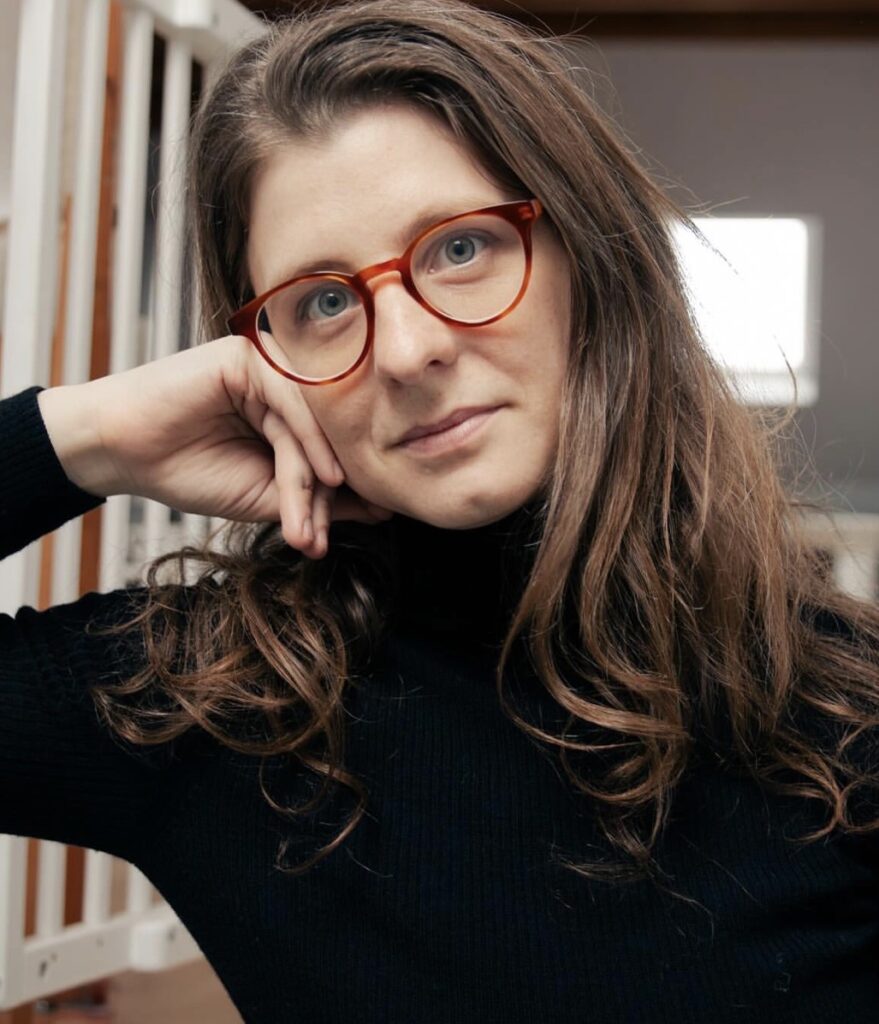
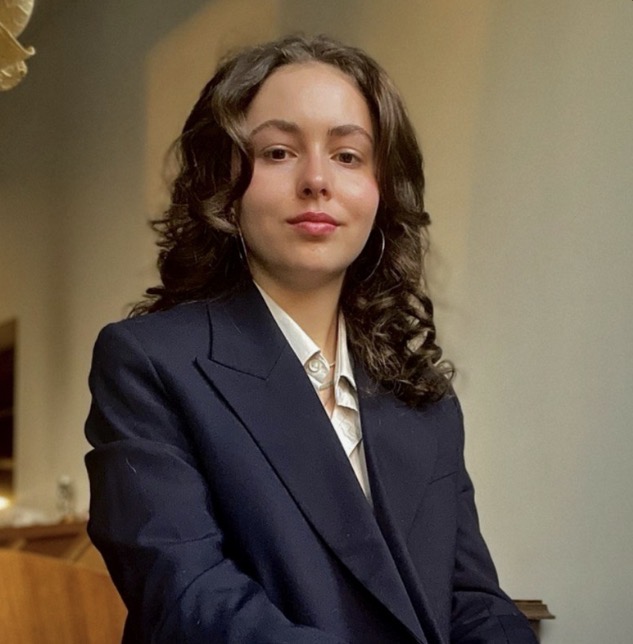
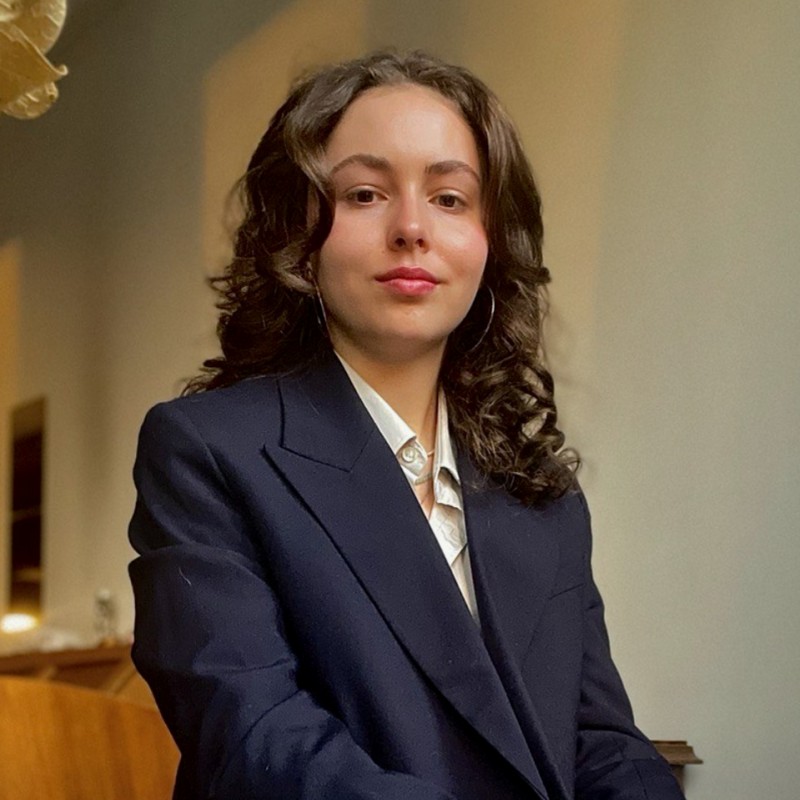
Yuliia Elyas is an activist, artist, and researcher from Dnipro, Ukraine, based in Utrecht, the Netherlands. She co-founded and co-curated the Ukrainian Decolonial Glossary. Her practice investigates the dynamics that shape social narratives, examining the agency of stories and images beyond their original contexts through artistic intervention and critical engagement. At VATAHA Foundation, Yuliia volunteers as cultural advocacy lead.
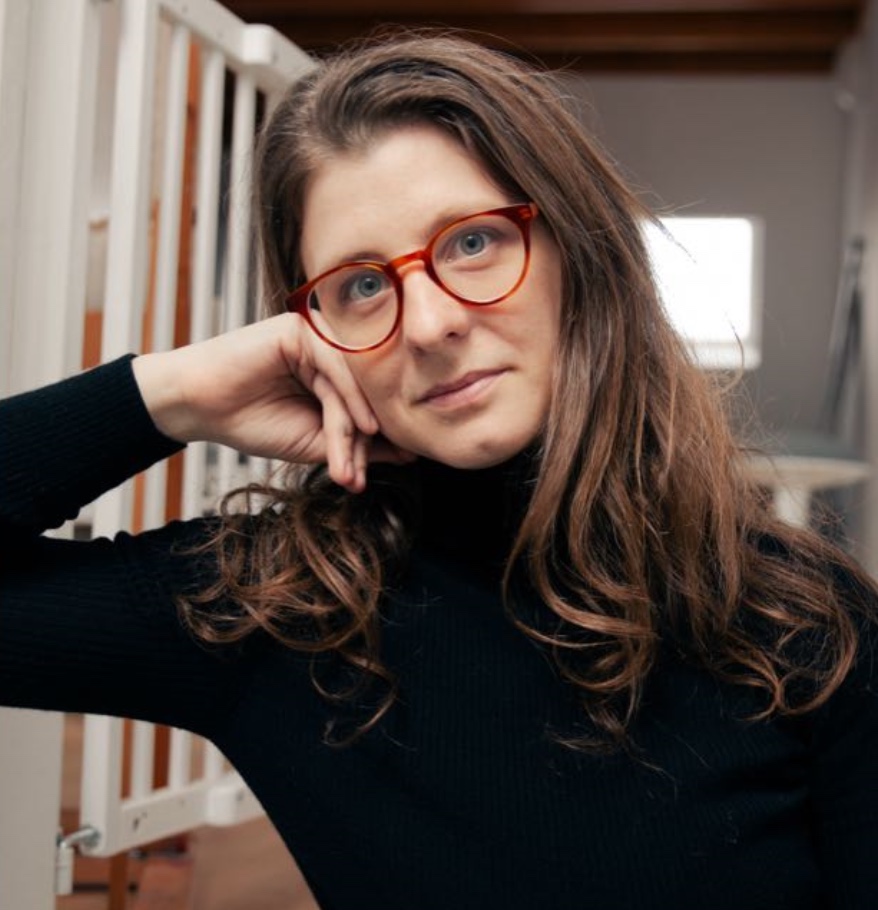
Anastasiia Omelianuk is a researcher and activist, based in Amsterdam, the Netherlands. She co-founded and co-curated the Ukrainian Decolonial Glossary. Anastasiia is also an anthropologist, writer, artist and curator. She is postdoctoral researcher in the Social and Cultural Anthropology Department at VU Amsterdam. In her ethnographic research, she explores care, gender, and activist knowledge practices in Ukrainian civil society. She is a former IWM Junior Fellow. She also co-founded the NGO Opora Foundation, where she coordinated a research team and produced advocacy-oriented research. Her recent publications include contributions to Solomiya Magazine and the Latvian Art Yearbook WunderKombināts III.
Conducted on December 5, 2025, and edited for clarity.
VATAHA is fully run by volunteers and on donations. Please consider making a donation here to support our cause.