
Ahead of VATAHA’s annual Vyshyvanka Day celebration, we’re not just showing off our beautiful traditional embroidered blouses, but also telling the deeply personal stories behind them.
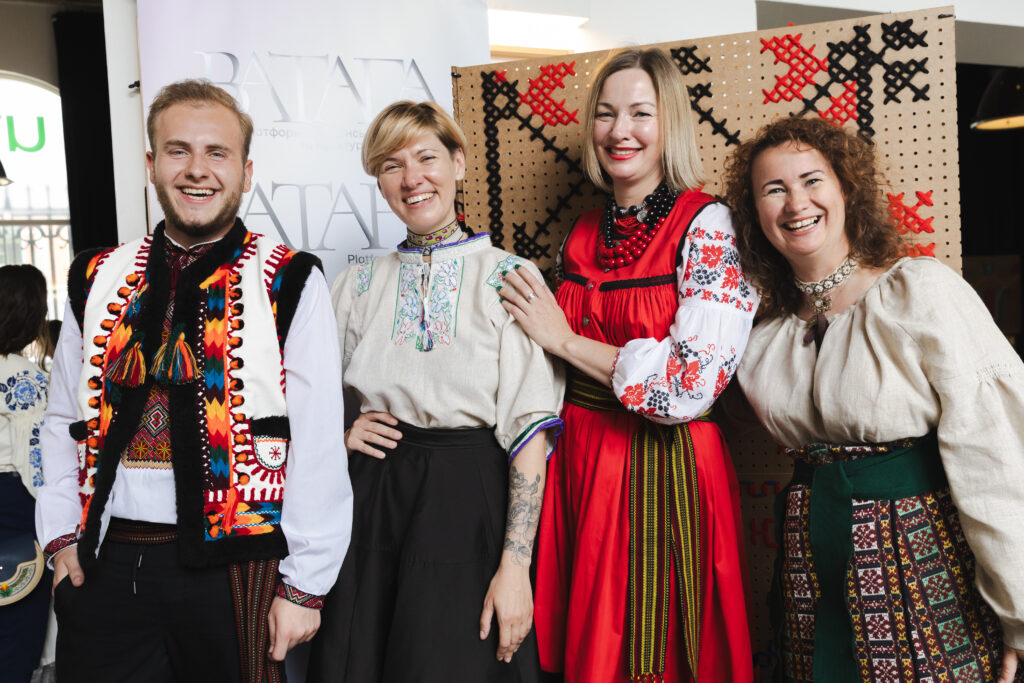
This year VATAHA is celebrating Vyshyvanka Day in both The Hague at the prestigious Kunstmuseum Den Haag as well as at the new art museum of migration at FENIX in Rotterdam.


Get excited to celebrate with us by reading through some of our volunteers’ testimonials about embroidering together with their grandmothers, the persecution that their families faced for wearing them, and preserving their shirts for future generations.
Our volunteers’ stories
Eugenia Bocancia
From Kyiv | VATAHA Reporter
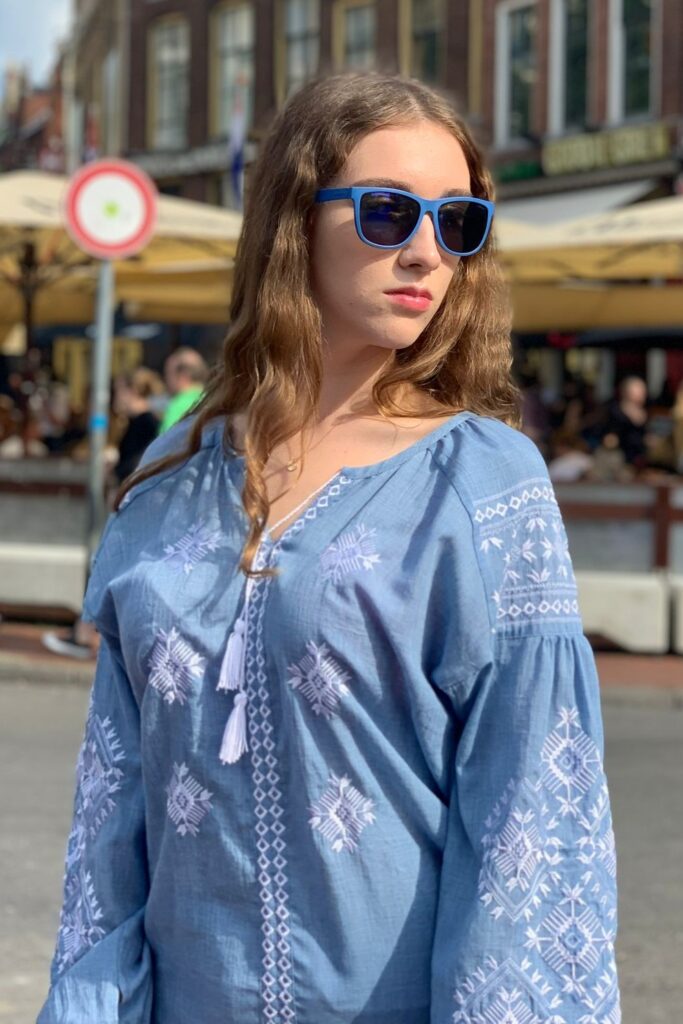
As we grow up, we do not always fully realise the impact that culture has on us. However, one thing I have always known is that the vyshyvanka symbolises beauty, freedom and emancipation. Some people may associate it more with nationalism than with everyday clothing, but for me, it has always been something deeply personal.
It is a timeless garment that Ukrainians wear with pride and courage. I especially appreciate the unique patterns and colours that reinterpret traditional ideas of what a vyshyvanka can be. When I moved abroad, I took two vyshyvankas with me and made a conscious decision to wear them more often, turning them into a personal statement.
In the past, I associated the vyshyvanka only with special occasions or celebrations. But why should its beauty not be a reason for celebration in itself?
Daria Engin
From Kharkiv | VATAHA Admin Assistant
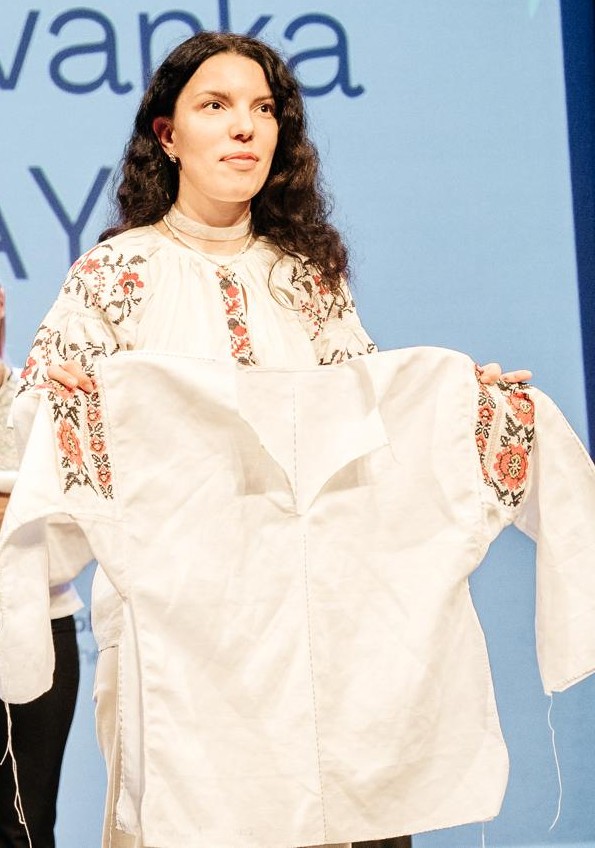
Where I am from, we mostly use red and black colors and rose and grape patterns in our vyshyvanka. I only have one vyshyvanka from my great grandmother, who grew up in the Soviet Union where it was difficult to keep her [Ukrainian] embroidery tradition alive.
It used to be a restricted symbol of bourgeoisie and nationalism, especially during the 1950s and 1960s, when Soviet authorities actively discouraged the use of vyshyvanka. Some people were even imprisoned for wearing or creating them. Neither my mother nor grandmother have their own vyshyvanka.
I was the first person in my family to revive the vyshyvanka tradition through VATAHA’s My OWN Vyshyvanka workshop series last year. I didn’t know how to start, what patterns to choose, what size to choose for the sleeves. But when I visited Ukraine to visit my grandmother and mother, my grandmother embroidered the first roses, and the next ones were done by my mother. It’s still not finished because I still want to add many more patterns, but it was a great start to revive the tradition. Perhaps I will never wear this vyshyvanka, but instead pass it on to the next generation.
Nathalie van den Heuvel
From Rotterdam and Kyiv | VATAHA Head of Grants and Policy Advice
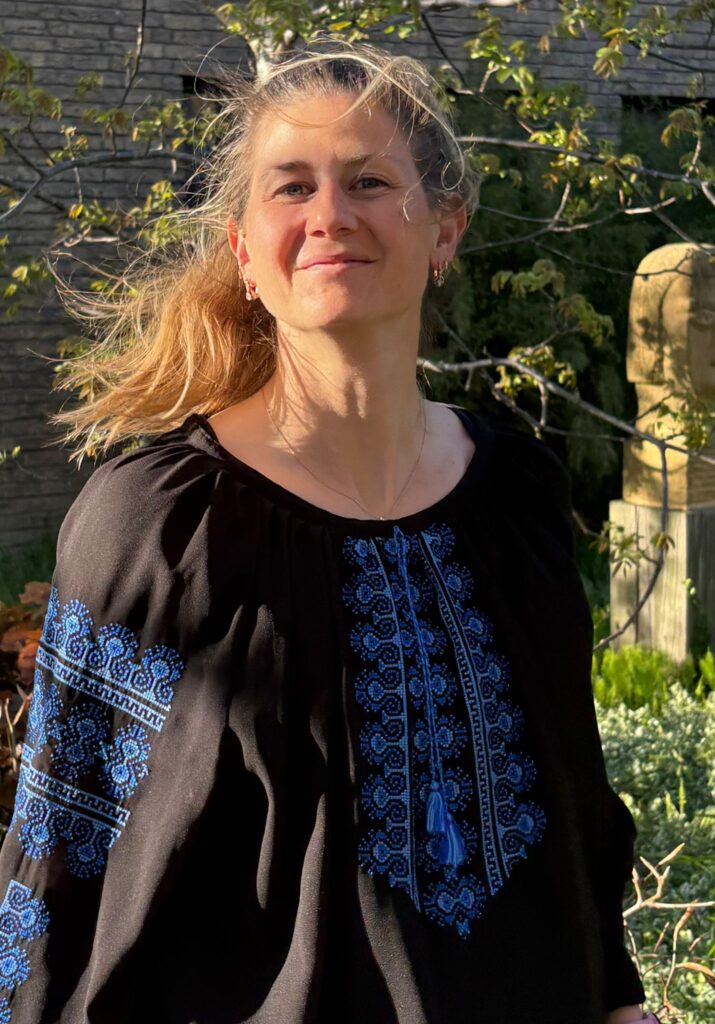
This is my vyshyvanka, and it carries a quiet but powerful meaning for me. It strengthened a Ukrainian identity that had always been part of who I am.
I was born and raised in the Netherlands, with a Dutch father, but through my mother Ukraine was always present. It lived in family stories, in summer visits to Odesa, and the way Ukraine was always part of my upbringing.
In 2014, during the Maidan Revolution, I visited my family in Kyiv and stood on Maidan myself. Being there stirred deep emotions. I felt immense pride in the courage of the Ukrainian people and in their determination to stand up for what they believe in.
That moment deepened my connection to Ukraine in a very personal way. During that visit, I saw this vyshyvanka and gave it to myself as a gift. A tangible symbol of connection, pride, and resilience. A true gift that continues to express the love I feel for Ukraine and its people.
Oksana Savchuk
From Ivano-Frankivsk | VATAHA Co-Founder
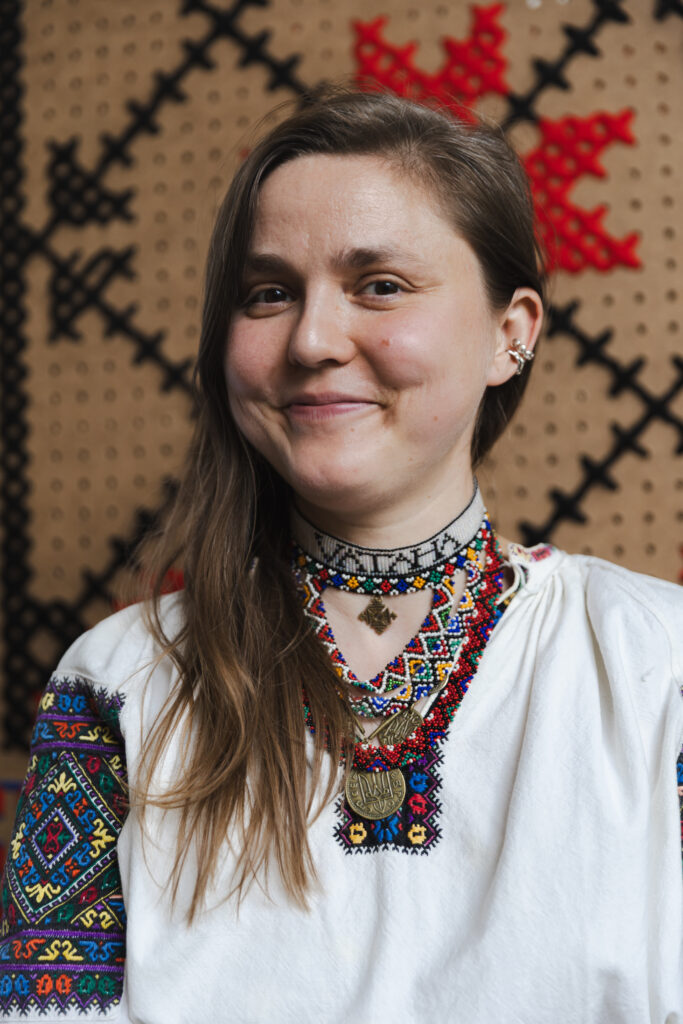
According to my aunt, this was one of my grandmother’s favorite vyshyvanka.
When the original shirt became old and torn, she stitched the embroidery on top of a new shirt, thereby recycling it.
The sleeves have quite an intense pattern, with intricate white-stitched details on the hems of the wrists.
But the front of the blouse is quite modest, leaving space for more necklaces or vests.
I have a few other pre-stitched patterns from my grandmother so I can sew the patterns onto more new shirts too.
Tanya Rumilets
From Odesa | Former VATAHA Workshop Curator
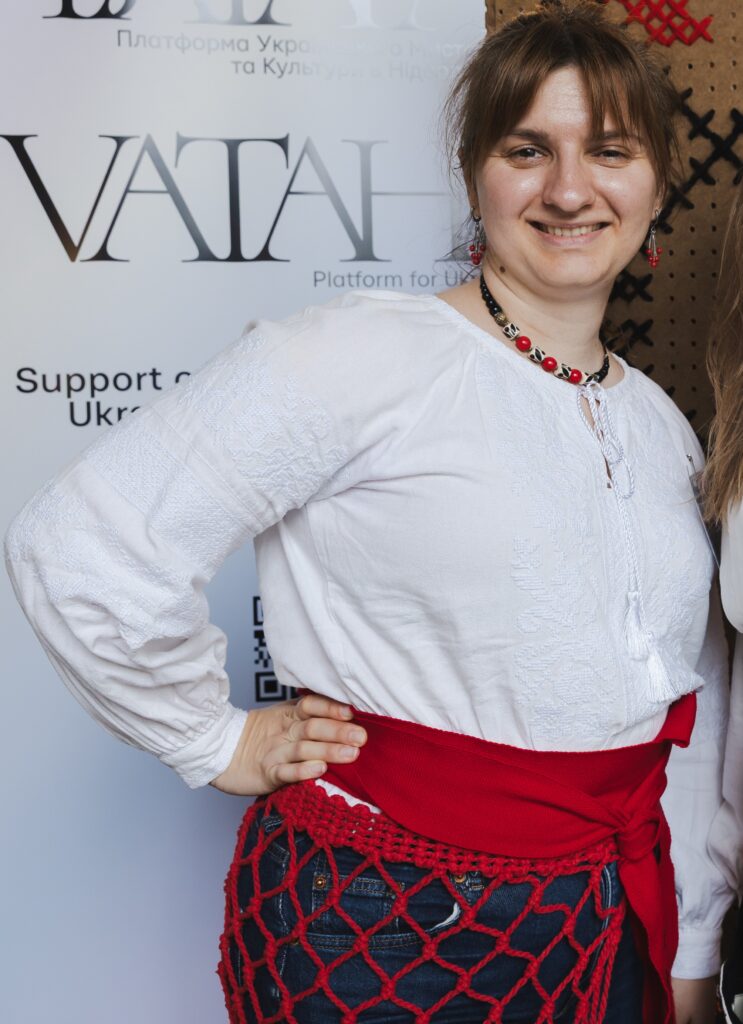
This embroidered shirt is not handmade, but it is a faithful replica of a traditional design. It was gifted to me by three women of my family — my mother and my two grandmothers.
One of my grandmothers gave it to me just a month before she passed away, which makes this gift especially meaningful and deeply personal.
The shirt is white-on-white, a style that is traditionally associated with ceremonial or wedding garments.
It carries symbolism of purity, transition, and important life passages.
This was my first “adult” vyshyvanka. When my mother and grandmothers gave it to me, they did so with a heartfelt intention: a wish for me to soon meet my life partner, to get married, and to continue our family line. For me, this shirt is not only clothing, but a vessel of love, memory, and generational blessing.
Dasha Lohvynova
From Makiivka | VATAHA Reporter
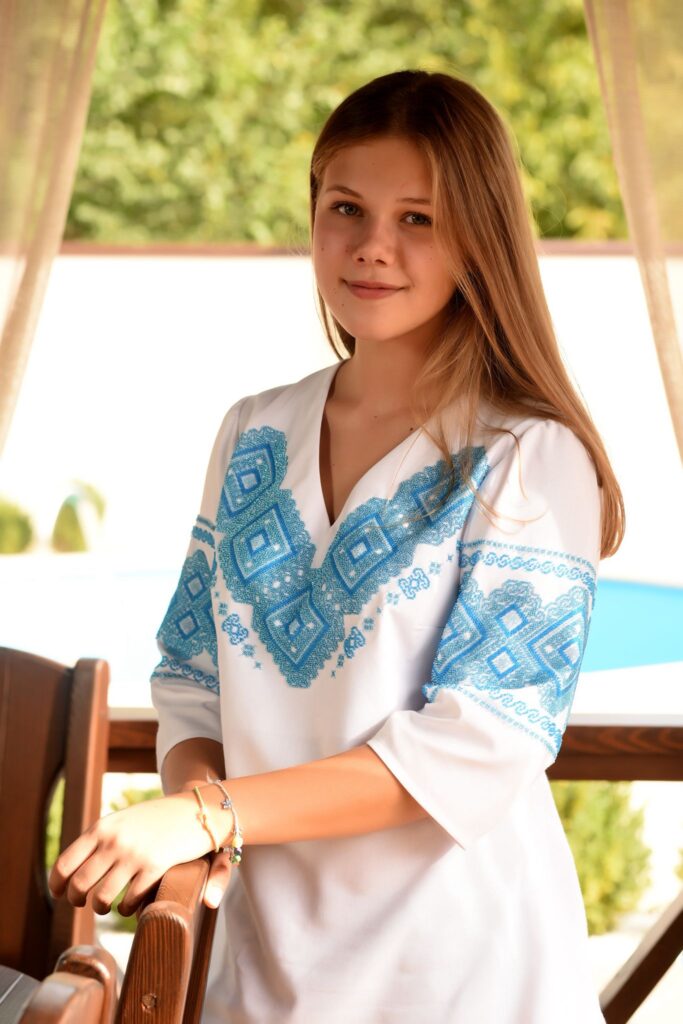
Unfortunately, in our family, we did not have traditional shirts passed down from generation to generation. However, some time ago, my father decided to create our own family vyshyvankas: three hand-embroidered shirts that match in color and ornamentation, united by meaning. Made in blue and embroidered with beads, the ornaments consist mostly of rhombuses, which are often associated with the earth. For our ancestors, the soil was the basis of life: it provided bread, plants, and a place for a home. Therefore, the rhombus in embroidery is often considered a symbol of the earth and fertility.
I received this vyshyvanka when I was a teenager, so unfortunately, I have grown out of it.
While I may not wear it now, I brought it with me when I moved to the Netherlands, and I continue to keep it with me wherever I go. More than just a piece of clothing, this shirt has become a part of my family history – something that connects me with my father and mother, and serves as a small symbol for the three of us. My dream is to pass this beautiful shirt on to future family members, creating a bond and a sense of ‘тяглість’ – continuity – between generations, and starting a new tradition.
Uliana Bun
From Nadvirna | VATAHA Co-Founder
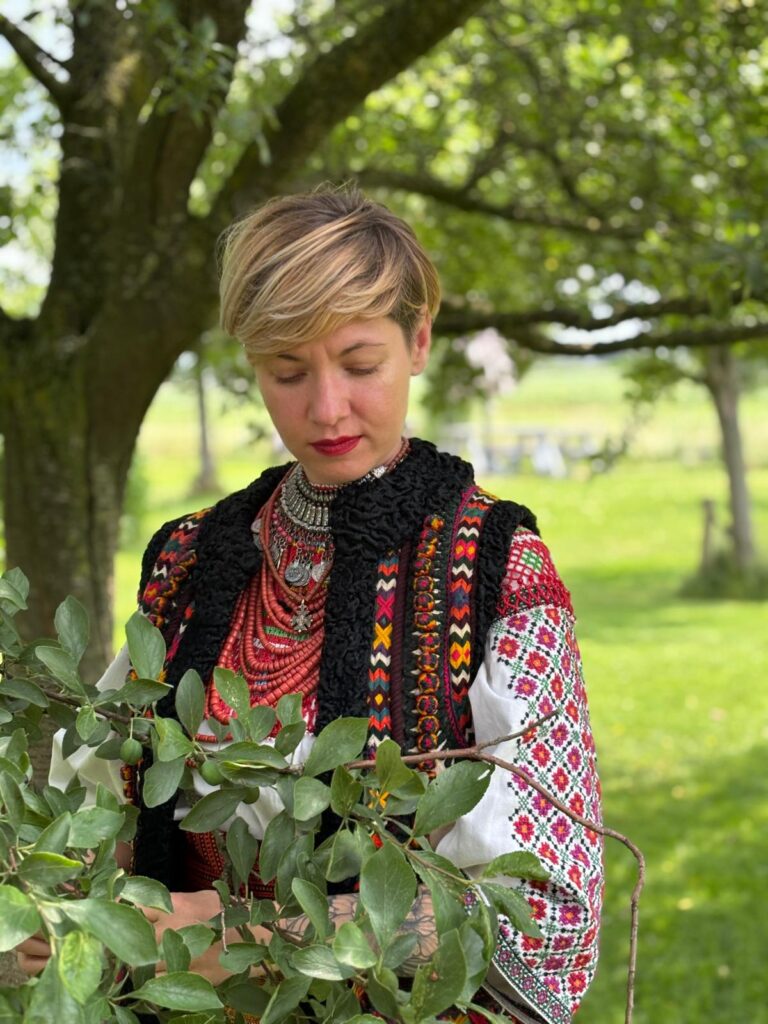
This vyshyvanka was entirely made by my great-grandmother from Kosiv. She spun the thread herself, then sewed and embroidered it by hand. It was meant “for everyday wear” — not for church, because for church you’d always wear your very best. After she passed, our family was left with six vyshyvankas and three women. So naturally, we split them evenly — two each.
My mom, as the direct heir, made the final call…probably the only way to avoid dramatic battles over all six. For many years, the shirts were kept in a wooden chest, and over time they developed yellow resin stains.
That’s when I decided to re-embroider all the sleeves to cover them. I didn’t want this piece to become just a “museum artifact” — I believe a vyshyvanka’s story only lives when it’s worn. I chose to repeat the same pattern my great-grandmother had originally used. But honestly… I don’t know if it’s something in the water in Kosiv or people were just built differently back then — I simply couldn’t recreate her tiny, incredibly fine stitches. It felt like trying to put a shoe a flea. So I scaled up the pattern and embroidered the sleeves my own way. Now this vyshyvanka is part of my stage outfit for performances with KOZA — and I’m insanely proud of it.
Iryna Umanets
From Kyiv | VATAHA Workshop Curator
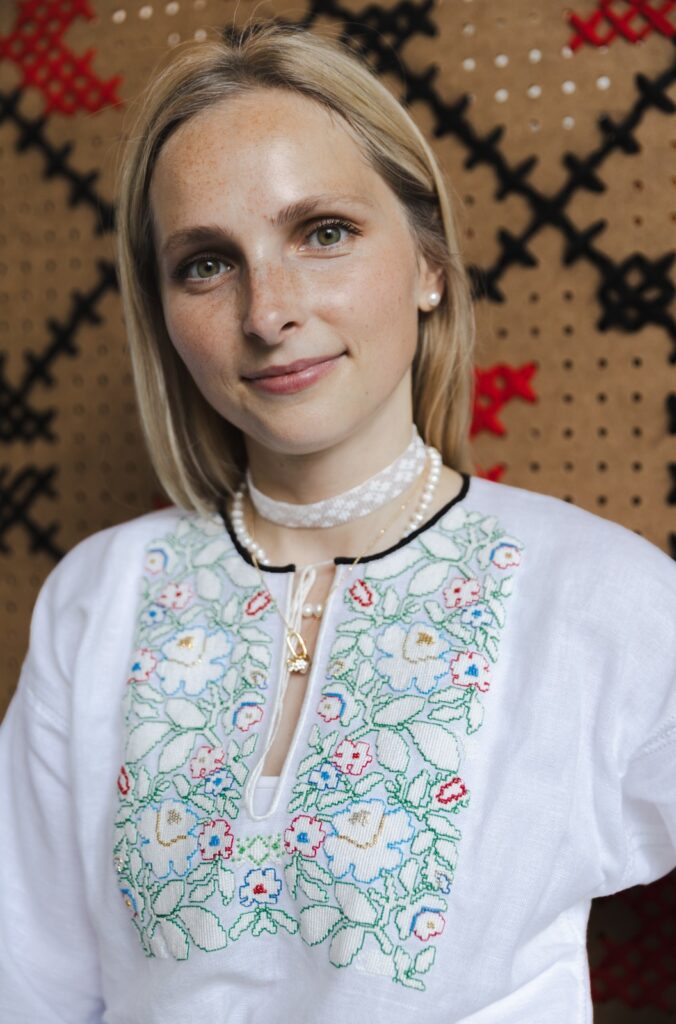
I’m from a city that is not only the capital of Ukraine, but also the capital of my heart.
My parents met in Ukraine: my father from faraway Kazakhstan, my mother — Ukrainian by blood and soul. There is no inherited embroidery in our family — no grandmother’s chest, no thread passed from hand to hand.
Just me, a needle, and a quiet longing I couldn’t quite name.
But since I was little, I’ve always loved making things with my own hands. And somewhere along the way, without even realizing it, embroidery became the way I breathe, feel, remember.
Each stitch — a small act of returning to something I never lost, just hadn’t found yet.
The soul behind my vyshyvanka is Ivan Franko — the poet who once slipped an embroidered shirt beneath his city jacket and walked proudly into modernity, his roots stitched close to his skin. I think about him often. About how you can be fully of your time, and fully of your people, all at once.
I wanted to create a shirt I could wear every day — not for tradition’s sake, not for ceremony, but simply because it’s a part of me. The way a name is part of you. The way a language is. The way a face you love is.
To wear it is to carry memory.
To wear it is to feel home.
To wear it is to say — I know who I am.
And in a world that asks us to forget so much — that feels like everything.
Anastasiia Khomenko
From Vinnytsia | VATAHA Workshop Curator
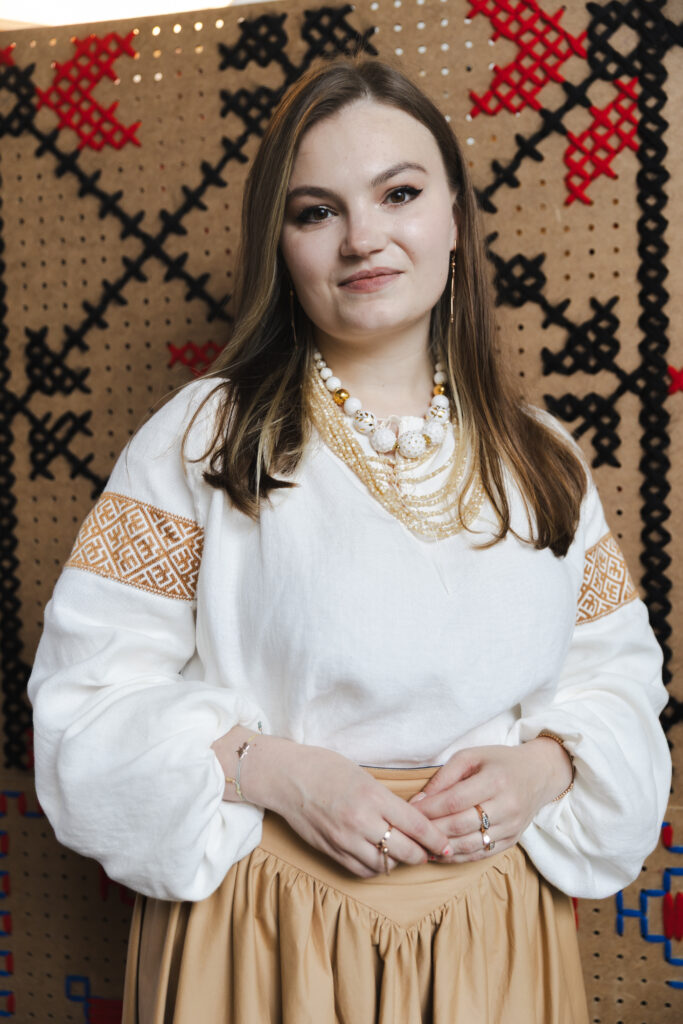
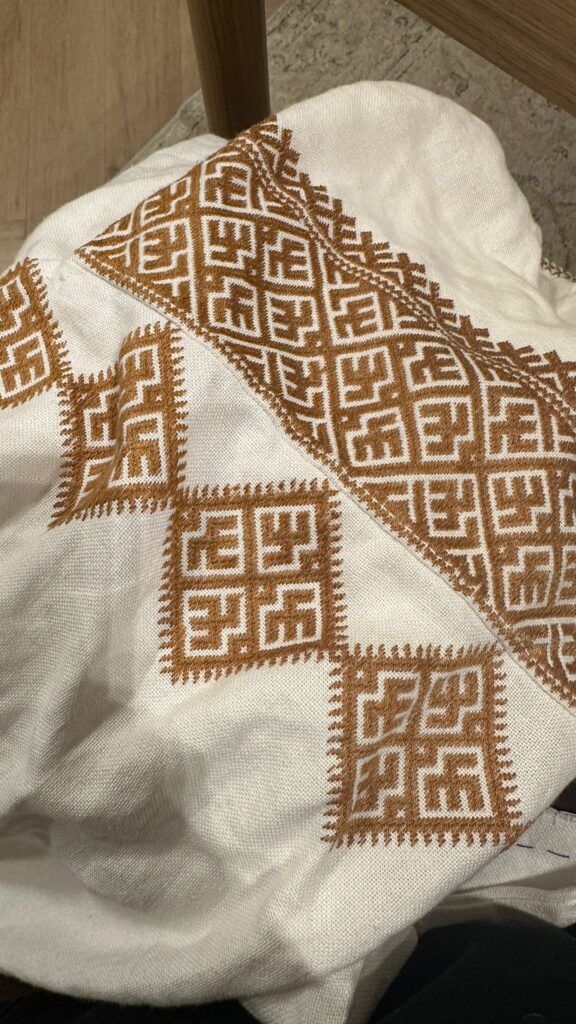
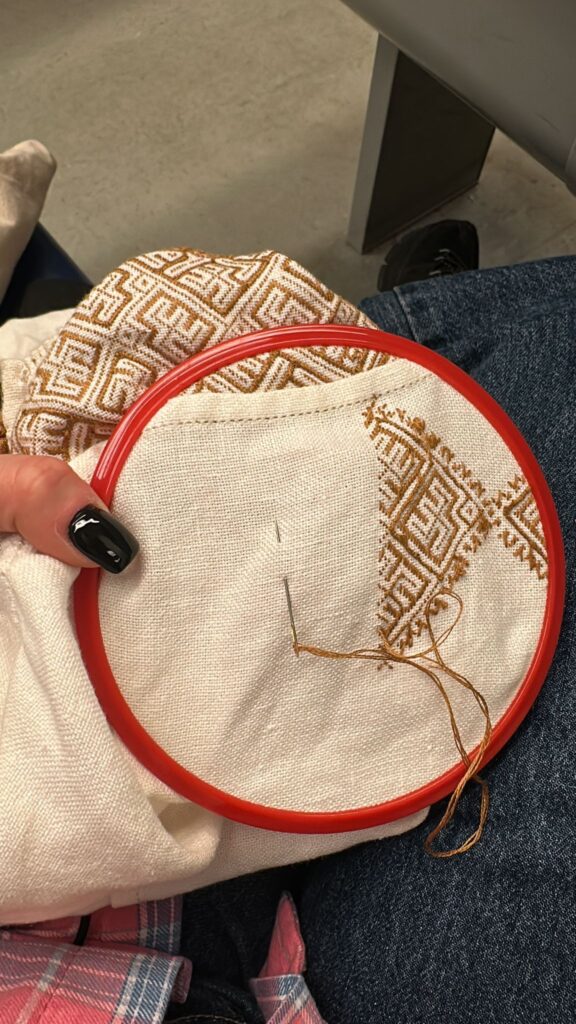
I made a decision to create my own vyshyvanka several years ago. After the full scale invasion started I had to flee abroad. During numerous talks with foreigners about Ukraine I realised I have nothing to show them about my culture and history.
Mostly because I have nothing left from my ancestors. The most horrible is that the reason for that is the same-russian oppression. I realised that if russia destroyed my heritage it depends on me to create my future and protect it. I started exploring traditional clothing of my region. It wasn’t easy. I didn’t have a goal to recreate exact historical piece.
I believe that despite preserving our culture we have to develop it to keep it interesting and up to date. So my goal was to create a shirt with traditional and comfortable cut, traditional ornament from my city and colour I will be able to wear more than just on holidays. It took a lot of time.
First I discovered yellow embroidery in my region. That was very unusual but a bit too bright for me. Also I chose the technique and more or less ornament. I was already busy with another shirt which is also nice but not THE shirt. Then the idea of organising my own vyshyvanka was brought. I understood that it is a sign – I have to start the desired shirt.
Accidentally I saw a post on Facebook with exactly the shirt I wanted. The ornament, the colour of embroidery-everything was perfect. As a responsible artist (😅) I asked where I can buy an scheme and actually bought it. The rest is a story of „My own vyshyvanka” We have a saying in our language „to reach something with blood and sweat”.
That was exactly how I did this shirt. But when I wore It for the first time I almost cried. I felt like I touched the history. Years of my destroyed heritage. It felt like I broke that cycle. It’s two years since I started my shirt. I am still adding embroidery, doing some alterations because the technique is not only one of the oldest but hard to make on such thick fabric.
The other reason is that I feel connection to this shirt. It gave me a feeling that I got on the other level. I feel if I made it I can do everything. I feel empowered and connected to my country and culture. It is far from perfect. But it is mine. It is the evidence that it is impossible to erase Ukrainian identity and power even along centuries.
Join our Vyshyvanka Day events
Get to know our volunteers better and learn more about traditional Ukrainian embroidery heritage at VATAHA’s two Vyshysvanka Day events this upcoming May.
From lectures to hands-on workshops and an ethno-musical performance, our two events in the Randstad will celebrate creativity, storytelling, and cultural heritage. Secure your ticket now!
- 📍20 May | 12:00–16:00 | Kunstmuseum Den Haag, Stadhouderslaan 41, 2517 HV
- 📍23 May | 12:00–16:00 | Fenix, Paul Nijghkade 5, 3072 AN