
This year was VATAHA’s 5th run for Ukraine. “The urgency has shifted,” says the curator of “ Ukrainian Creatives Eternally Silenced by the russian War”, Christian van der Kooy.
“In the first year, a run like this was about mobilizing. Now it is about connecting the physicality with the memory; otherwise it is just another sports competition. The beauty of such a run is that it literally exhausts you, and that exhaustion is connected to someone who gave their life. It becomes internalized, connected with memory.”
The Run’s art program is part of that memory, and part of what gives runners context surrounding those very names.
Echoes and Fallen Rhymes
OVO Literary Agency
The “Echoes” project was created by OVO Literary Agency and the literary memorial project “Nedopysani” (Unwritten). Writer and veteran Olena Herasymiuk conceived the idea. Together with poet and veteran Pavlo Matyusha, they have created a space where their own texts intertwine with fragments from the works of Ukrainian authors who were killed or went missing during the war.
The “Fallen Rhymes” (“Збиті рими”) project brings Ukrainian soldiers’ poetry to a wider audience by turning their texts into songs performed by contemporary bands. The first album has already been released and includes songs by Mad Heads, Mnishek, Angy Kreida, Anderson, and others, based on poems by Ukrainian heroes.
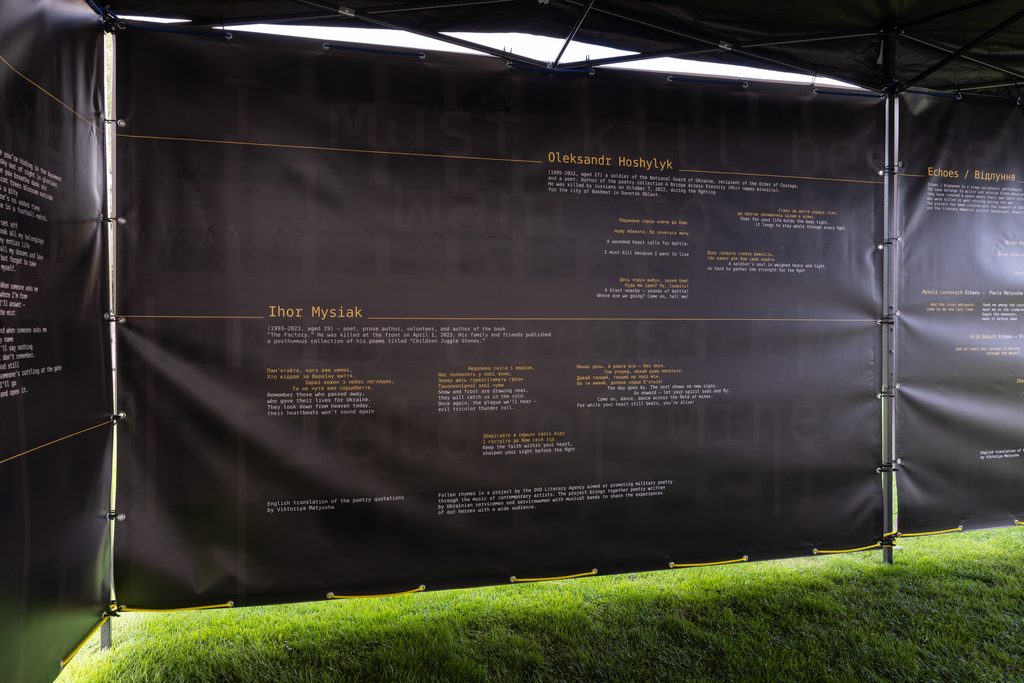
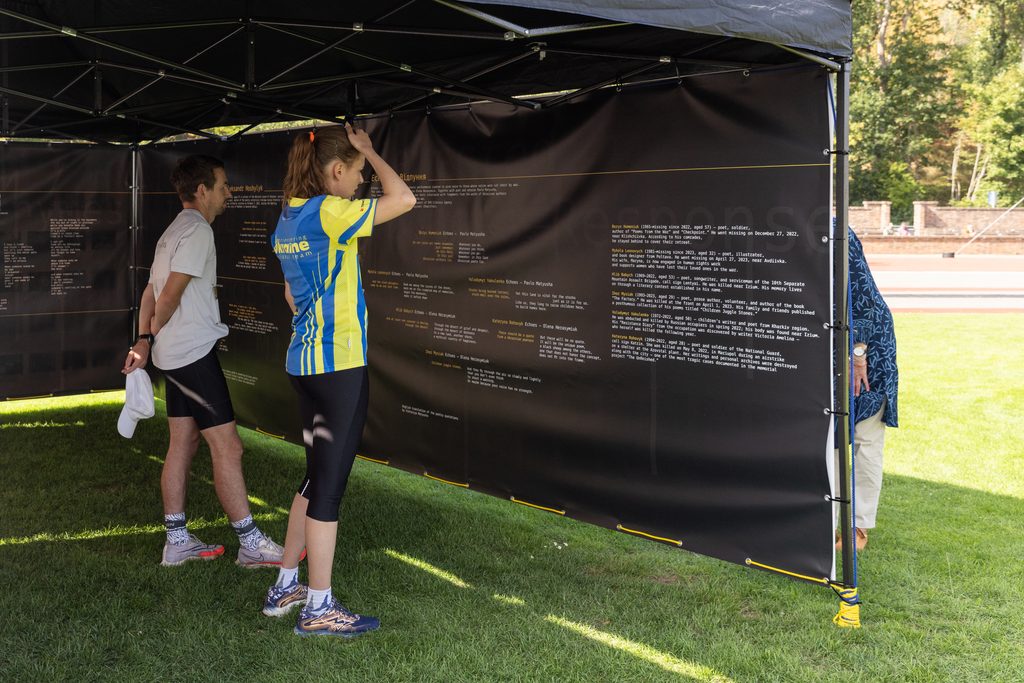
Photographer: Christian van der Kooy
“No matter how much foreigners read the news about the war in Ukraine or watch documentaries, it may all remain ‘somewhere over there’ until it touches their hearts. That is where art, and poetry in particular, becomes a powerful tool through which we can reach not people’s minds, but their souls. War poetry can express in a few metaphors and stanzas something that can turn one’s consciousness 180 degrees and touch hearts across the globe. And then, perhaps, the world will understand much better both the price we are paying and the values we are fighting for. Our shared values,” Victoria Stepanets, a curator of the project, explained.
Carpet of Love and Sorrow
A participatory healing art memorial, hand-braided by communities worldwide. Each braid is one life. The red ones are for those who are living through the war, the black for those it has taken, and the mixed red-and-black for those who are missing, still waiting to be found. In 2028, the Carpet will be unfolded on Dam Square in Amsterdam as an attempt at a Guinness World Record, and it will raise funds for the education of children who have lost their parents to the war, so that grief becomes not only remembrance but a future.
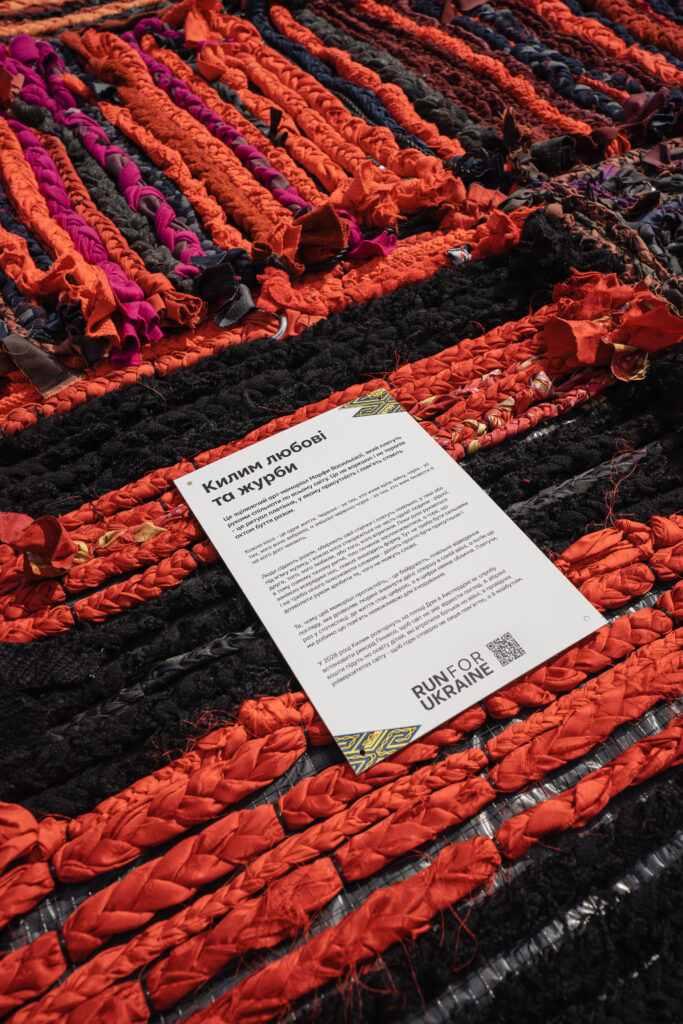
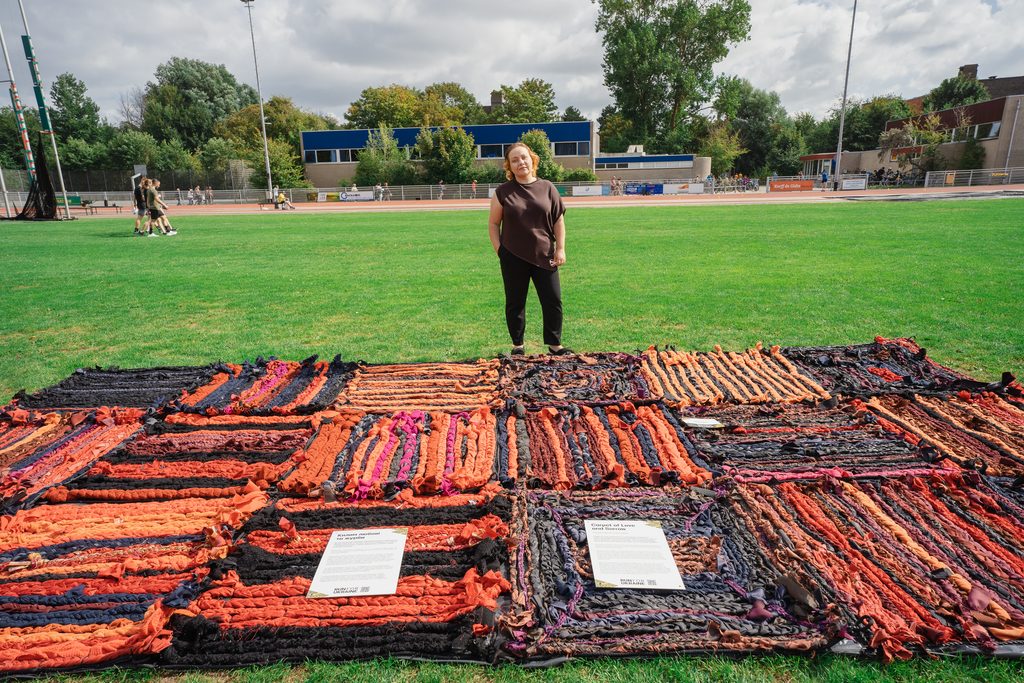
Photographer: Lera Manzovitova
Marfa Vasilieva, the artist behind the project, told us, “Each person has their own why. I did this project to give Ukrainian people, and people who have friends or relatives in Ukraine, an opportunity to use fabric as a prayer and a last goodbye. Many people weren’t able to go to a funeral or to say goodbye. The black braids become that funeral.”
“If we don’t have rituals that nurture our thoughts and our soul, we lose ourselves.”
Ukrainian Creatives Eternally Silenced by the russian War
Curated by Christian van der Kooy, monitored by PEN Ukraine
A memorial to the Ukrainian creatives and culture-makers who stepped up to defend their freedom and protect European borders.
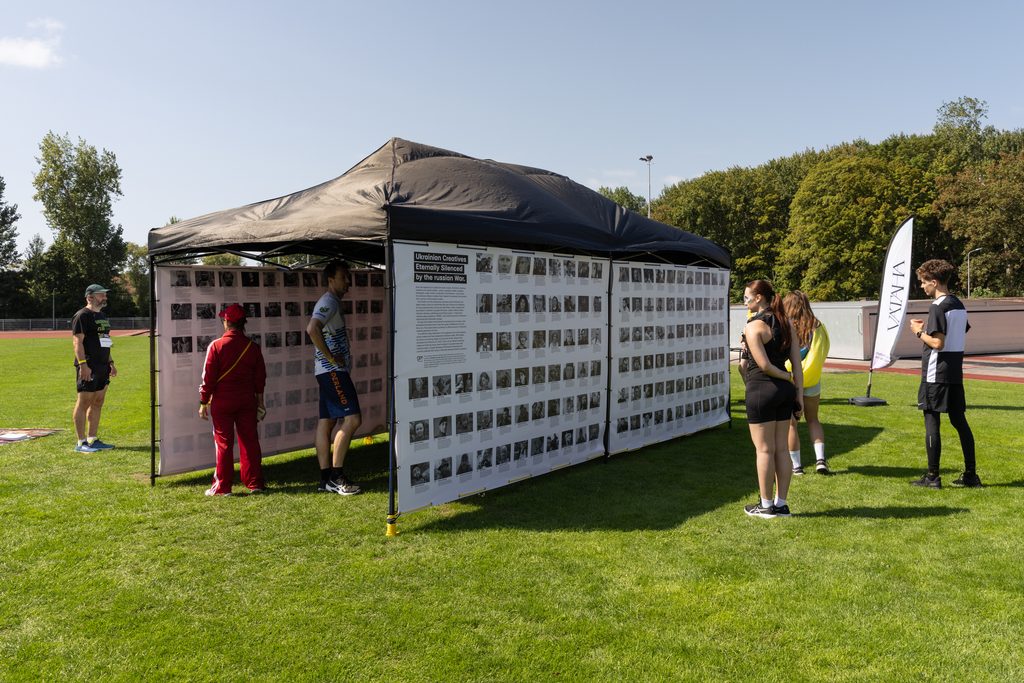
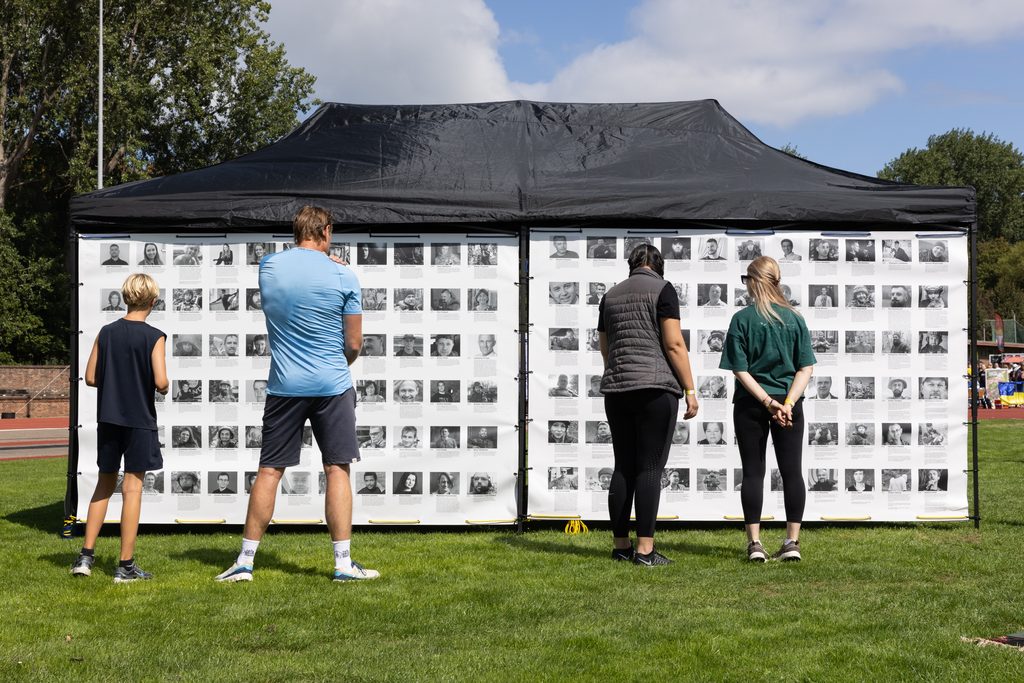
Photographer: Christian van der Kooy
“This year we collected 350 people in total, people working for news outlets, cameramen, poets, photographers, librarians, museum workers. It is painful to realize that these lists are so incomplete. Most of the time the news is about numbers: the numbers sent, the military needs, the destruction. But this is a genocide on such a scale that the goal is to erase Ukrainian culture. These 350 people are so important for what Ukraine is, and for what it would be if they were still alive,” van der Kooy tells us.
For a Dutch audience, he puts the massive loss into local context: “Imagine the whole Amsterdam art scene wiped away. Who is there left to talk to? What happens to their works: who will pick them up, who will show them to an audience? That is why it is important to understand something of the scale. In Ukrainian history, so much has been wiped away before. This is happening again.”
“My task is to stoke the fire. To challenge people to be more active and more outspoken.”
Memory Remains
Maria Petrochko with the support of Letterenfonds
A series of illustrated portraits of fallen Ukrainian defenders, each printed on paper embedded with live seeds. The paper is fragile and easily destroyed, but planted in soil, it grows into flowers. Seen from a distance, the floral pattern resolves into camouflage: a field of battle, a field of harvest, a field of flags.
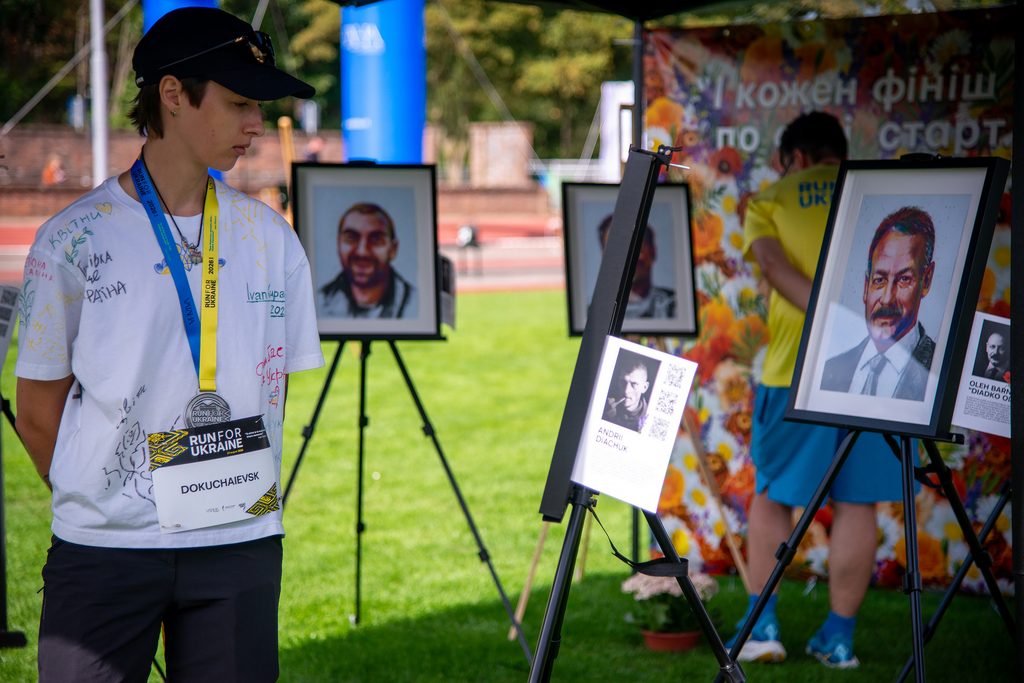
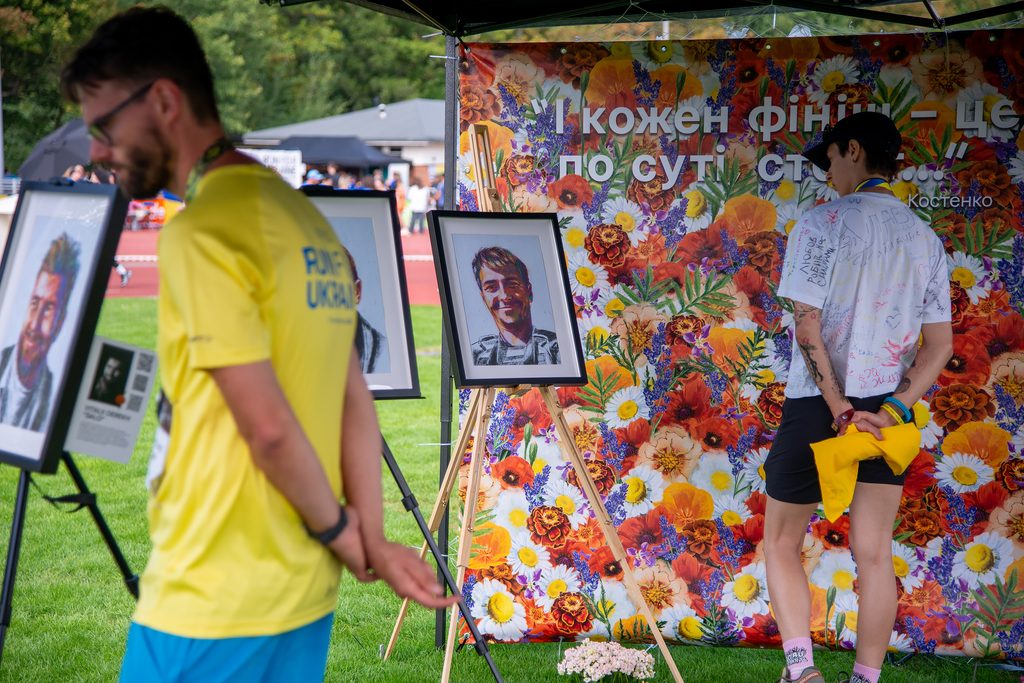
Photographer: Olga Kyrychenko
“The material is fleeting, but convictions and love are indestructible. As long as we remember, people live on, their ideas sprout, and their dreams come to fruition,” Maria says. “Memory does not die; it simply changes form and grows through our actions.”
This year, more than 1000 people came together in The Hague to run, walk, remember, and show their continued support for Ukraine. We run for Ukraine because remembering is a form of solidarity; it is about community and its collective healing. And we remember not only the past, but the future Ukraine we continue to stand with.
Would you like to support future editions of Run for Ukraine? Please consider making a tax-deductible donation to VATAHA: