
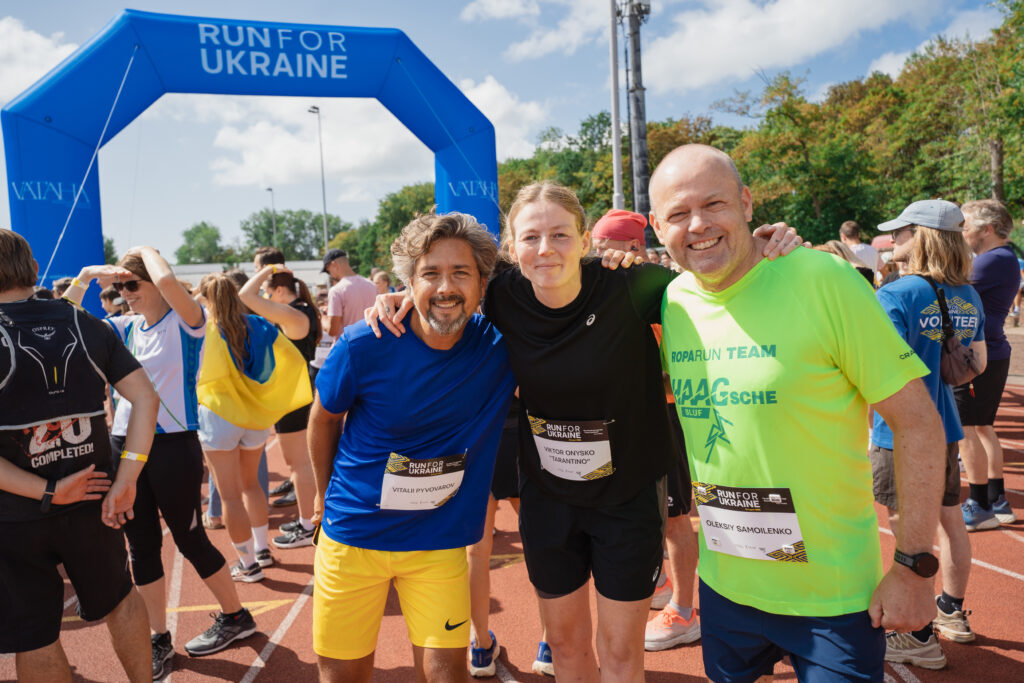
On August 23, the eve of Ukraine’s Independence Day, Haag Atletiek once again filled with runners gathering for VATAHA’s annual memorial Run for Ukraine. More than 1000 people came together in The Hague to run, walk, remember, and show their continued support for Ukraine.
This year marked the fifth Run for Ukraine organized by VATAHA in the Netherlands. What began as a small memorial run in Rotterdam in 2022 has grown into an annual gathering of Ukrainians, Dutch residents, and international supporters. Participants ran in memory of fallen defenders and deceased loved ones, and in support of Ukrainian cities and villages affected by russia’s war.
Already curious about the next edition? Save the date: the sixth Run for Ukraine will take place August 29, 2027.
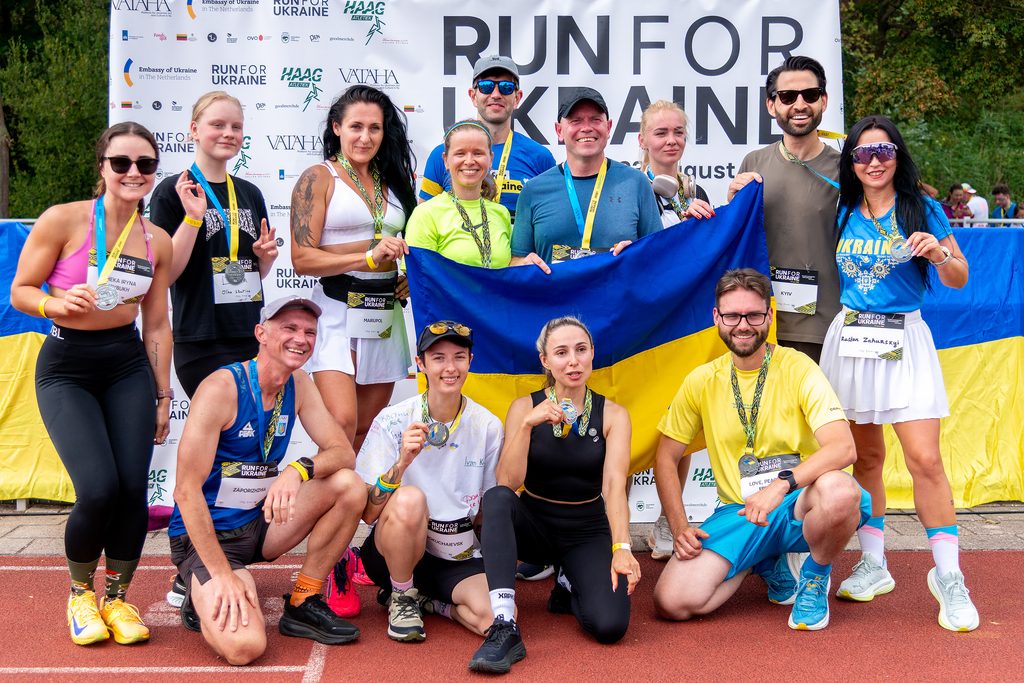
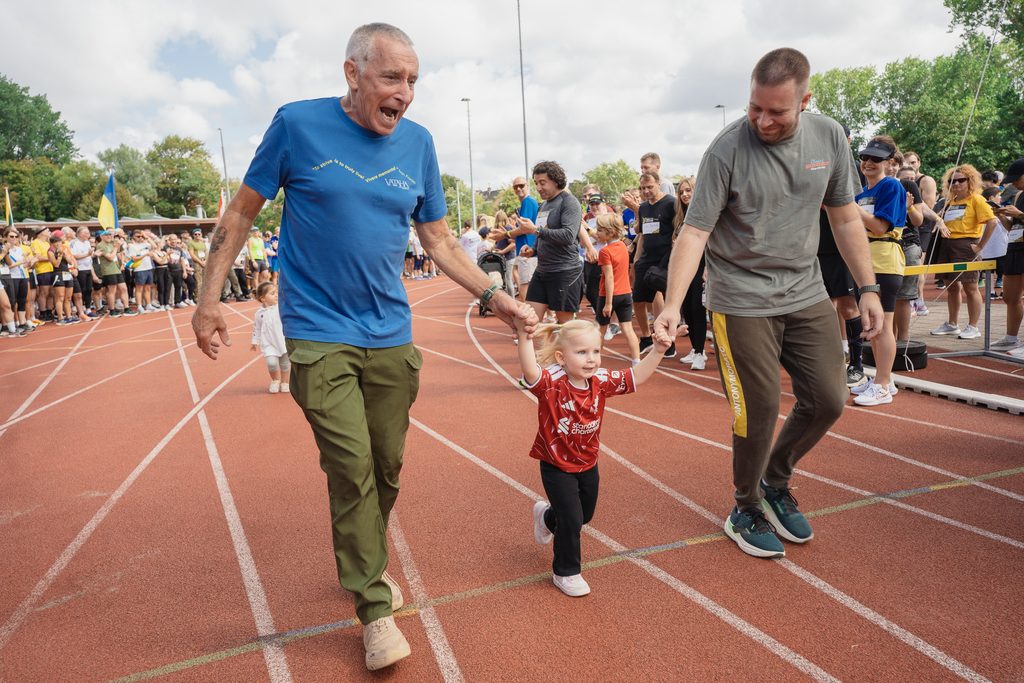
This year, the event stretched beyond The Hague. Satellite editions of Run for Ukraine took place simultaneously in Groningen and Maastricht, bringing the memorial run to three Dutch cities on the same day.
If you missed the runs on August 23, you can still join Run for Ukraine in Zwolle, taking place September 27, 2026.
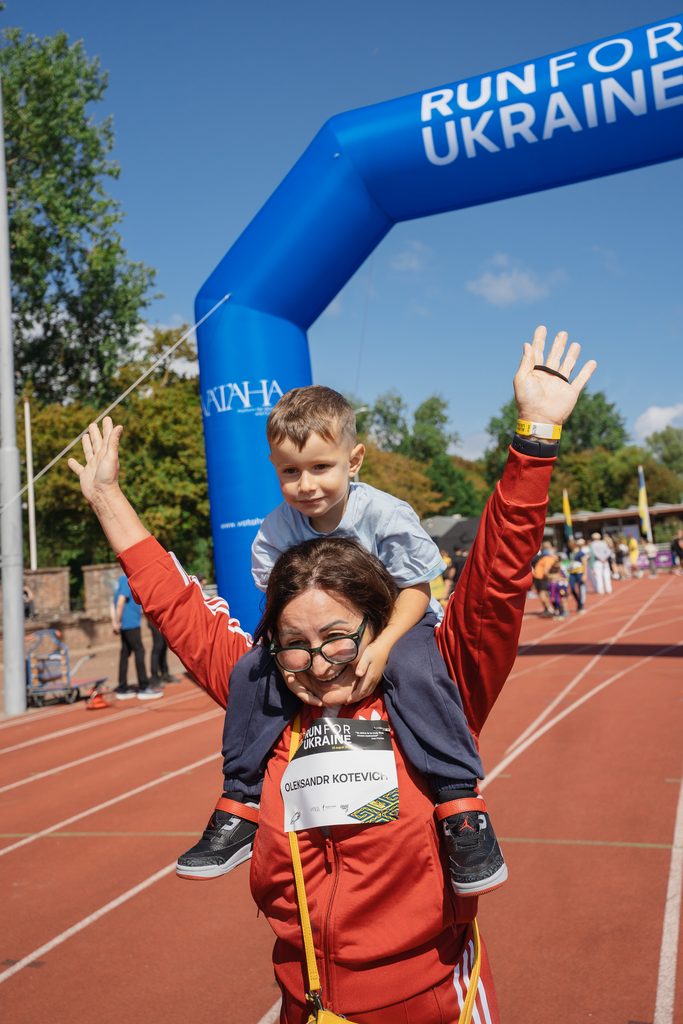
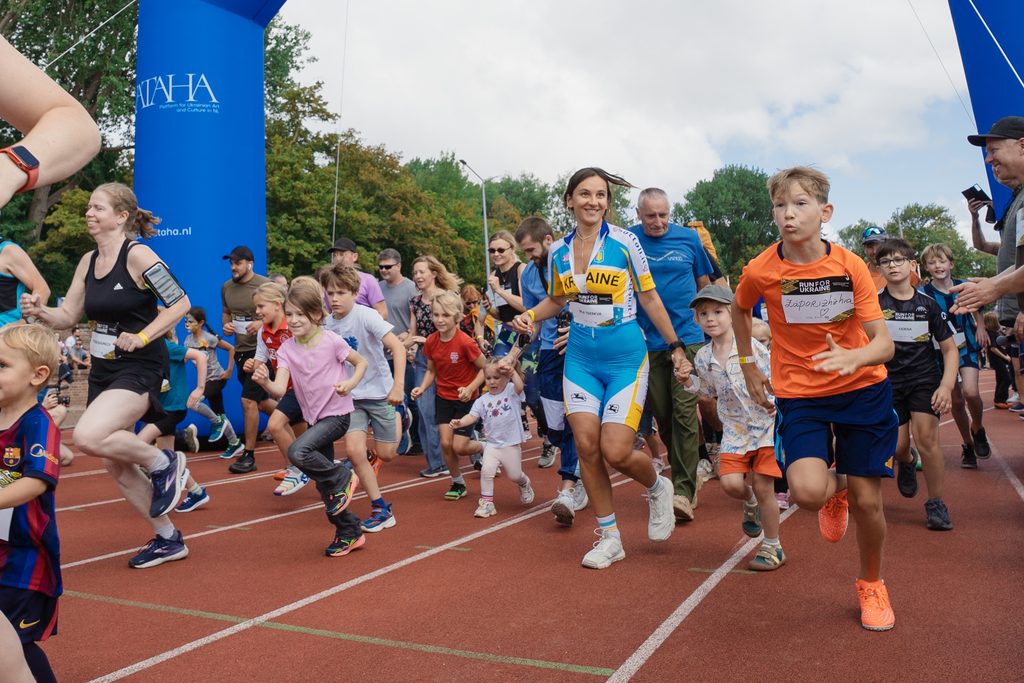
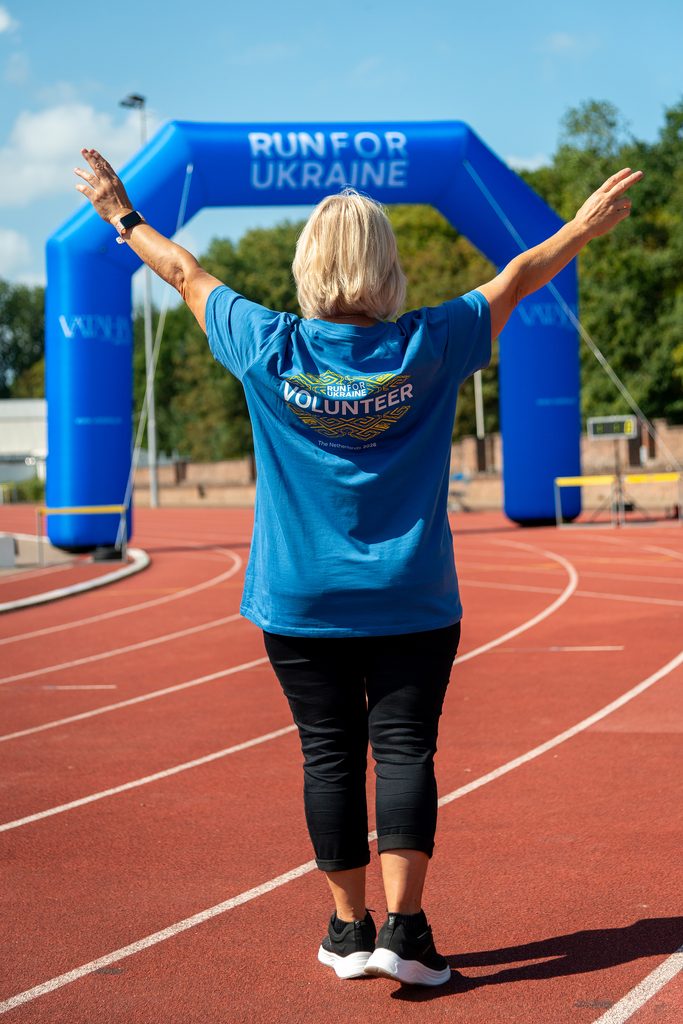
The tradition behind Run for Ukraine began in Ukraine itself, where an annual memorial run honours those who died defending the country’s independence, sovereignty, and territorial integrity. VATAHA brought this tradition to the Netherlands in 2022, and since 2023 has organized the event together with Haag Atletiek.
Five years later, the reason for running remains painfully present. But so does the community that has grown around it.
At the Starting Line
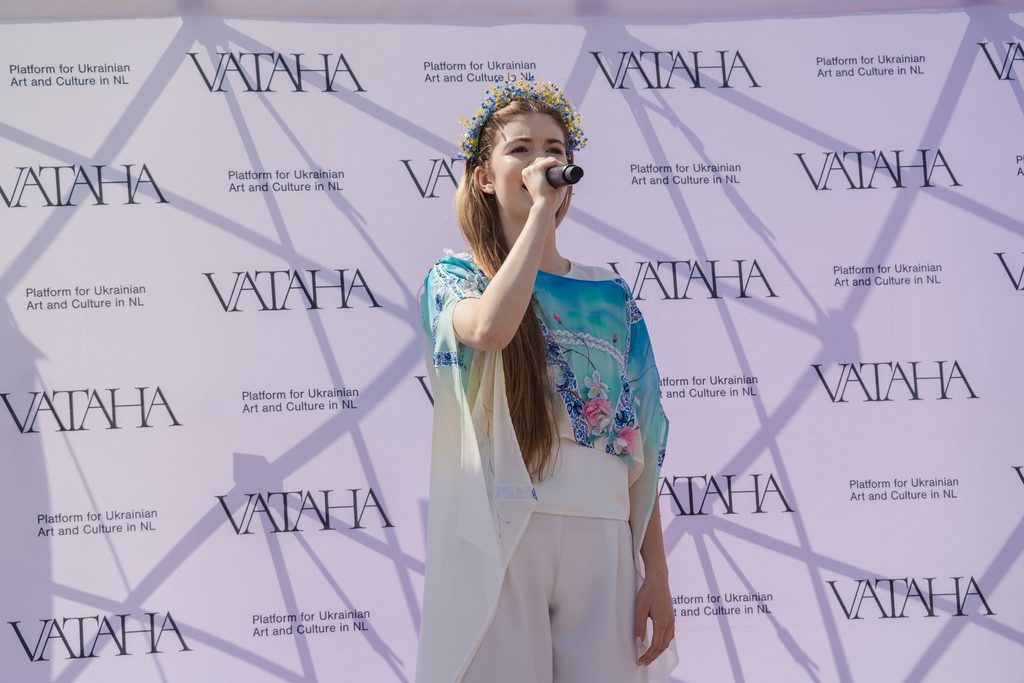
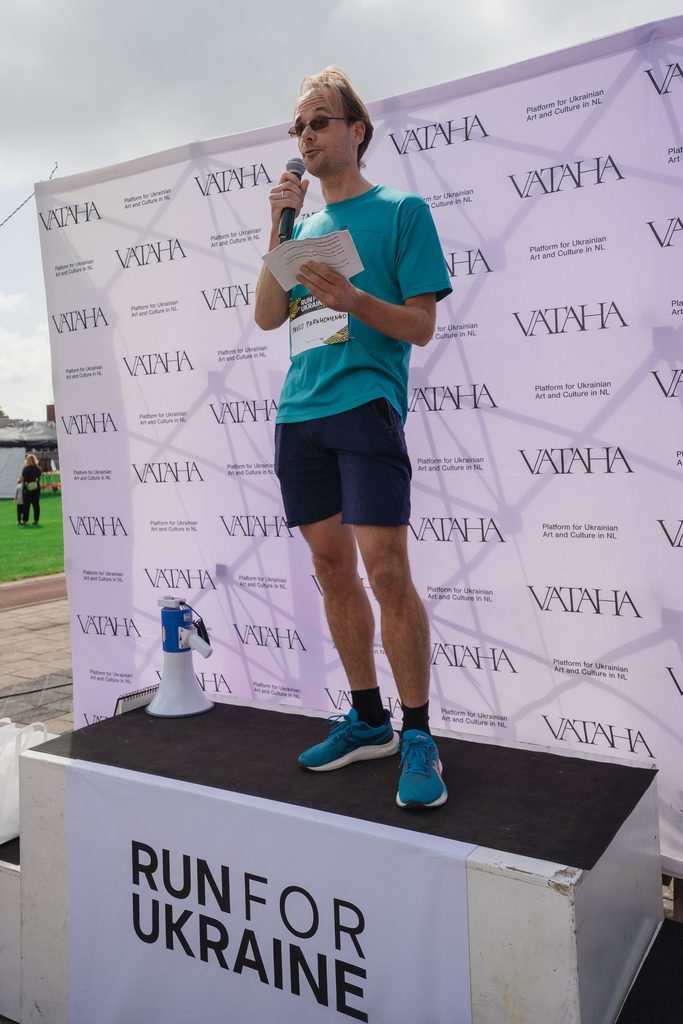
Before the runners set off across the dunes of The Hague, the afternoon began the way it always does – with Veronika Morska’s voice rising into the national anthem, followed by words meant to carry the crowd forward.
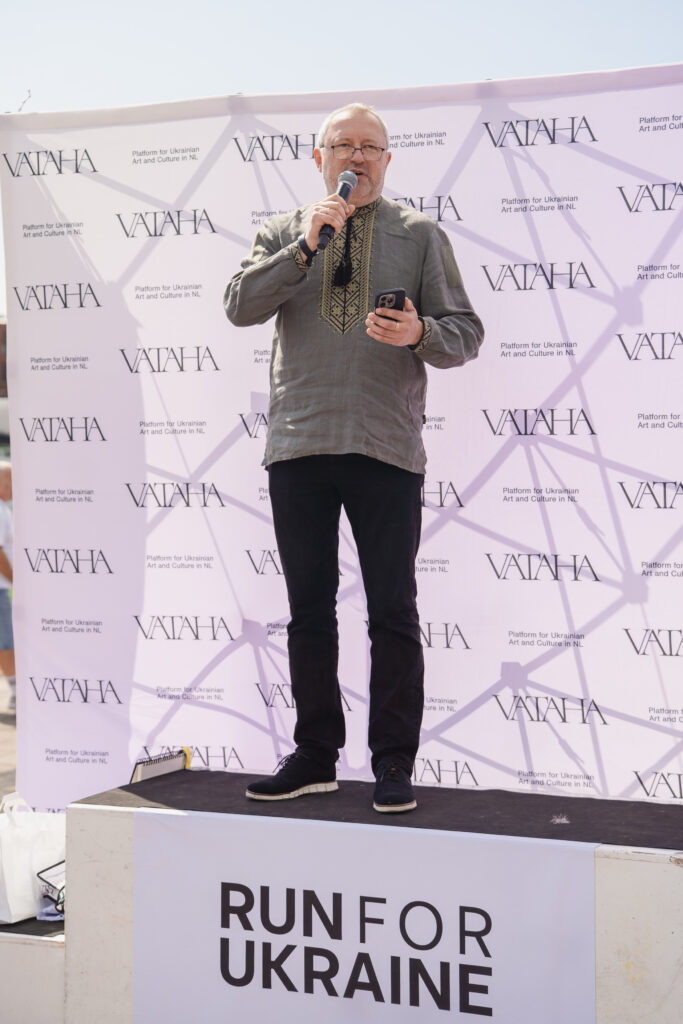
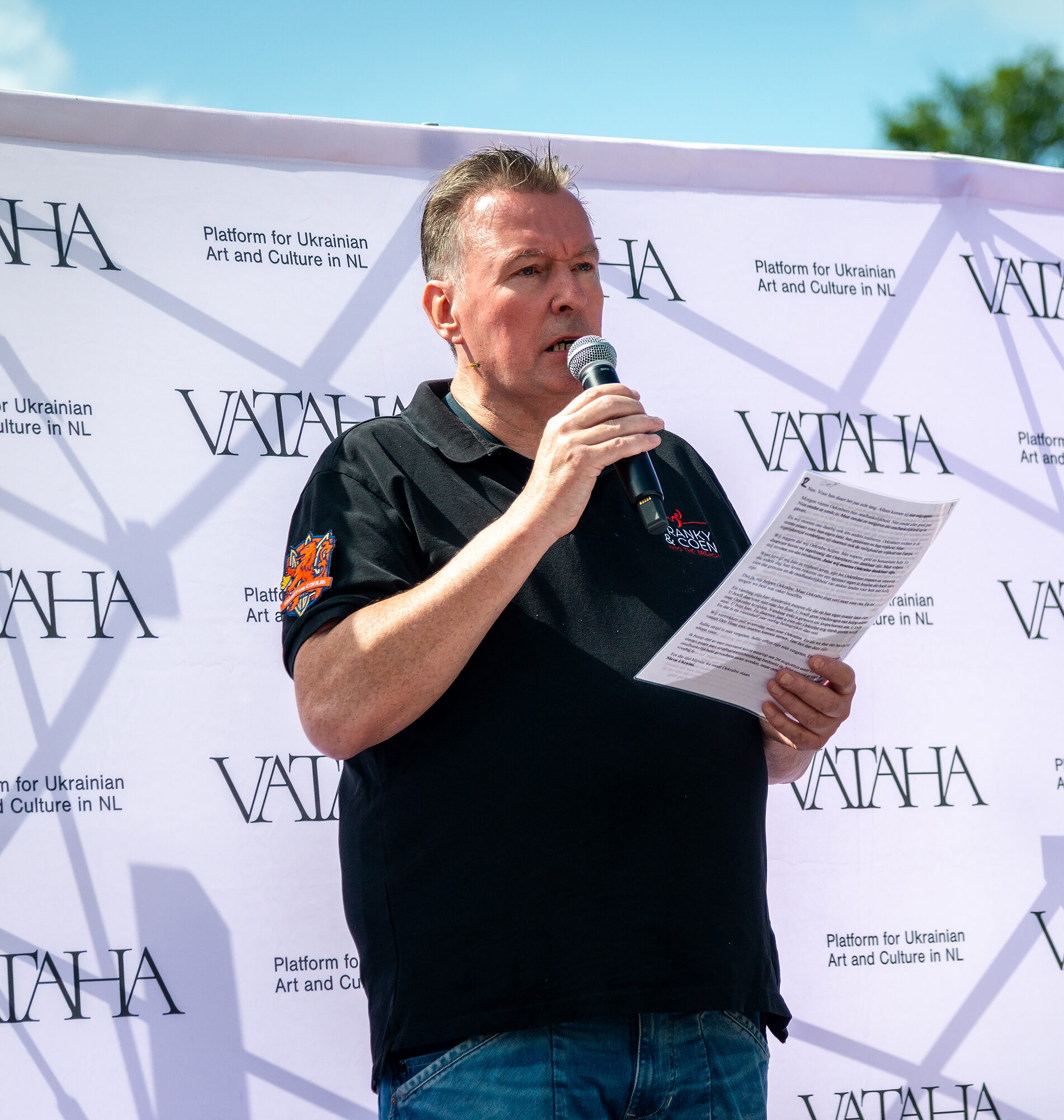
Pierre Heijnen, President of Haag Atletiek, welcomed everyone, while Ambassador of Ukraine to the Kingdom of the Netherlands Andrii Kostin kicked off the first countdown for the children’s run. The spirit of the moment continued with the speech from Director of the Program Directorate on Ukrainian displaced people Ministry of Migration and Asylum Luuk Leussink, whose remarks added weight to the opening ceremony. Coen, of Franky and Coen, closed the official opening with a heartfelt and urgent plea for support.
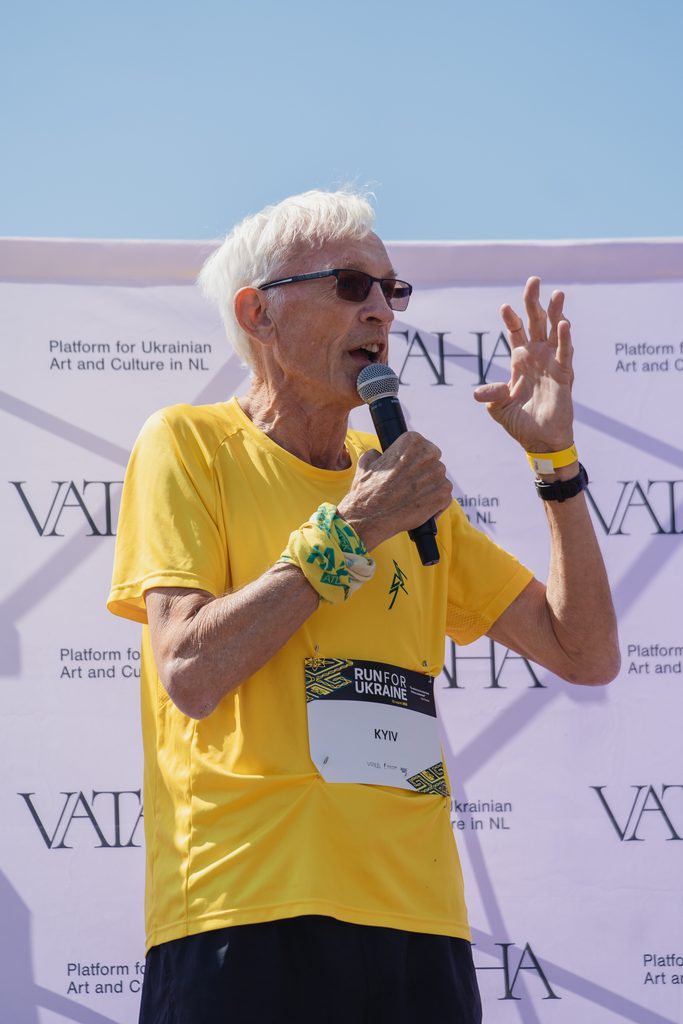
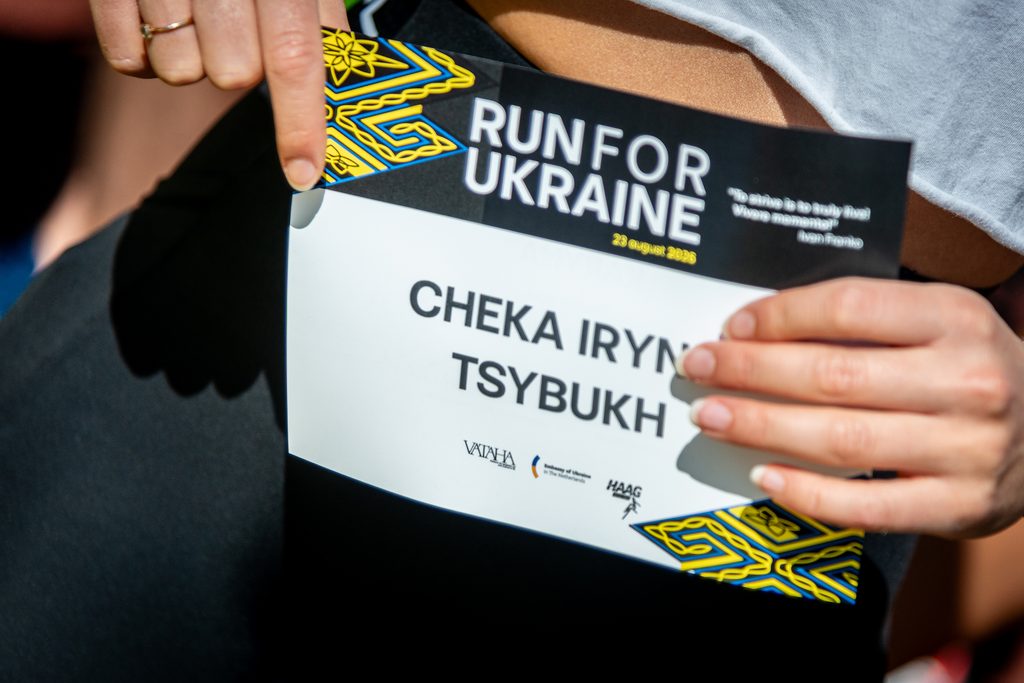
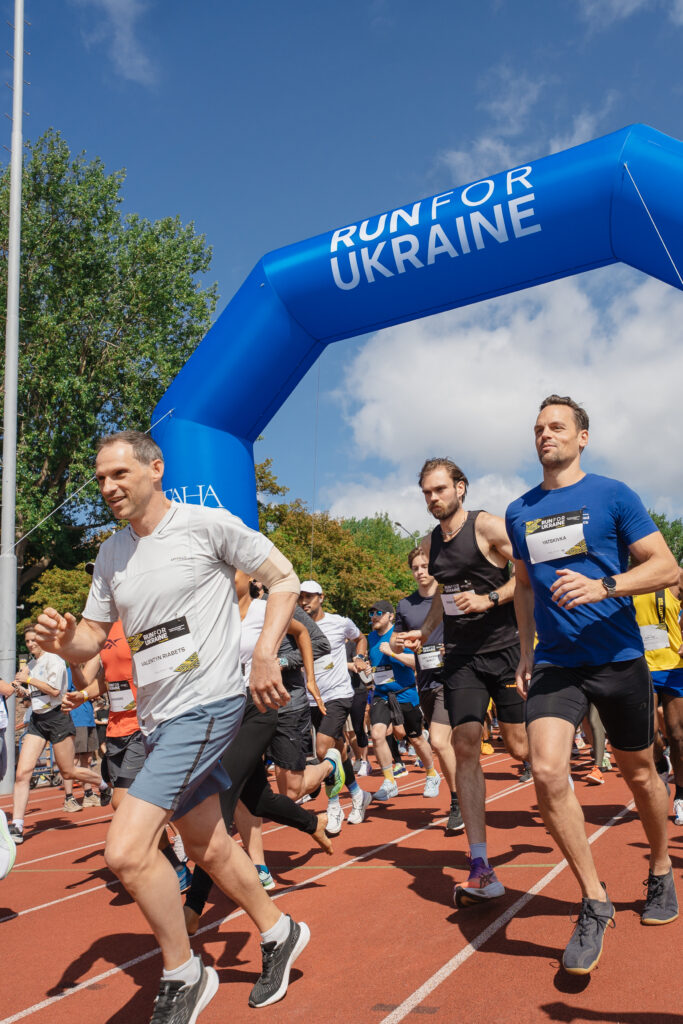
Then it was time to run. Mr. Yurii Herashchenko, Defence Military Attaché of Ukraine, continued with count downs as the first steps were made, sending participants off across the 10, 5 and 2 kilometer distances. Each runner carried a dedication: the name of a fallen hero or deceased loved one, or the name of a Ukrainian city or village they had chosen to support.
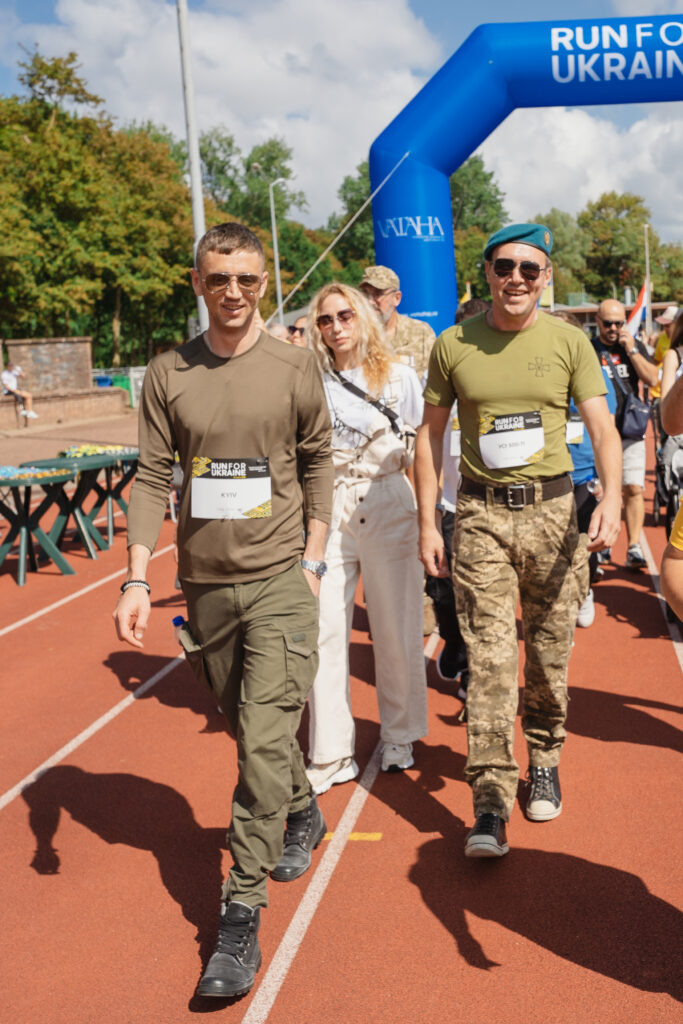
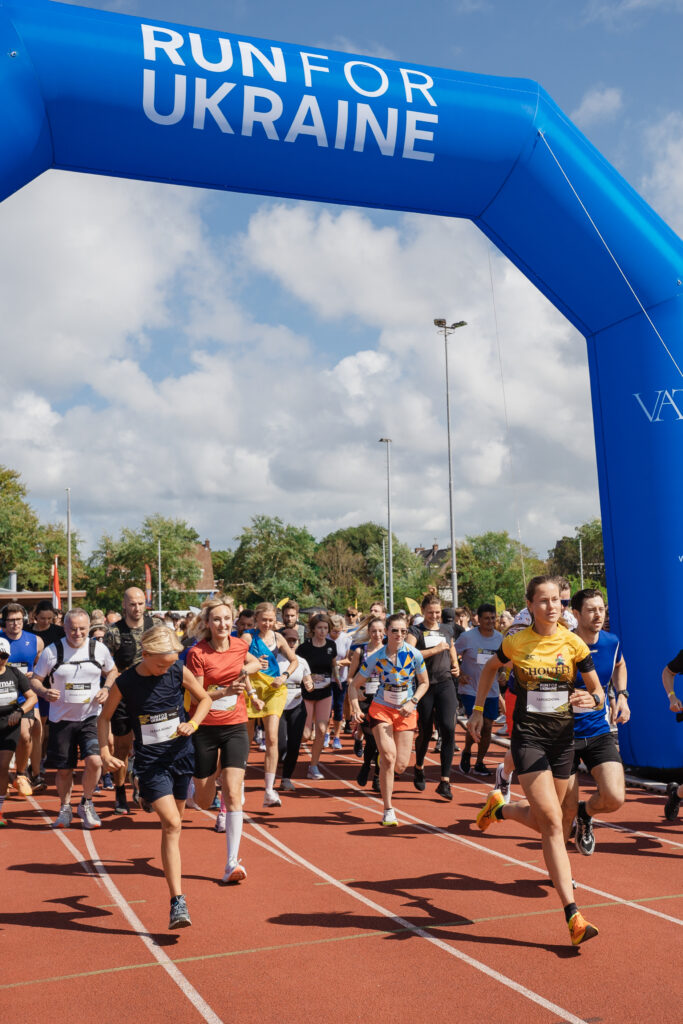
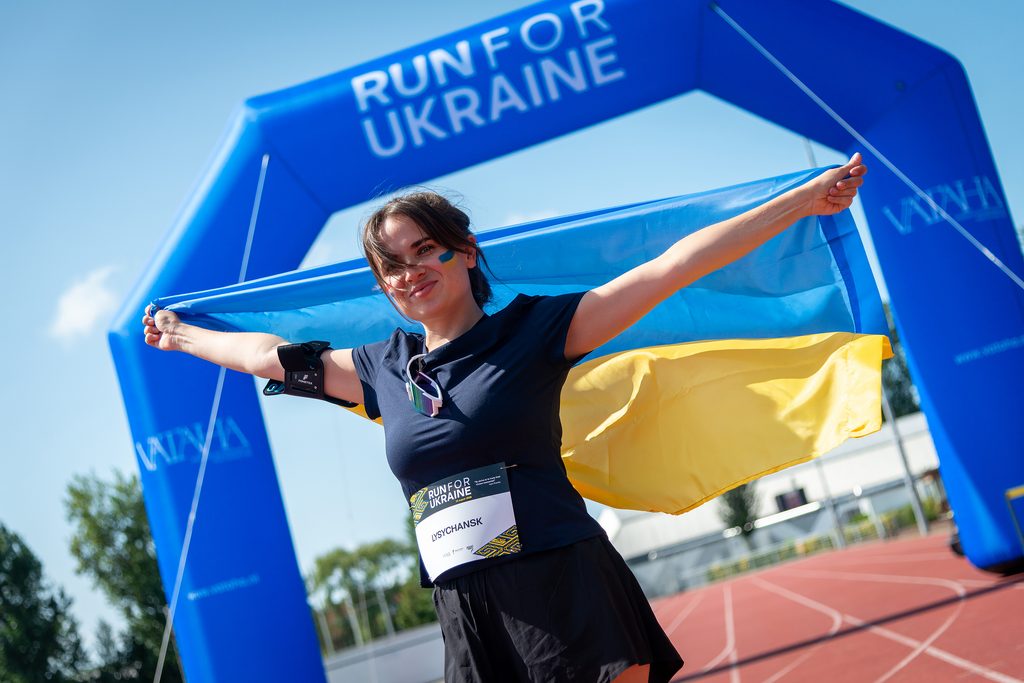
Among those taking part were Ukrainian veterans who are currently staying in the Netherlands for rehabilitation. Their presence, made possible together with the Netherlands for Ukraine Foundation, has become particularly meaningful at the event. This year, the group of veterans was also joined by Levi Vloet from Team Para Atletiek, moving alongside them in a shared moment of solidarity.
Art, Culture, and Remembrance
Run for Ukraine has always made space for Ukrainian culture alongside movement, as artistic practice is another form of remembrance. This year’s art programme, gathered at the centre of the running track, made this impossible to miss: visitors moved through portraits, braided tapestry, poetry, and archives concerned with memory, loss, and preservation of Ukrainian voices.
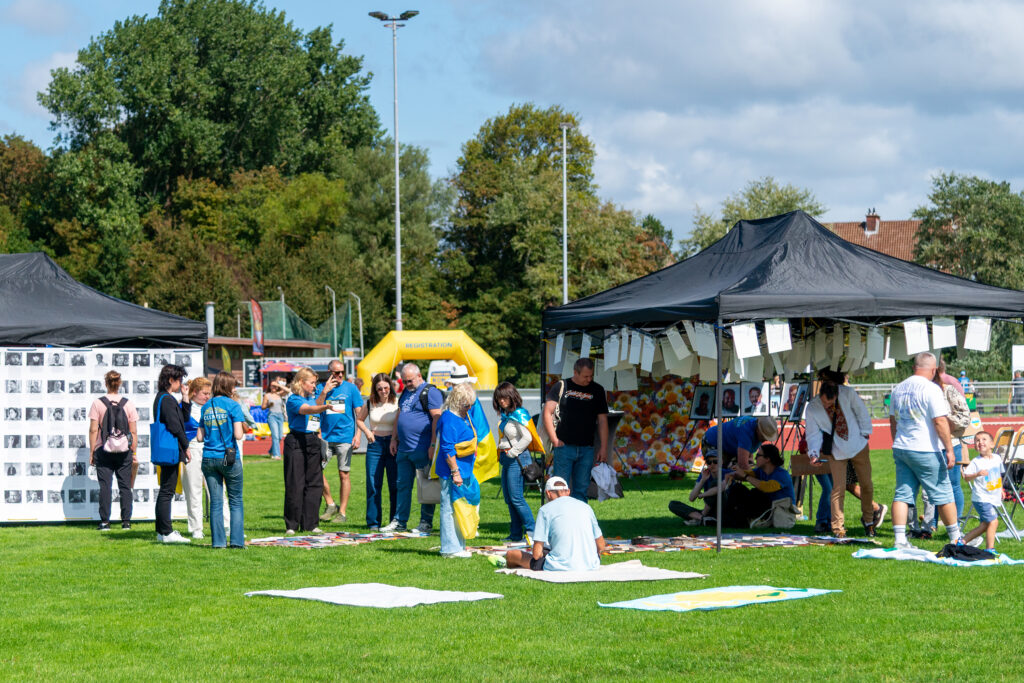
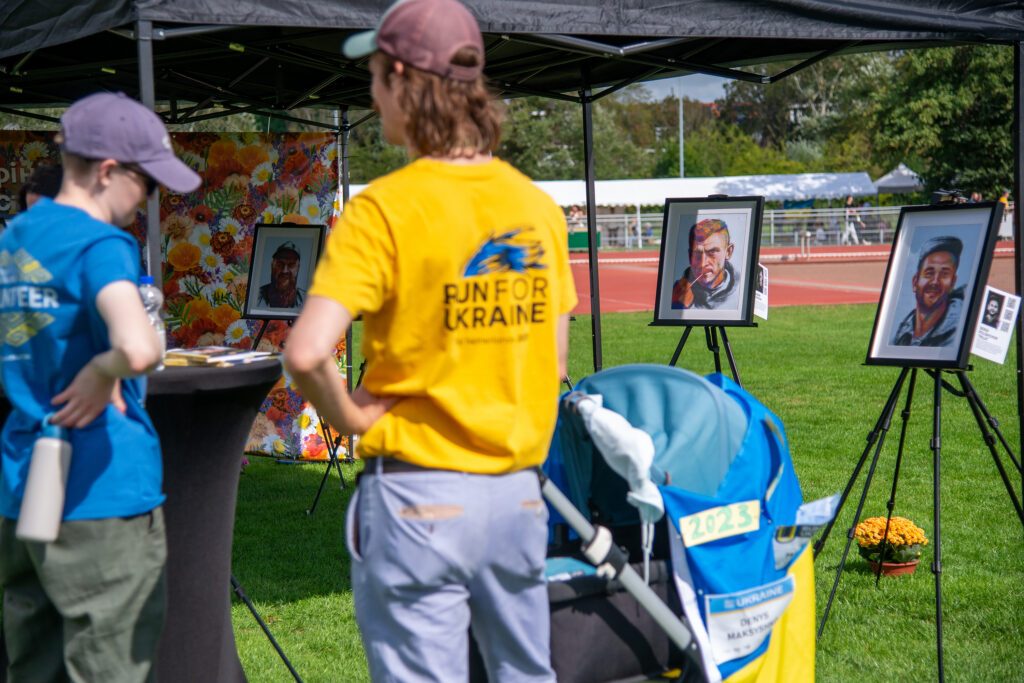
The art scene opened with faces. Ukrainian artist Maria Petrochko presented Memory Remains, a series of illustrated portraits honouring soldiers who have been killed, created with the support of the Dutch Foundation for Literature (Letterenfonds).
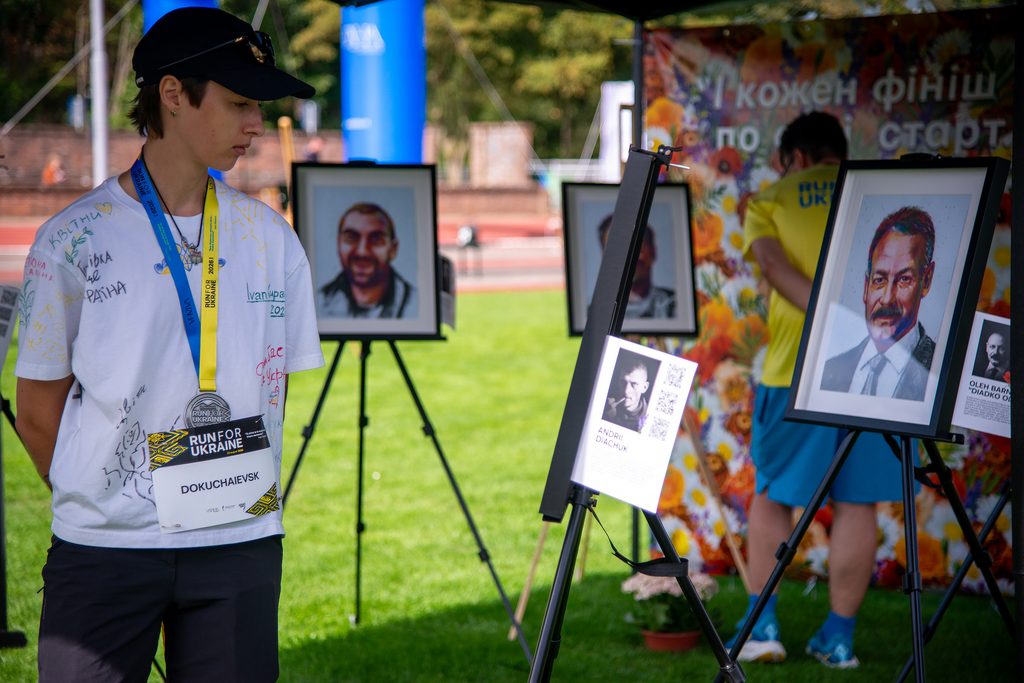
Each portrait was printed on handcrafted paper embedded with live flower seeds. Paper can be torn, burned – but it can also be planted, and from it, something still grows. Seen up close, the portraits are made of flowers, objects of warmth, joy, and light. Step back, and that same floral pattern resolves into the pattern of military camouflage: one image folding into the other; a flower field that is simultaneously a battlefield.
The artwork suggests that materiality fades but ideas, love, and memory do not; they can simply change form, and grow.
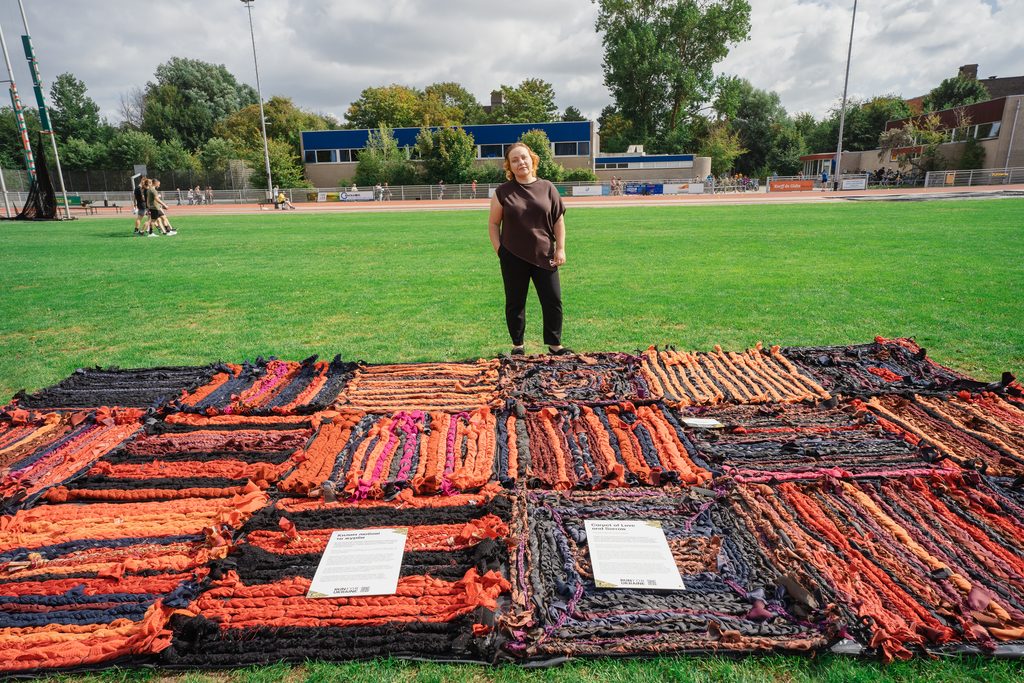
Nearby, Marfa Vasilieva’s Carpet of Love and Sorrow entered a new stage. Over the past years, visitors at collective sessions and VATAHA events have braided strips of black cloth for those lost and red cloth for those still struggling in Ukraine. At Run for Ukraine 2026, those braids were woven together into a collective tapestry for the first time, a step towards the project’s goal of creating a Guinness World Record. What began as many personal gestures is slowly becoming one shared object of remembrance.
Literature carried that same thread forward, giving memory a voice rather than an image.
Echoes, a collaboration between Literary Agency OVO and Nedopysani, takes the words of Ukrainian authors whose lives were cut short by war and places them in the voices of contemporary readers and writers, letting unfinished work continue to be read, spoken, and passed on.
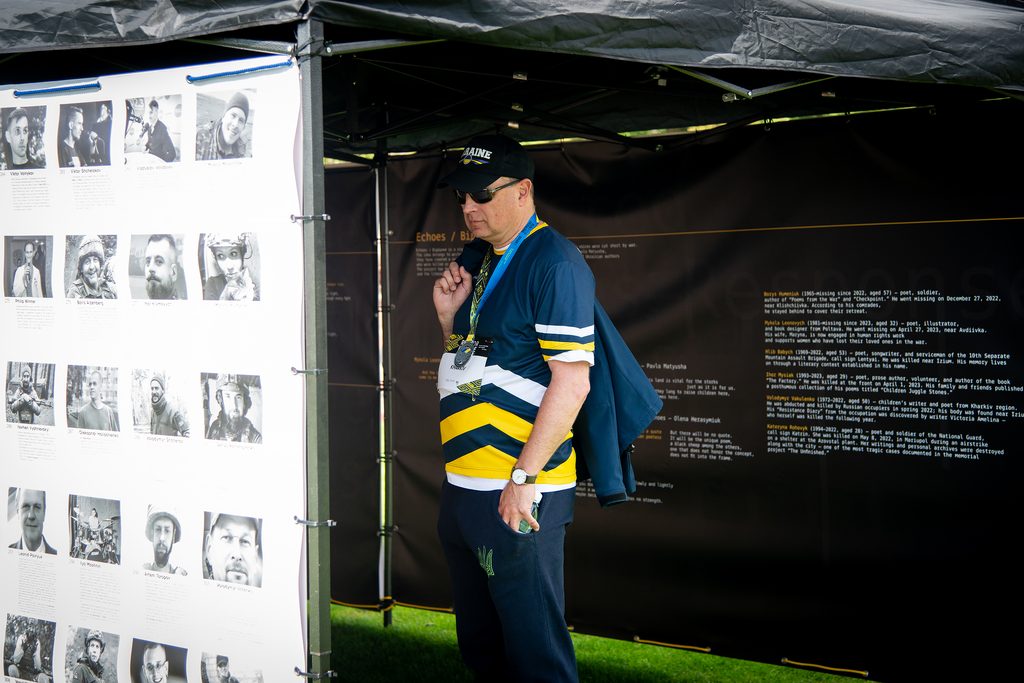
Fallen Rhymes, another Literary Agency OVO project, extends that same act of continuation into music, turning the poetry written by Ukrainian soldiers into songs performed by contemporary bands, so their words reach audiences who might otherwise never encounter them.
At the Literature Corner by Ukrainian House Rotterdam Library, visitors could browse Ukrainian writing in Ukrainian, Dutch, and English and discover authors whose work is increasingly finding readers beyond Ukraine.
At the same time, curated by Yuliia Lakitonova, another project was hard to look away from: Silent Witnesses with books donated by Ukrainian publisher Zhorzh. On display were charred, smoked-scented copies brought directly from Kharkiv – survivors of a print run destroyed in a russian strike on 1 August 2026.
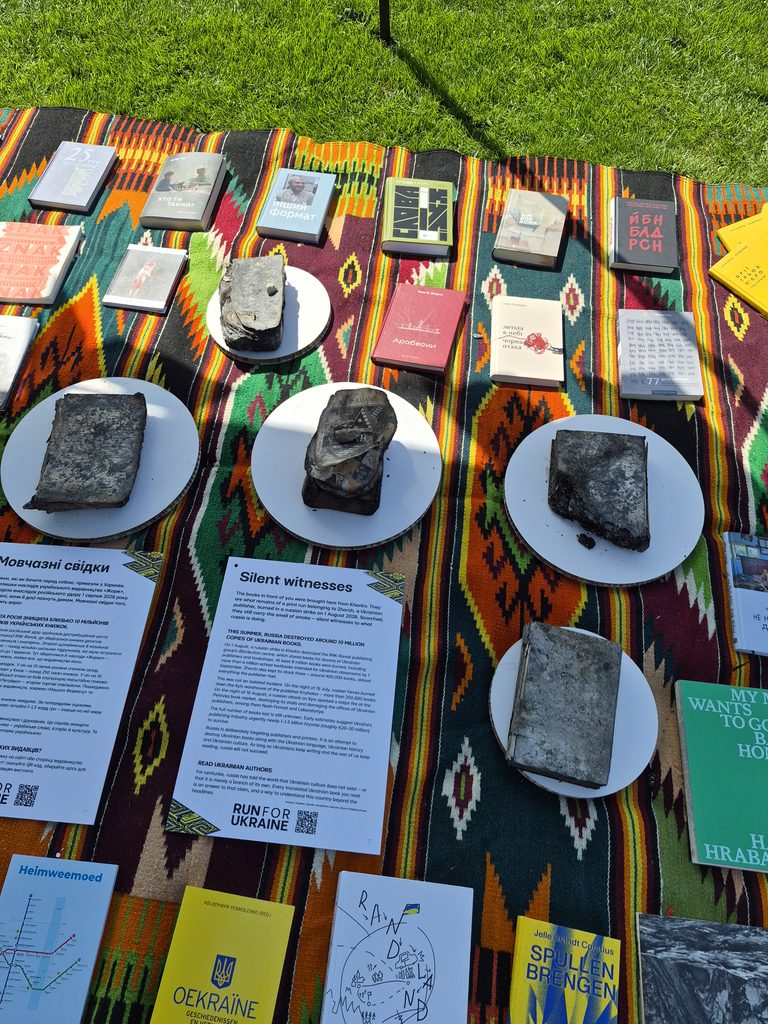
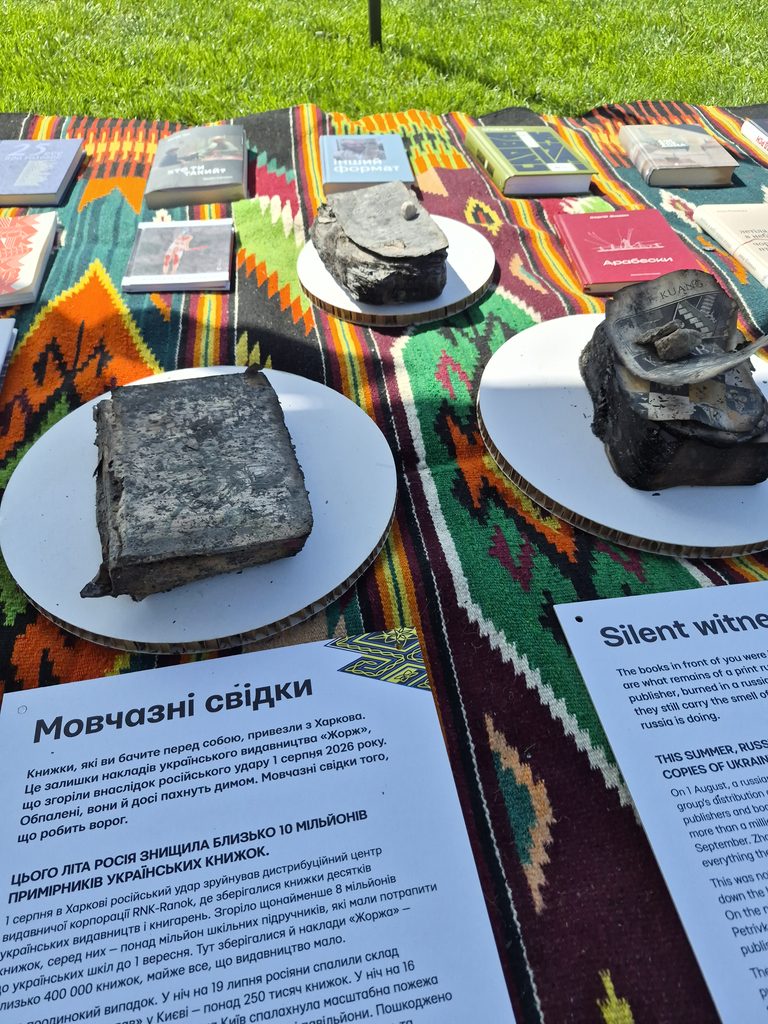
It was one of several such attacks this summer: warehouses and book markets in Kyiv and Kharkiv have been hit, and, by some estimates, russia has destroyed around 10 million Ukrainian books since June.
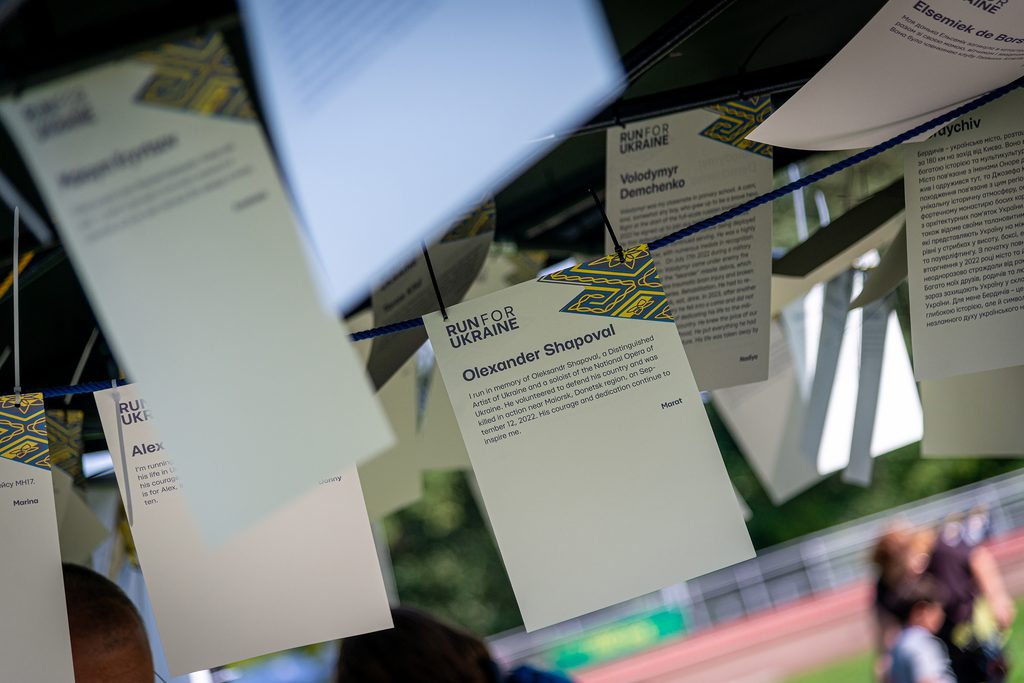
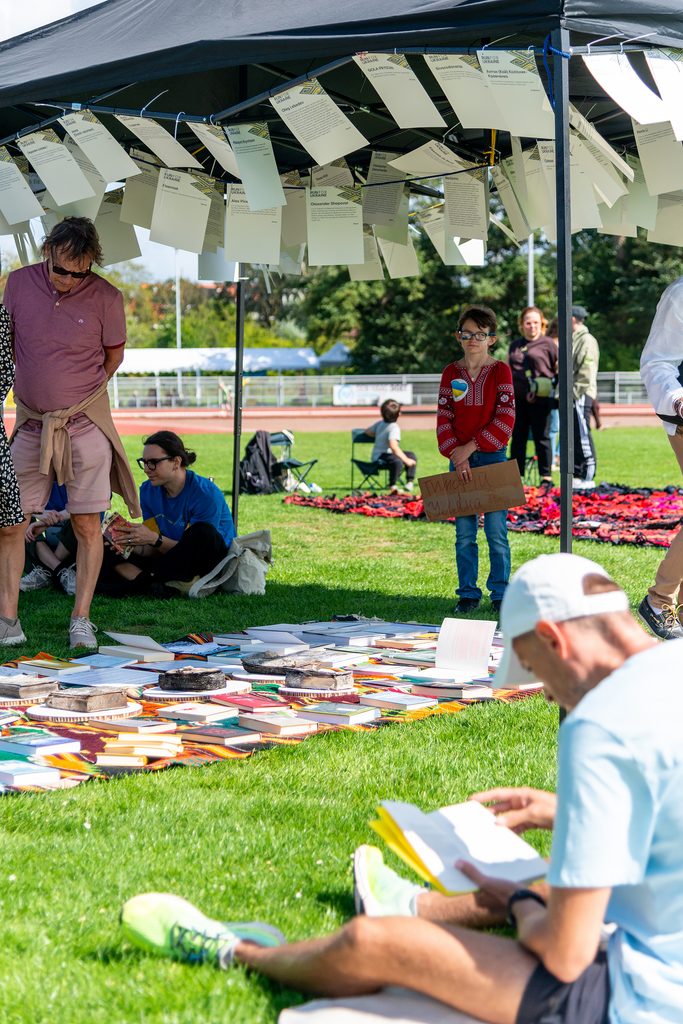
At the book corner, participants could also read the testimonials: stories, memories, and dedications of those who ran.
Returning to Run for Ukraine was Ukrainian Creatives Eternally Silenced by the russian War, based on PEN Ukraine’s ongoing monitoring and curated by Dutch photographer and curator Christian van der Kooy. The project remembers Ukrainian writers, artists, musicians, journalists, and other culture-makers killed since the beginning of russia’s war.
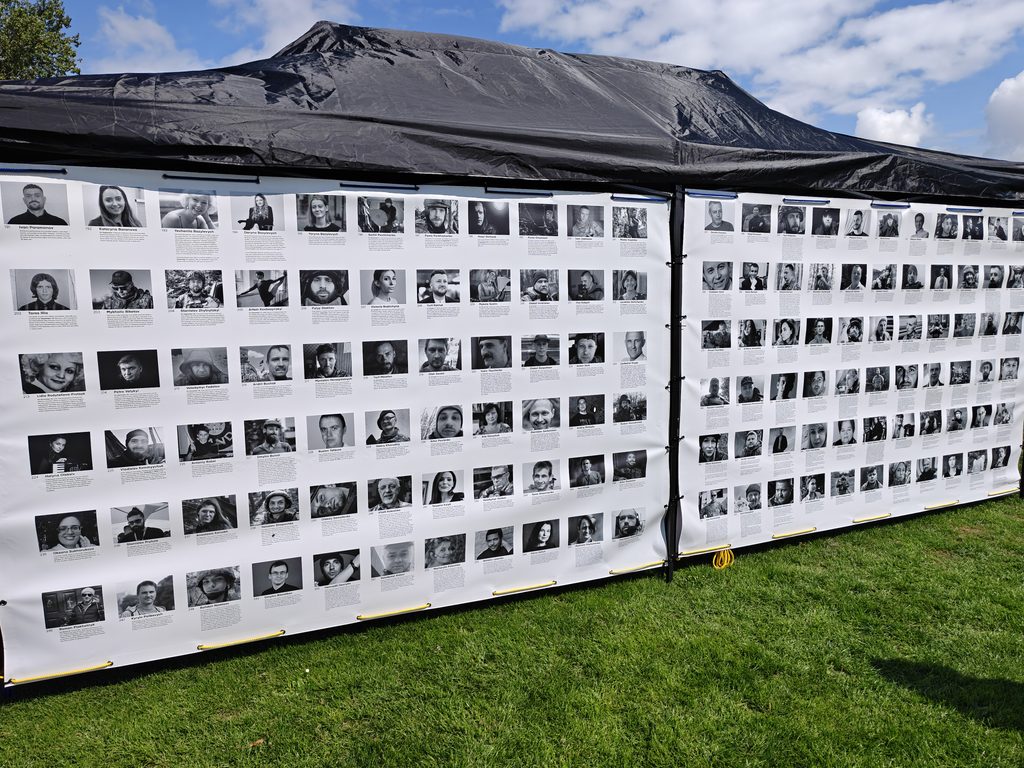
Together, the projects made the centre of the running track a space not only to remember people who have been lost, but to encounter the culture they created and the voices the war has attempted to silence.
Beyond the Finish Line
After crossing the finish line, runners had plenty of reasons to stay. VATAHA once again served borshch, the Ukrainian beetroot soup that has become a Run for Ukraine tradition. The sublimated version of it was just like the one soldiers on the frontline eat.
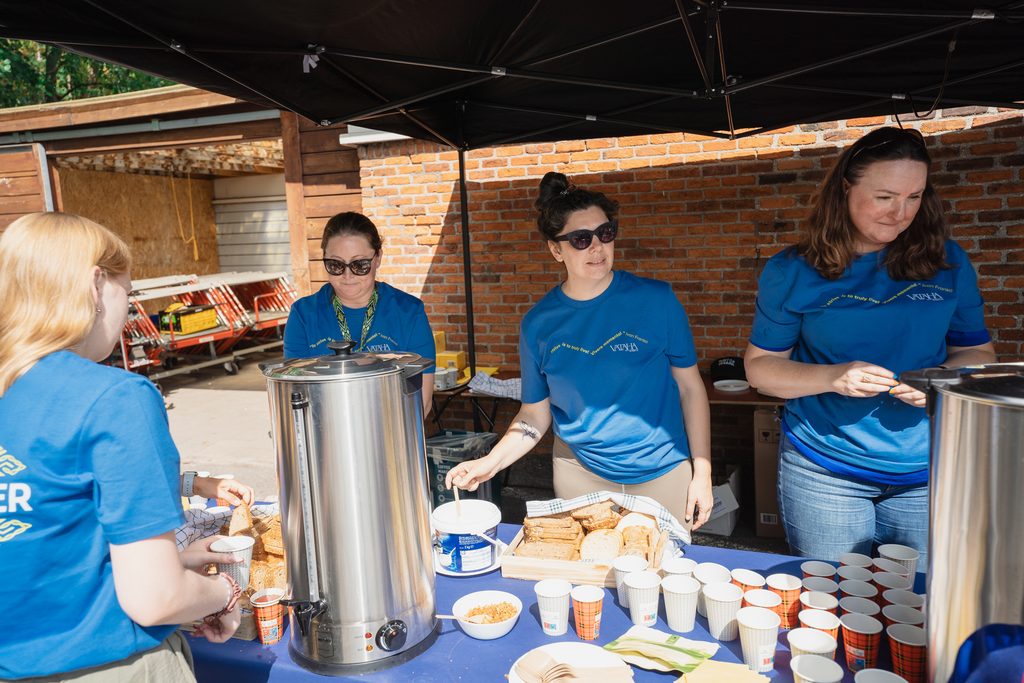
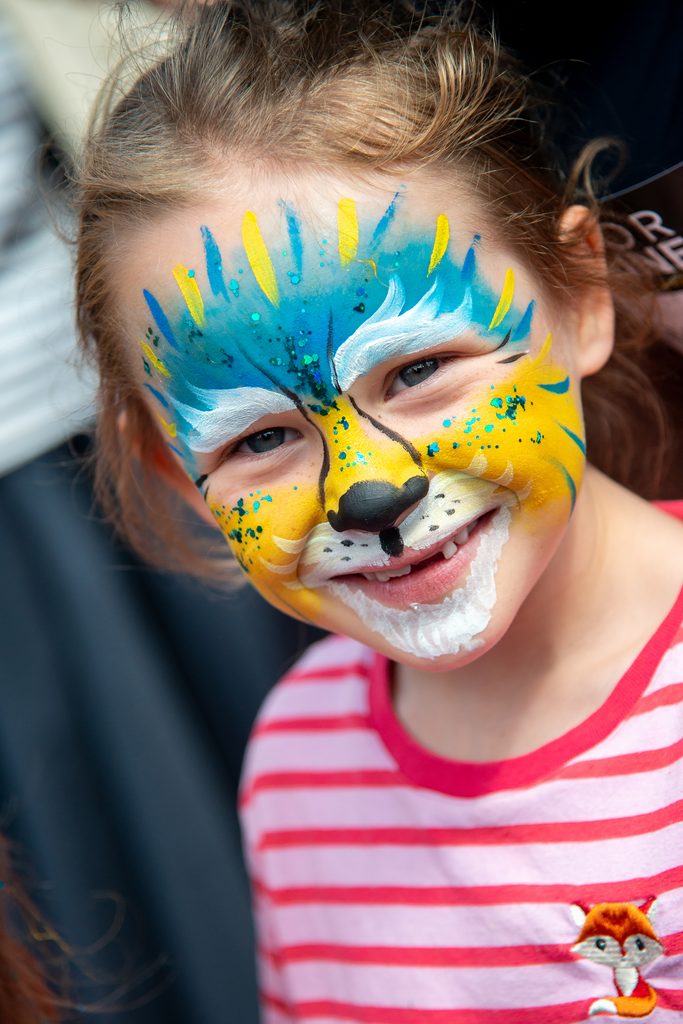
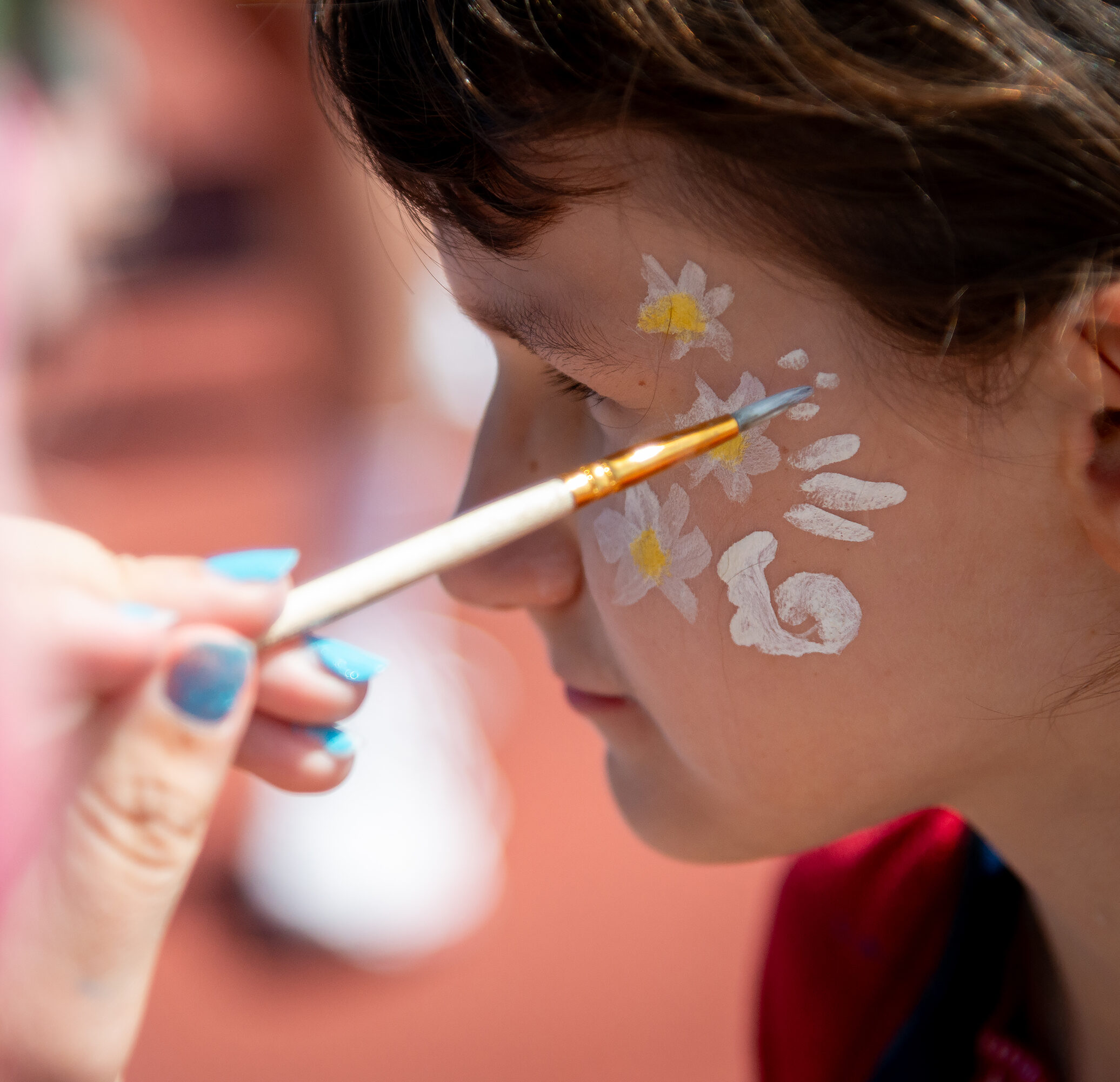
At the same time, volunteers from Ukrainian House Rotterdam and the Dutch collective of local “Moms” kept the children and families busy with fun kids activities throughout the afternoon, including traditional Dutch games. Everyone could also get a face paint, flag stamp or a temporary tattoo.
There was a new addition to the menu this year: Franky and Coen, the Dutch humanitarian volunteers known for bringing their chip van into Ukraine, served fries to participants for donation.
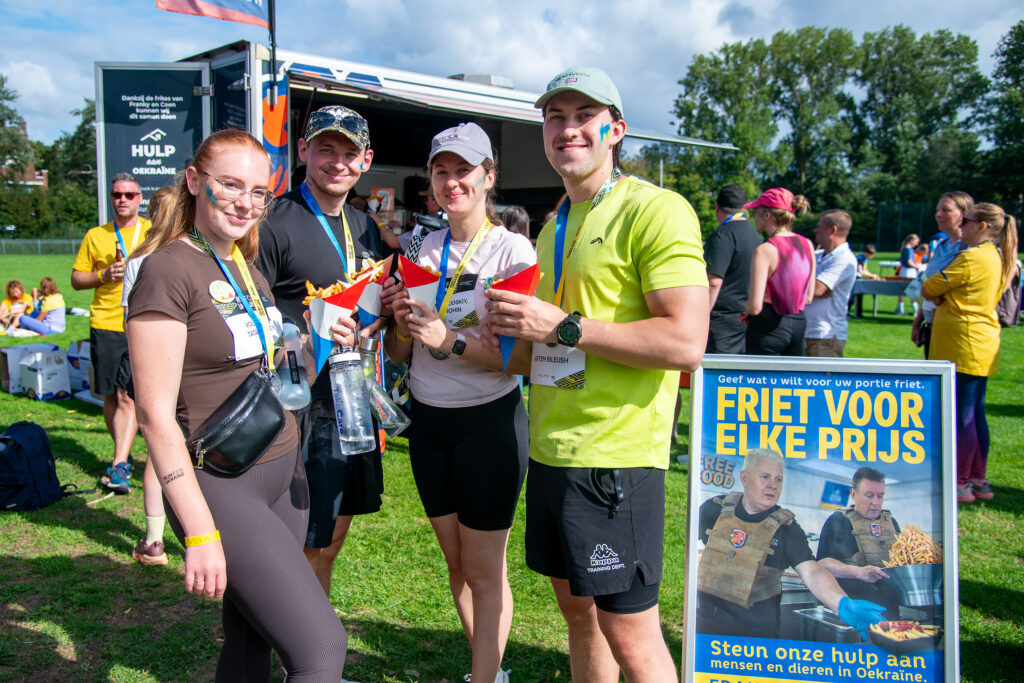
What began for Franky and Coen as handing out fries at the Polish border has grown into extensive humanitarian work inside Ukraine. During repeated trips to frontline regions, they have distributed food and medical supplies, assisted with evacuations, supported hospitals and shelters, and continued serving fries in places including Kherson, Kramatorsk, Kharkiv, Bucha, Irpin, and Zaporizhzhia.
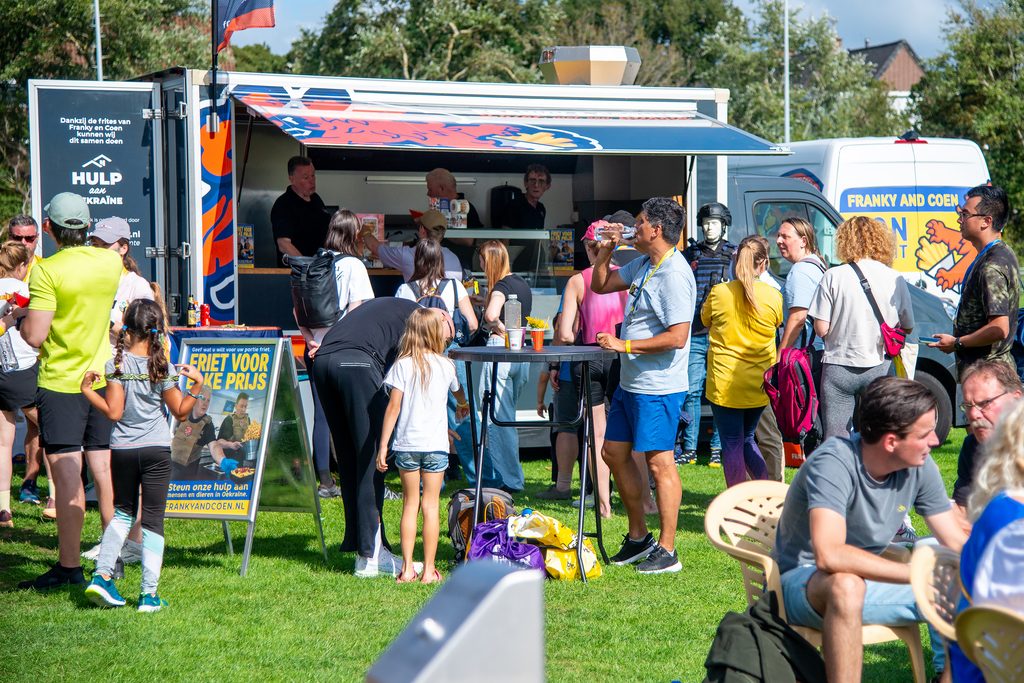
For them, the fries are deliberately simple: a hot meal and a brief moment of normality in places where normal life has been disrupted by war.
“Only to Struggle Means to Live”
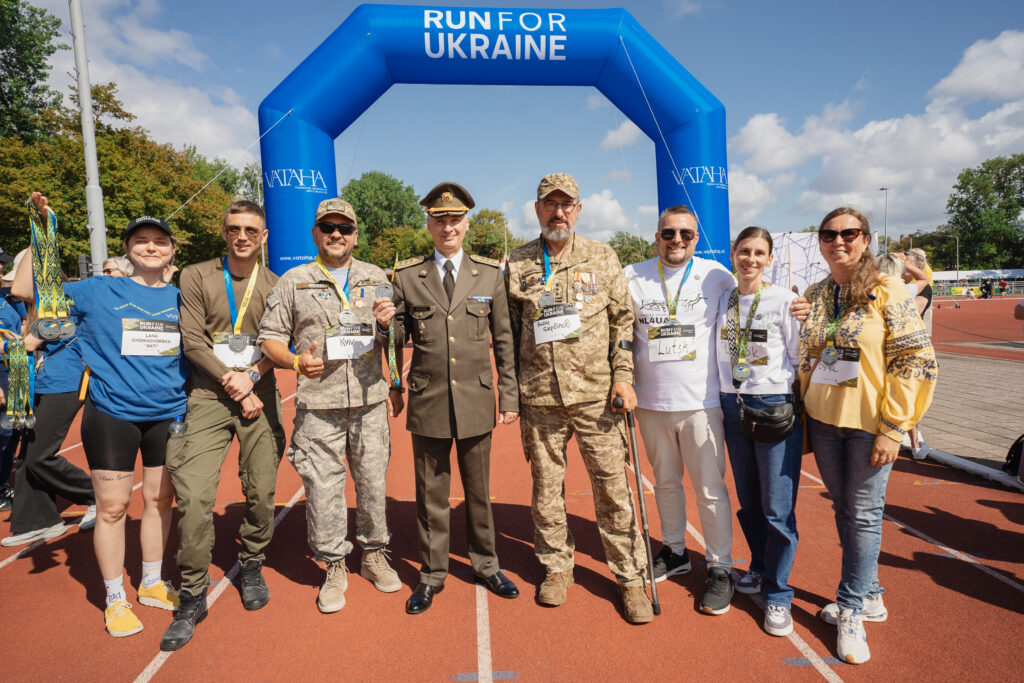
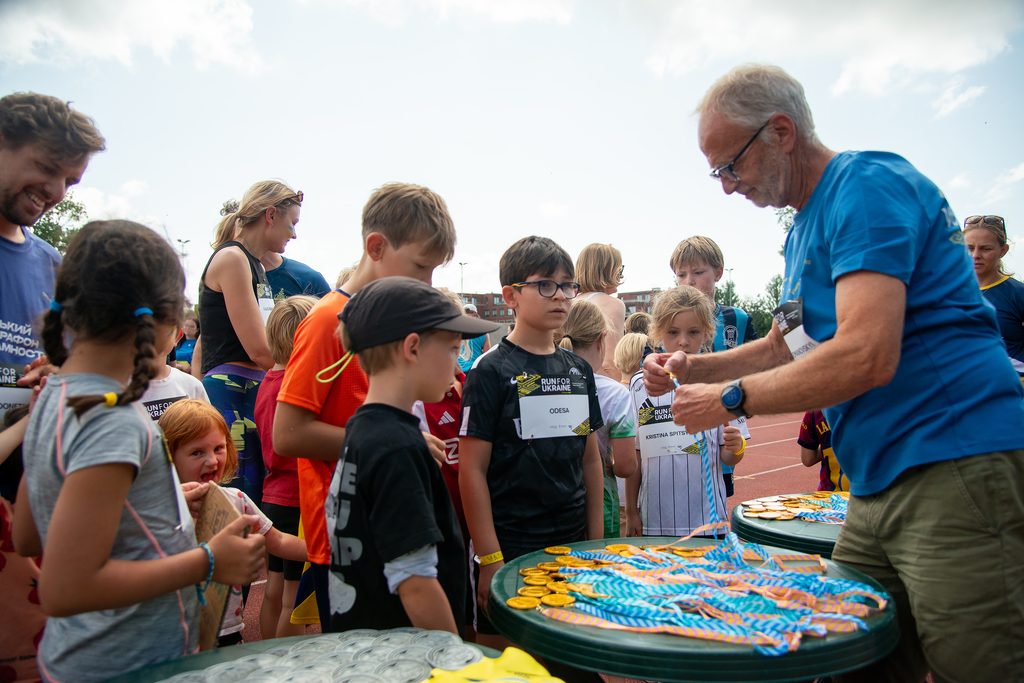
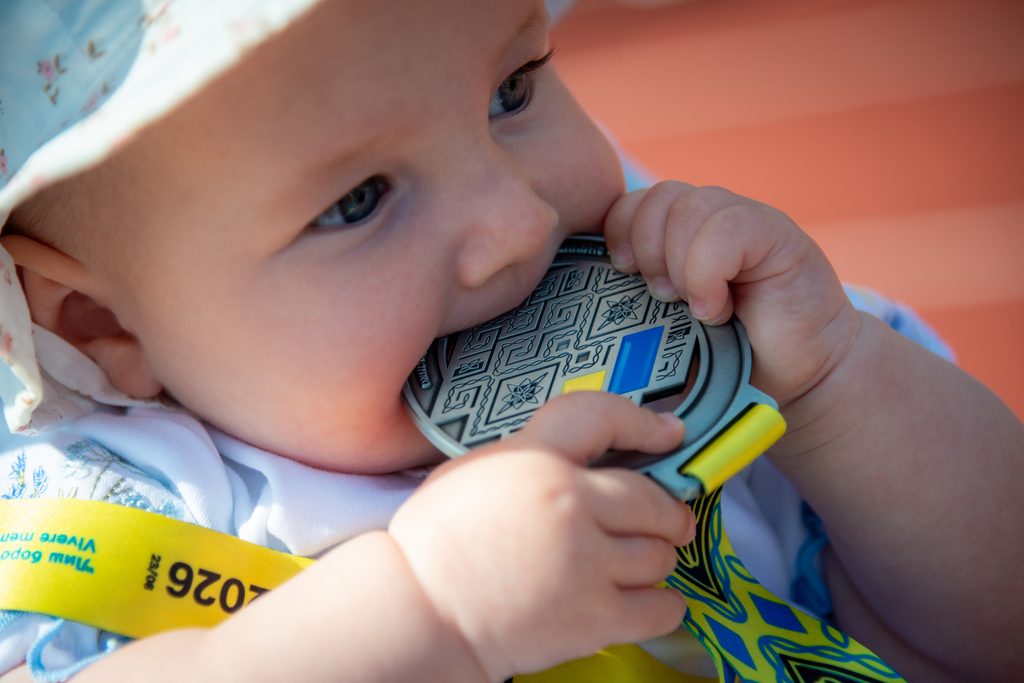
At the finish line, Mr. Heraschenko presented participants with their medals, another important Run for Ukraine tradition. The medal, designed by Ukrainian artist Maria Petrochko, honours Ivan Franko, one of the most important figures in Ukrainian literature and cultural history. Engraved on it are his words:
Only to struggle means to live. Vivere memento.
Remember to live.
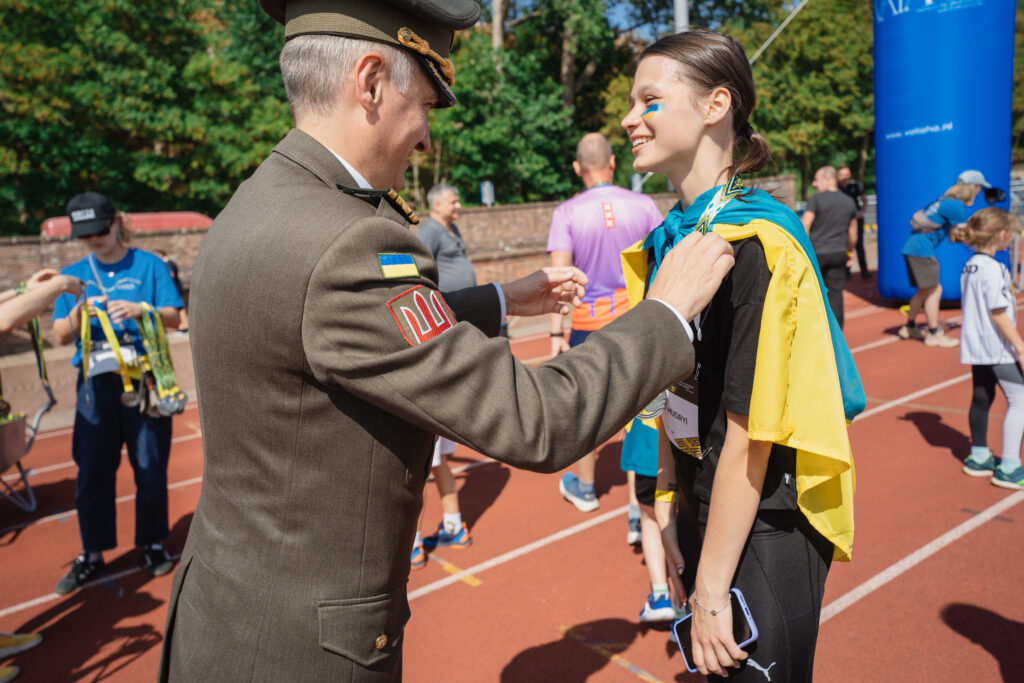
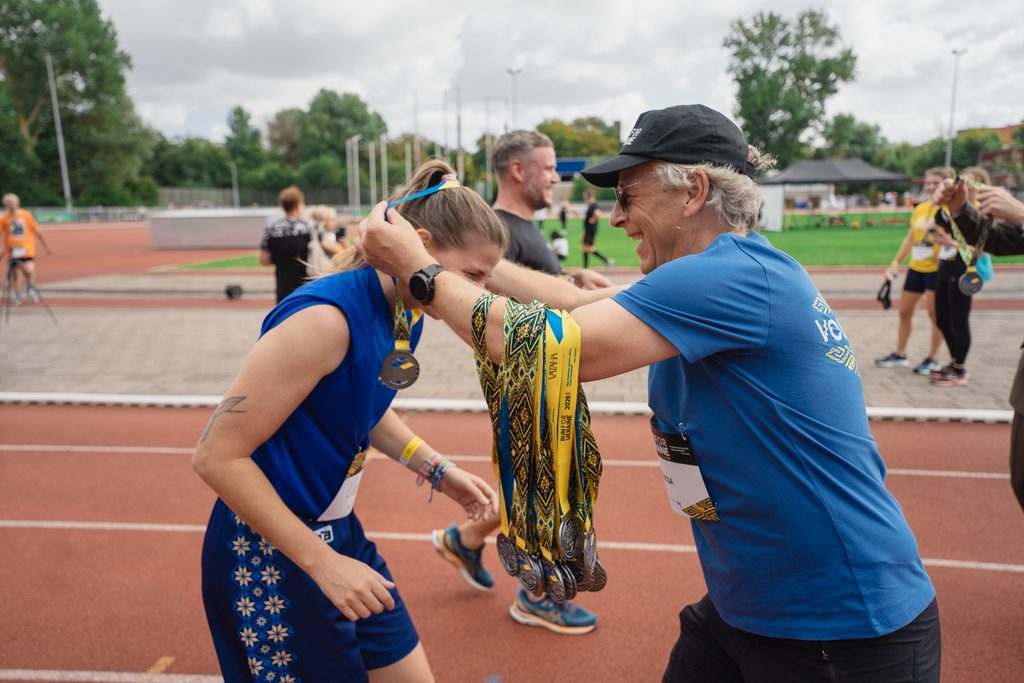
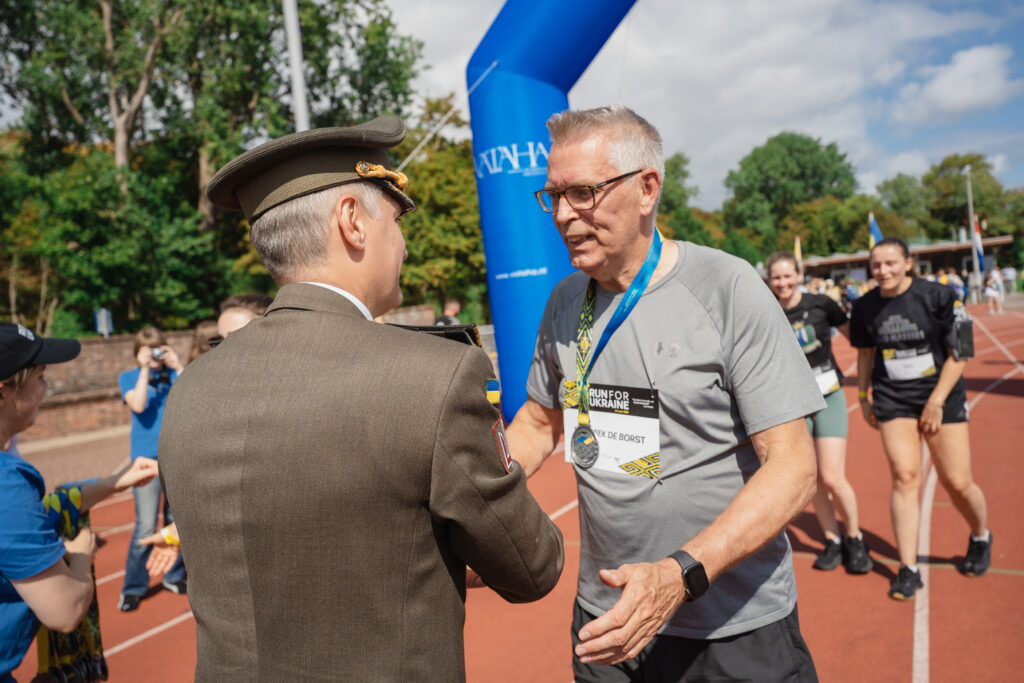
The medal draws on Franko’s life and legacy. Its design incorporates the Carpathian landscape of the region where he was born, an embroidery pattern from a vyshyvanka he wore, and a small Ukrainian flag marking the fact that this year’s Run for Ukraine took place on National Flag Day. August 27 also marks the 170th anniversary of Franko’s birth.
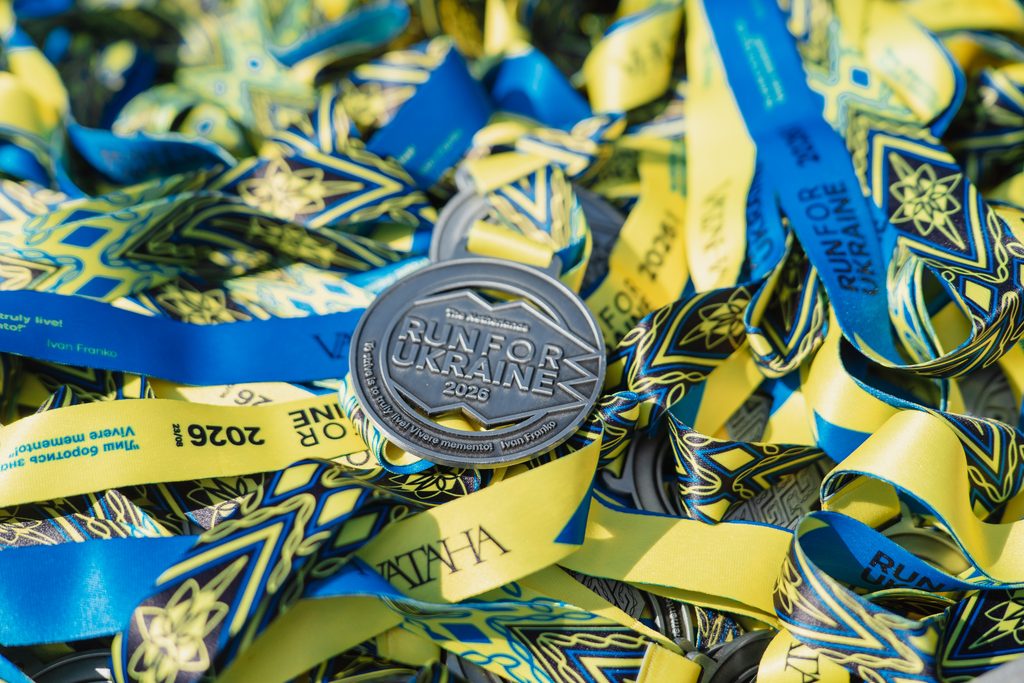
Since 2024, Petrochko has designed each Run for Ukraine medal around a piece of Ukrainian poetry. Together, the three medals now carry words about endurance, freedom, and struggle — small objects marking a finish line while pointing towards something far from finished.
Five Years of Running and Remembering
The Run for Ukraine has changed considerably since fewer than 100 people joined VATAHA’s first memorial run in Rotterdam in 2022. It has moved cities, grown to more than 1500 participants, expanded its cultural programme, and this year reached Groningen, Zwolle and Maastricht as well.
What hasn’t changed is its purpose. For one afternoon, running becomes a way of carrying names, places, memories, and stories forward. Ukrainian veterans share the course with children. Artworks and books sit alongside running shoes and race bibs. Dutch and Ukrainian communities meet not only to remember what has been lost, but to keep Ukraine present and its voices heard.
Five years on, Run for Ukraine is more than a race. It is a shared act of remembrance – a moment to pause, to honour those who have been lost, and to remember the lives and places behind the headlines. Every kilometre run, every story shared, and every person who takes part helps keep those memories alive.
We run for Ukraine because remembering is a form of solidarity, it is about community and its collective healing. And we remember not only the past, but the future Ukraine we continue to stand with.
Words of Thanks
Run for Ukraine 2026 was organized by VATAHA Foundation in partnership with Haag Atletiek and the Embassy of Ukraine in the Kingdom of the Netherlands.
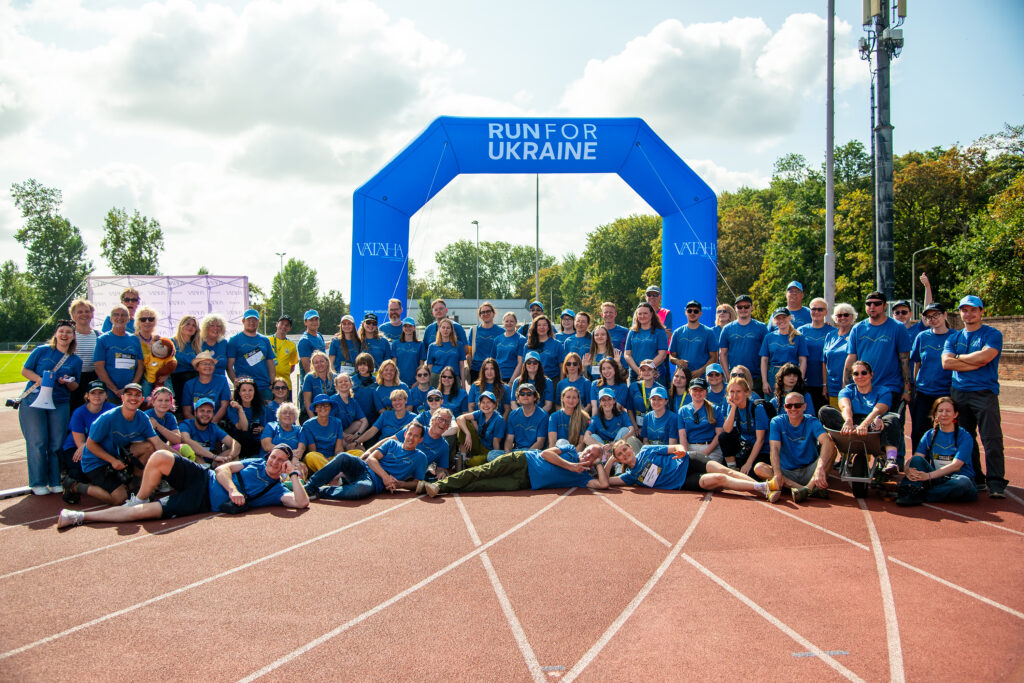
We are deeply grateful to all the dedicated volunteers who made this event possible.
Our special thanks goes to Goodmerch.de, Franky and Coen, EHBO in Nederland, Embassy of the Republic of Lithuania to the Kingdom of the Netherlands, Netherlands for Ukraine Foundation, Ukrainian House Rotterdam, Kingdomes, Lithuanian Youth Association in the Netherlands.
Supported by Ministry of Justice & Security and Fonds 1818.
Photo credits: Lera Manzovitova, Anna Bielchenko, Olha Kyrychenko.
This was VATAHA’s fifth annual Run for Ukraine. Read about the previous editions below:
Looking forward to the next edition? Save the date now: the sixth Run for Ukraine will take place August 29, 2027.
Would you like to support future editions of Run for Ukraine? Please consider making a tax-deductible donation to VATAHA here.